Key takeaways
- Real linoleum is made from linseed oil, wood flour, cork, limestone and pigments on a jute backing, while vinyl flooring is based on PVC.
- Sheet vinyl rolls are commonly 6, 12 or 15 ft wide, so most kitchens and bathrooms can be covered with no seams.
- Vinyl composition tile is typically 12 by 12 in and about 1/8 in thick, and single damaged tiles can be replaced easily.
- Linoleum is through-colored and typically lasts 25 to 40 years, but it needs professional installation and periodic sealing.
- For bathrooms and laundry rooms, seam-free sheet vinyl is usually the most water-resistant resilient floor choice.
Linoleum flooring is a natural resilient floor made from linseed oil, wood flour, cork, limestone and pigments on a jute backing, while sheet vinyl flooring and vinyl tile are synthetic PVC products. Sheet vinyl gives the most waterproof, seam-free floor; vinyl tile is easiest to install and repair; linoleum is the most durable natural, low-plastic option.
All three are called "resilient flooring" because they flex slightly underfoot, and in everyday speech people still call any of them "lino." This guide sets out the real differences in materials, thickness, water resistance, cost and installation, so you can pick the right floor for a kitchen, bathroom, rental or commercial space.
Linoleum vs vinyl: what is the difference?
Is linoleum the same as vinyl? No. They look similar once installed, but they are made from completely different materials.
- Linoleum was invented in the 1860s. Real linoleum flooring is made by oxidizing linseed oil (from flax), mixing it with wood flour or cork dust, ground limestone and color pigments, and calendering the mix onto a jute or polyester backing. The color runs through the full thickness, so wear does not reveal a different layer.
- Vinyl flooring appeared in the mid-20th century. It is based on PVC (polyvinyl chloride) with plasticizers, fillers and stabilizers. Most modern vinyl has a printed design layer protected by a clear wear layer, measured in mil (1 mil = 0.001 in = 25.4 micron).
The difference between vinyl and linoleum therefore shows up in maintenance and lifespan: linoleum benefits from periodic sealing and resists scratches by being through-colored, while vinyl relies on its wear layer and never needs sealing.
Types of vinyl flooring: sheet, tile and plank
Before comparing with linoleum, it helps to separate the main types of vinyl flooring:
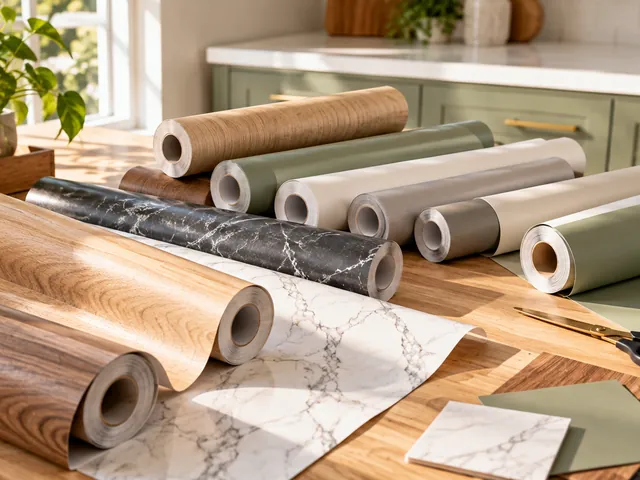
- Sheet vinyl flooring: supplied as a vinyl flooring roll, traditionally 6, 12 or 15 ft (about 1.8, 3.7 or 4.6 m) wide, so most rooms can be covered with no seams or one seam. Constructions include fiberglass-backed, felt-backed and cushioned vinyl.
- Vinyl composition tile (VCT): rigid 12 × 12 in (30 × 30 cm) tiles, about 1/8 in (3.2 mm) thick, with a high limestone filler content. Common in schools, shops and hospitals; needs periodic waxing.
- Luxury vinyl tile and plank (LVT/LVP): thicker multi-layer products with a photographic print and a wear layer, typically 12–30 mil, in glue-down or click-lock formats.
- Peel-and-stick vinyl tiles and rolls: self-adhesive PVC with a pressure-sensitive adhesive and a release liner, for fast DIY installation. See our guide to whether peel-and-stick floor tiles really work.
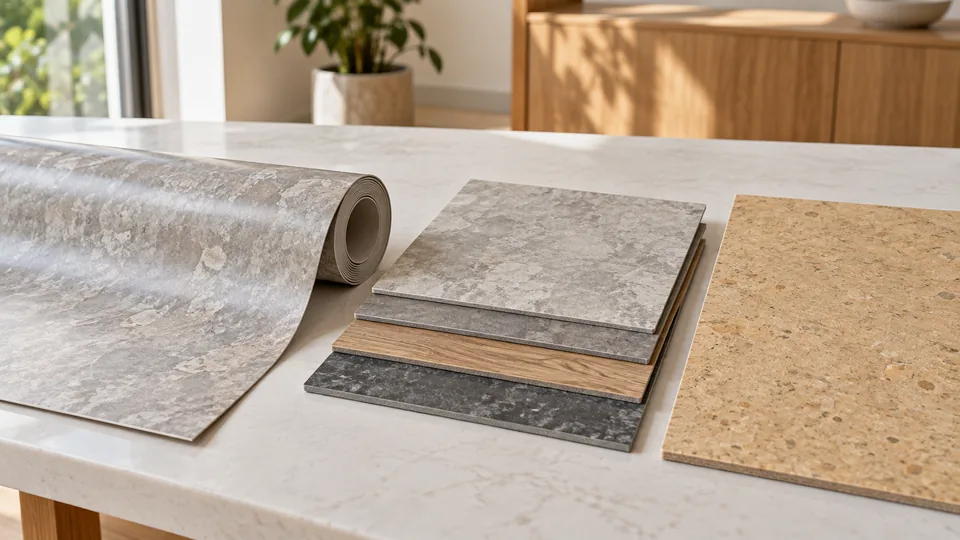
Linoleum also comes as sheet linoleum flooring on rolls, usually about 2 m (6.5 ft) wide, and as linoleum tiles, including interlocking linoleum floor tiles on a fiberboard core.
Sheet vinyl vs vinyl tile vs linoleum: comparison table
The figures below are typical ranges for residential and light commercial products.
| Property | Sheet vinyl | Vinyl tile (VCT, LVT, peel-and-stick) | Linoleum (sheet or tile) |
|---|---|---|---|
| Main material | PVC, plasticizer, fiberglass or felt backing | PVC with limestone filler (VCT) or layered PVC (LVT) | Linseed oil, wood flour, cork, limestone, jute |
| Typical thickness | 1.5–3 mm (60–120 mil) | 0.3–8 mm depending on type | 2–3.2 mm (80–125 mil) |
| Format | Rolls 1.8–4.6 m wide | Tiles and planks | Rolls about 2 m wide, or tiles |
| Water resistance | Excellent; few or no seams | Good surface, but water can enter joints | Water-resistant if sealed; standing water damages edges |
| Installation | Template cutting, glue or loose-lay | Easiest; tile by tile | Professional; heavy, needs acclimation and seam welding |
| Repair | Patch or replace sheet | Replace single tiles | Patch; scratches can be buffed |
| Typical lifespan | 10–20 years | VCT 20+, LVT 15–25, peel-and-stick 5–10+ | 25–40 years |
| Environmental profile | Synthetic, plasticizers | Synthetic | Bio-based, biodegradable raw materials |
Sheet vinyl flooring: pros, cons and where it fits
Sheet vinyl flooring rolls are the default choice when a floor must be waterproof. Because a 12 ft or 15 ft roll covers most kitchens and bathrooms in one piece, there are no joints for water to enter. Commercial vinyl sheet flooring is also heat-welded at seams in hospitals and food areas for hygienic, sealed floors.
- Pros: waterproof, soft and warm underfoot (especially cushioned grades), wide range of tile look, wood and marble look vinyl sheet flooring, and usually cheaper than tile.
- Cons: large rolls are heavy and need accurate templating; a cut or burn means patching or replacing the sheet; low-cost thin grades dent under furniture.
Luxury sheet vinyl flooring uses a thicker wear layer and higher-definition print. When comparing heavy duty vinyl flooring rolls, look at total thickness and wear layer: residential wear layers are often 6–12 mil (0.15–0.3 mm), while commercial sheet vinyl starts around 20 mil (0.5 mm).
Vinyl tile flooring: when tiles beat sheets
Tile vs vinyl sheet is mostly a question of installation and repair. Tiles are light, easy to carry up stairs and can be laid one at a time, and a damaged tile can be swapped in minutes. That makes types of vinyl tile flooring, from VCT to LVT and peel-and-stick, popular for DIY projects, rentals and retail fit-outs.
The trade-off is joints. In wet rooms, water can work through seams, so tiles need a flat, sealed subfloor and tight joints. Cushioned vinyl tiles add comfort, and black and white lino floor tiles in a checkerboard layout remain a classic retro look. See our patterned and checkered floor tile design guide for layout ideas.
If you are also weighing ceramic, tile vs vinyl flooring comes down to feel and cost: ceramic is harder, colder and more permanent; vinyl is warmer, quieter and easier to replace.
Linoleum flooring: pros, cons and where it fits
Natural linoleum flooring has a long track record in schools, hospitals and kitchens. It is naturally anti-static, does not need plasticizers, and its through-body color means wear patterns are less visible.
- Pros: long lifespan, bio-based materials, scratches can be buffed out, and it develops a warm patina. Retro linoleum flooring and marble linoleum patterns suit period homes.
- Cons: higher installed cost, needs professional fitting, is sensitive to standing water and high-pH cleaners, and can show a temporary yellow "drying room film" when new that fades in daylight.
Linoleum flooring rolls are heavy and stiff, so fitting linoleum flooring is usually a trade job: the material must acclimate, be laid in adhesive and often be seam-welded. Linoleum countertops exist too, typically as linoleum sheet bonded to a board, and are used in some mid-century style kitchens.
Linoleum flooring that looks like wood or tile is limited compared with vinyl, because linoleum patterns come from mixing colored granules rather than printing. If you need realistic wood, stone or tile visuals, vinyl offers far more choice.
Which is the best floor for kitchens and bathrooms?
Among types of flooring for kitchens and bathrooms, the deciding factor is water:
- Bathrooms and laundry rooms: sheet vinyl first, because there are no joints. Choose a tile look vinyl sheet flooring if you want a ceramic appearance.
- Kitchens: sheet vinyl or linoleum. Kitchen vinyl sheet flooring handles spills; linoleum suits buyers who prefer natural materials and accept periodic maintenance.
- Rentals and quick refreshes: peel-and-stick vinyl tiles or self-adhesive PVC flooring rolls, which go down over a sound existing floor.
- Commercial corridors: commercial sheet vinyl or commercial linoleum flooring, both of which can be seam-welded.
For more detail on wet rooms, see waterproof vinyl flooring for bathrooms and kitchens.
How do you install sheet vinyl or lino flooring?
A sound, flat subfloor is the basis of every resilient floor. The typical sequence for a glue-down sheet vinyl roll is:
- Acclimate the roll in the room at 18–27 °C (65–80 °F) for at least 24 hours, laid flat or loosely rolled face out.
- Prepare the subfloor. Remove old flooring if loose, fill dips, sand high spots and clean thoroughly. Concrete must be dry; plywood must be smooth and fixed.
- Make a template of the room from paper, including door frames and pipes.
- Cut the sheet from the template on a clean, flat surface, leaving about 3 mm (1/8 in) expansion gap at walls.
- Apply sheet vinyl glue with the trowel notch recommended by the adhesive maker, or use double-sided tape for loose-lay products.
- Lay and roll the sheet from the center outward with a floor roller to remove air.
- Seal seams and edges with seam sealer, then fit skirting or quarter-round.
How to stick lino to concrete follows the same steps, with extra attention to moisture testing. Our subfloor preparation guide explains moisture checks and leveling in detail.
Cost, cheap vinyl flooring rolls and buying in bulk
As a broad guide, sheet vinyl and peel-and-stick vinyl are usually the least expensive per square meter, LVT sits in the middle, and real linoleum is typically the most expensive to buy and install. Linoleum flooring rolls clearance and vinyl sheet flooring clearance offers can bring the price down, but check that the roll width and quantity cover the room without an extra seam.
For retailers, contractors and property managers, thin self-adhesive PVC flooring is a separate, budget category. Our self-adhesive PVC flooring roll is 0.3 mm thick with an embossed, skid-resistant surface, supplied in 1.22 m × 50 m or 0.61 m × 50 m rolls in wood, stone and carpet patterns, with CE and SGS reports. It is designed for quick indoor refreshes such as rentals, pop-up shops and exhibition stands, not as a replacement for thick commercial sheet vinyl. Browse the full self-adhesive floor film range.
Next step
Tell us the pattern, roll width, thickness, quantity and where the floor will be used, and we will send a quotation within 24 hours. Free A4 samples are available, so contact us to compare our self-adhesive PVC flooring against your current supplier.
Frequently Asked Questions
Is linoleum the same as vinyl?
No. Linoleum is made from natural materials, mainly oxidized linseed oil, wood flour, cork, limestone and pigments on a jute backing. Vinyl flooring is a synthetic product based on PVC. They look similar once installed and are both resilient floors, but they differ in water resistance, maintenance, lifespan and environmental profile.
Which is better, linoleum or vinyl?
Vinyl is better for wet rooms, tight budgets and realistic wood or tile looks, because it is waterproof and needs no sealing. Linoleum is better if you want a natural, long-lasting floor, typically 25 to 40 years, and accept a higher installed cost, professional fitting and occasional resealing to protect it from moisture.
What is sheet vinyl flooring?
Sheet vinyl flooring is a continuous PVC floor covering supplied on wide rolls, commonly 6, 12 or 15 feet wide. It has a backing layer, a printed design layer and a clear wear layer. Because it covers most rooms in one piece, it has few or no seams, which makes it highly water-resistant for kitchens and bathrooms.
How long does sheet vinyl flooring last?
Sheet vinyl flooring typically lasts 10 to 20 years in a home, depending on the thickness of its wear layer, the quality of the subfloor preparation and the traffic it carries. Commercial grades with wear layers of 20 mil or more last longer. Furniture pads and regular sweeping help prevent dents and abrasion.
Is vinyl tile or sheet vinyl better for a bathroom?
Sheet vinyl is usually better for a bathroom because one continuous sheet leaves no joints for water to seep through. Vinyl tiles can work if the subfloor is flat and sealed and the joints are tight, and they are easier to repair, but splashes and mopping water can eventually reach the subfloor through the seams.
Can you install linoleum flooring yourself?
Linoleum tiles and click-lock linoleum planks can be installed by a skilled DIYer. Sheet linoleum is harder: the rolls are heavy and stiff, need acclimation, must be laid in adhesive and are often seam-welded. Most homeowners hire a professional flooring installer for sheet linoleum to avoid cracking and open seams.
What are the main types of vinyl flooring?
The main types of vinyl flooring are sheet vinyl on wide rolls, vinyl composition tile or VCT, luxury vinyl tile and plank (LVT and LVP) in glue-down or click-lock formats, and peel-and-stick vinyl tiles or rolls with a factory-applied adhesive. They differ in thickness, wear layer, installation method and water resistance.