Key takeaways
- 3D wallpaper creates depth in one of three ways: a printed optical illusion, an embossed PVC surface, or sculpted panels with real projection.
- Embossed PVC peel-and-stick wallpaper typically measures 0.15–0.4 mm thick and gives tactile texture at a lower cost than 3D wall panels.
- 3D PVC, foam and wood wall panels cast real shadows but are more permanent and need careful joint alignment.
- Faux stone, rock and brick are the most popular 3D wallpaper designs because real stone veneer is heavy and expensive to install.
- A smooth, primed, fully cured wall and a plumb first strip are the two biggest factors in a seamless 3D wallpaper installation.
3D wallpaper is a wallcovering whose embossed surface, printed shading or foam backing creates a sense of depth, so a flat wall reads as stone, brick, wood or sculpted relief. It ranges from thin printed murals to embossed PVC peel-and-stick rolls and thicker 3D wall panels in foam, PVC or wood.
This guide explains what each type of three dimensional wallpaper and panel actually is, how they compare on thickness, cost and durability, and how to install them so seams and edges disappear. It ends with notes for retailers and contractors who buy 3D wall decor by the roll.
What is 3D wallpaper, exactly?
"3D" is a marketing term rather than a technical standard, which is why the same search for 3d wallpaper returns everything from photo murals to foam bricks. In practice it covers three ways of producing depth on a wall:
- Optical 3D: a flat print with perspective, shadow and highlight, such as a wall mural of a receding forest or an abstract geometric pattern. The surface is smooth; the depth is an illusion.
- Embossed 3D: a PVC or vinyl film pressed between engraved rollers so the surface carries real relief, typically 0.1–0.5 mm deep. Brick mortar lines, stone grain and floral damask can be felt with a fingertip.
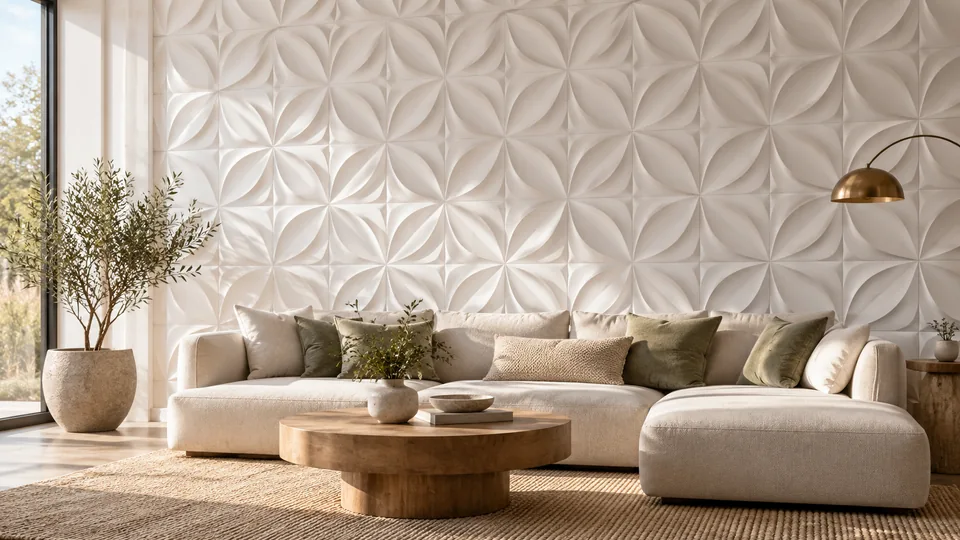
- Sculpted 3D: panels and tiles with genuine projection of 3–25 mm, made from XPE foam, PVC, gypsum, MDF or solid wood. These cast real shadows and change appearance as light moves through the day.
Most peel and stick wallpapers 3D sold for homes are embossed PVC: a decorative PVC face, a pressure-sensitive adhesive (PSA) and a release liner. PVC (polyvinyl chloride) is used because it embosses crisply, resists water and wipes clean.
Types of 3D wallpaper and 3D wall panels compared
The table below compares the main options you will see under 3d wall panels, 3d wall tiles and 3d wallpaper for wall listings. Figures are typical ranges, not guarantees for any one product.
| Type | Typical thickness | Depth effect | Install method | Best for |
|---|---|---|---|---|
| Printed 3D mural wallpaper | 0.1–0.3 mm (4–12 mil) | Optical only | Paste or peel and stick | Feature walls, ceilings, kids rooms |
| Embossed PVC peel-and-stick wallpaper | 0.15–0.4 mm (6–16 mil) | Low relief you can feel | Self-adhesive | Brick, stone, wood and damask accent walls |
| XPE foam 3D wall stickers | 3–8 mm (1/8–5/16 in) | Soft, padded relief | Self-adhesive tiles | Bedrooms, nurseries, rentals |
| 3D PVC wall panels | 0.5–1 mm sheet, 10–25 mm profile | Strong sculpted relief | Adhesive or double-sided tape | Living rooms, offices, retail |
| 3D wood wall panels | 9–20 mm (3/8–3/4 in) | Real timber texture and shadow | Construction adhesive, nails, battens | High-end lounges, hotels, reception walls |
| Gypsum or MDF sculpted panels | 10–30 mm | Deep, paintable relief | Adhesive plus filler and paint | Permanent architectural walls |
As a rule, the more real projection a product has, the more it costs per square meter and the more permanent the installation. Embossed PVC sits in the middle: it looks textured from a normal viewing distance of 1–2 m, costs far less than sculpted panels and can usually be removed later.
3D PVC wall panels vs 3D wallpaper
3D PVC wall panels are vacuum-formed sheets, usually 50 × 50 cm (about 20 × 20 in), with waves, diamonds, bricks or abstract shapes standing proud of the wall. They are paintable, waterproof and light, but each panel joint must be filled or aligned carefully, and the profile collects dust.
Embossed 3D wallpaper comes on a roll, so it covers a wall in fewer pieces and fewer seams. It will not cast deep shadows, but it handles kitchens, bathrooms and offices well because the surface is continuous and wipeable.
Stone, rock and brick 3D wallpaper: the most popular looks
Faux stone wallpaper and rock wallpaper are the best-selling 3D designs because real stone veneer is heavy, expensive and messy to install. A good textured stone wallpaper combines two things: a high-resolution photographic print of real stone and an embossing roller engraved to match that print, so the raised areas line up with the printed highlights.
- Stacked stone wallpaper imitates thin horizontal ledger stones; it suits fireplaces, TV walls and restaurant counters.
- 3D brick wallpaper reproduces red, white-washed or grey brick with recessed mortar joints. See our comparison of faux brick wallpaper and faux brick wall panels for realism tips.
- Faux rock wallpaper uses irregular fieldstone shapes for a rustic, lodge-style wall.
- Concrete and cement 3D wallpaper gives an industrial look for cafes and offices.
Our self-adhesive 3D stacked-stone brick wallpaper is an embossed PVC film supplied in 1.22 m × 50 m trade rolls, rated waterproof, moisture-proof and mould-proof. For retail packs, our removable 3D brick stone wall sticker comes in 0.45 m × 2 m rolls.
3D wall art, murals and wall decals
Not every 3D wall needs to be stone. Wall art in 3D includes printed 3D wall murals, 3D wall decals and 3D wall art stickers, plus sculptural pieces such as metal or resin wall sculptures hung like pictures. For wallpaper buyers, the relevant formats are:
- 3D wall murals: one image spread across several panels, often a landscape, a sky ceiling or a 3D abstract wallpaper design. Realistic 3D wall murals rely on a large, sharp print and a matte finish to avoid glare.
- 3D wall murals peel and stick: the same images printed on self-adhesive PVC, so a renter can apply and remove them. Our wall murals guide covers sizing and panel layout.
- 3D wall decals and stickers: individual cut shapes, such as butterflies, hexagons or foam bricks, for spot decoration rather than full coverage.
- Embossed floral and damask 3D wallpaper: raised rose or scroll patterns with a pearlescent finish, popular as luxury 3D wallpaper for living room and bedroom feature walls.
Color trends matter too. Black 3D wallpaper and dark 3D wallpaper in charcoal or navy create dramatic media rooms; grey 3D wallpaper and white embossed patterns are the safe sellers for rentals; blue 3D wallpaper, such as sky-and-cloud ceiling murals, is a staple for nurseries.
Where should you use 3D wallpaper in a home or office?
3D textures work best on one feature wall rather than a whole room, because strong relief and pattern become busy when repeated on four walls.
- 3D wallpaper for living room or lounge: the wall behind the sofa or TV. Stone, wood slat and large-scale geometric designs suit 3D living room wall decor.
- 3D wallpaper for bedroom: the headboard wall. Soft embossed damask, upholstered-look foam tiles or 3D wood wallpaper keep it calm.
- 3D wallpaper for office: reception walls and meeting rooms. Concrete, brick and modern 3D wall panels give texture without a construction project.
- 3D kitchen wallpaper: only in waterproof, wipeable PVC, and kept at least 30 cm (12 in) from a gas flame. Oil-proof backsplash films are a better choice right behind the hob.
- Hotels, cafes and shops: faux stone and brick are the most common 3D wall accents in hospitality because they photograph well and install overnight.
How do you install 3D peel-and-stick wallpaper and panels?
3D wallpaper application is close to standard peel-and-stick installation, with extra attention to pattern matching because relief makes misaligned seams obvious. Work at room temperature, ideally 18–28 °C (65–82 °F).
- Prepare the wall. The wall must be smooth, clean, dry and sound. Fill holes, sand bumps, and let new paint cure for at least 2–4 weeks. On porous or fresh drywall, apply a primer so the adhesive has a stable surface.
- Measure and plan. Measure height and width, add 5–10 cm (2–4 in) at top and bottom for trimming, and check the pattern repeat. Draw a plumb line with a level for the first strip or panel.
- Cut the first piece. Cut the roll to length, keeping the pattern start consistent so brick courses or stone rows line up across strips.
- Peel and position. Peel 20–30 cm (8–12 in) of liner, align the top edge to the plumb line, and press lightly with your hand before committing.
- Smooth from the center out. Use a soft felt squeegee or cloth, working down and outward. On embossed film, use hand pressure rather than a hard squeegee so you do not flatten the texture.
- Match the next strip. Butt or slightly overlap the next piece according to the product instructions, aligning mortar lines or motifs at eye level first.
- Trim and finish edges. Trim at the ceiling, skirting and outlets with a sharp utility knife and a straightedge, changing blades often. Press edges firmly; a hairdryer on low heat helps thicker films conform.
- Let the adhesive set. Most pressure-sensitive adhesives build full bond over 24–48 hours. Avoid washing the wall during this time.
For foam and PVC 3D wall panels, the sequence is the same, but each tile is pressed for 10–20 seconds and the layout starts from the center of the wall so cut tiles fall evenly at both ends. Our full guide on how to install peel-and-stick wallpaper covers corners and outlets in detail.
Is 3D wallpaper expensive or inexpensive?
3D wallpaper spans the full price range. Inexpensive peel and stick wallpaper with a printed or light embossed finish is usually the cheapest way to add texture, often a fraction of the price of tile or stone. Thicker embossed PVC with registered emboss, XPE foam panels and modern 3D wall panels in PVC sit in the middle. Expensive wallpaper and 3D wood wall panels, sculpted gypsum and real stone veneer cost several times more once labor is included.
When comparing inexpensive wallpaper with premium options, look at:
- Film thickness: thicker PVC hides wall flaws and is harder to tear.
- Emboss registration: whether the raised texture lines up with the printed pattern.
- Adhesive grade: permanent for commercial walls or removable for rentals.
- Test reports: fire-retardant grades and formaldehyde or heavy-metal tests for hotels and schools.
How long does 3D wallpaper last, and can it be removed?
Embossed PVC 3D wallpaper on a properly prepared wall typically lasts several years indoors; many of our 3D designs carry a 5-year warranty. Lifespan is shortened by direct sun, high humidity on unsealed walls, and heat sources.
Removable adhesives are designed to peel off primed, painted walls without lifting paint, especially when warmed slightly and pulled back at a low angle. Foam panels and 3D PVC wall panels fixed with construction adhesive are semi-permanent and may require wall repair. Our guide to removing wallpaper without damaging walls explains the steps.
Buying 3D wallpaper and panels in bulk
For retailers, e-commerce sellers and contractors, 3D wallpaper is a high-turnover category because the designs photograph well and customers often buy several rolls per wall. Points to check with a factory:
- Roll format: 0.61 m × 3 m retail rolls for consumer packs, or 0.61 / 1.22 m × 50 m trade rolls for installers and projects.
- Function grades: waterproof, moisture-proof, mould-proof, fire-retardant and anti-static versions for different markets.
- Design customization: private-label patterns, colorways and packaging through OEM and ODM production.
- MOQ and lead time: from 1 roll for stock items and 100 rolls for customized production, with 7–10 days for stock and 15–25 days for custom orders.
Browse the full self-adhesive wallpaper and floor film range for brick, stone, floral, mural and wood grain 3D designs.
Next step
Tell us the design style, roll size, quantity and destination market, and we will send free A4 samples and a quotation within 24 hours. Contact us with photos of the wall or project for a recommendation on film thickness and adhesive grade.
Frequently Asked Questions
What is 3D wallpaper made of?
Most 3D wallpaper for homes is embossed PVC film with a pressure-sensitive adhesive and a release liner. Thicker 3D products use XPE foam, vacuum-formed PVC, gypsum, MDF or solid wood. Printed 3D murals are flat PVC or non-woven paper that create depth with shading rather than physical texture.
Is 3D wallpaper good for a living room?
Yes, 3D wallpaper works well in a living room when used on one feature wall, such as behind the sofa or TV. Stone, brick, wood slat and large geometric designs add texture without overwhelming the space. Choose a wipeable PVC finish if the wall gets touched often or faces children and pets.
Can you put 3D wallpaper in a kitchen or bathroom?
You can use waterproof PVC 3D wallpaper in kitchens and bathrooms if the wall is sealed and well ventilated. Keep it away from direct water spray and at least 30 cm from a gas flame. Behind a hob, an oil-proof, heat-resistant backsplash film is the more durable choice.
What is the difference between 3D wall panels and 3D wallpaper?
3D wall panels are rigid or semi-rigid tiles in PVC, foam, gypsum or wood that project 3-25 mm from the wall and cast real shadows. 3D wallpaper is a thin roll, usually embossed PVC, with shallow relief. Wallpaper has fewer seams and is easier to remove; panels give deeper texture.
How do you hide seams on 3D brick wallpaper?
Start from a plumb line, cut every strip at the same point in the pattern repeat, and align mortar joints at eye level before smoothing outward. Butt seams tightly or overlap as the instructions say, then press edges firmly. Placing seams along vertical mortar lines makes them almost invisible.
Is 3D peel-and-stick wallpaper removable?
Most 3D peel-and-stick wallpaper uses a removable adhesive that peels off primed, painted walls without damage. Warm the film gently with a hairdryer and pull back at a low angle. Foam tiles and 3D PVC wall panels fixed with construction adhesive are semi-permanent and may need wall repair afterward.
How long does 3D wallpaper last?
Embossed PVC 3D wallpaper installed indoors on a properly prepared wall typically lasts several years, and many designs carry a 5-year warranty. Direct sunlight, unsealed damp walls and nearby heat sources shorten its life. Thicker films resist scuffs and tears better in hallways and commercial spaces.