Key takeaways
- Tile stickers are printed PVC film, usually 0.1 to 0.3 mm thick, applied to each existing tile so the grout lines stay visible.
- Any decal used on a walking surface needs a textured, slip-resistant overlaminate, while wall and stair riser stickers can be thin and smooth.
- Floor tile stickers suit low-traffic rooms on flat, clean, dry tile and fail early on textured tile, wet floors and under chair legs.
- Floor graphics for events and retail typically last from a single day to about 6 to 12 months depending on traffic and laminate.
- Residential stair risers are commonly about 7 to 7.75 inches tall, so every riser should be measured before ordering riser stickers.
Tile stickers are thin, waterproof self-adhesive vinyl squares applied over existing ceramic tile to change its color or pattern without regrouting. Floor decals and floor graphics are printed vinyl with an anti-slip laminate for floors, and stair riser stickers are printed strips that cover only the vertical face of each step. All three peel off later.
They look similar on a product page but are built differently, because a backsplash, a bathroom floor, a store aisle and a staircase put very different loads on the film. This guide explains what each product is, where it works, how to apply it, and what to check before you buy or stock it.
What are tile stickers and decals on tile?
Tile stickers, also sold as tile decals, vinyl tile stickers, vinyl tile decals or peel and stick tile decals, are pieces of PVC film printed with a tile pattern and coated with a pressure-sensitive adhesive (PSA). You stick them directly onto each existing tile, so the grout lines stay visible and the result reads as new tile.
- Material: printed PVC film, usually 0.1–0.3 mm (4–12 mil) thick, often with a clear protective top layer.
- Finish: matte or satin for walls; matte with a textured, anti-slip surface for floors.
- Common sizes: 4x4 tile stickers (10 × 10 cm), 6 × 6 in (15 × 15 cm), 8 × 8 in (20 × 20 cm) and 12 × 12 in (30 × 30 cm), plus metric 15, 20 and 40 cm squares sold as "tile floor sticker 40" sets.
- Patterns: Moroccan and encaustic designs, marble tile stickers, terrazzo, solid white tile stickers, green tile stickers, subway and hexagon.
Decals on tile only hide color and pattern. They do not fix cracked tiles, failing grout or uneven surfaces, which show through the film within days.
Tile stickers vs floor decals vs stair riser stickers
| Product | Typical surface | Construction | Key requirement | Typical life |
|---|---|---|---|---|
| Wall tile stickers / wall tile decals / backsplash tile stickers | Glazed ceramic wall tile | Printed PVC, 0.1–0.2 mm, removable or permanent PSA | Waterproof, heat-tolerant near cooktops, wipeable | Several years indoors |
| Floor tile stickers / floor tile decals | Ceramic or porcelain floor tile | Thicker PVC, 0.2–0.3 mm, textured top coat | Wear and slip resistance, strong adhesive | 1–3 years in light foot traffic |
| Floor decals / floor graphics | Sealed concrete, vinyl, laminate, tile | Printed vinyl plus anti-slip overlaminate | Slip-rated laminate, clean removal | Days (events) to about 6–12 months (retail) |
| Stair riser stickers | Painted or wood stair risers | Printed PVC strips, 0.1–0.2 mm | Exact riser size, durable edges | Several years (risers are not walked on) |
The key difference is foot traffic. Wall and riser products are never stepped on, so they can be thin and glossy. Anything on a walking surface needs a textured, slip-resistant top layer and a thicker film.
Bathroom tile stickers and kitchen tile decals
Bathroom tile stickers, bathroom tile decals and kitchen tile stickers are the most common use, because dated wall tile is expensive and messy to replace. They work well on:
- Backsplashes behind sinks and counters, where tile decals for the kitchen hide dated glazed tile.
- Bathroom walls outside the direct shower spray.
- Bathtub surrounds where tiles are smooth and the grout is sound; bathtub tile stickers last longest above the tub rim rather than inside a shower.
- Laundry and utility rooms.
Waterproof tile stickers (and tile decals sold as waterproof) resist splashes and steam, but water can still creep in at edges if they are not pressed down firmly. Near a cooktop, leave a gap of at least 30 cm (12 in) from open flames, or use a heat-resistant aluminum foil backsplash film instead. Our guide to installing a peel-and-stick backsplash covers both options, and the kitchen backsplash project shows the foil-sticker option as a retail range.
Do floor tile stickers work?
Floor tile stickers work in low-traffic rooms such as a guest bathroom, laundry or small entry, provided the floor is clean, dry and flat. Bathroom floor tile stickers and kitchen floor tile stickers fail early in three situations: on textured or deeply grouted tile, where the film bridges the grout and tears; in wet areas where water sits on the floor; and under chair legs and wheeled furniture.
When people ask for the best floor tile stickers, look for these specifications:
- Film of at least 0.2 mm (8 mil) with a textured, matte, slip-resistant top coat.
- A permanent or high-tack adhesive suited to glazed tile.
- A stated waterproof rating; even floor tile stickers that are waterproof need a dry installation.
- Square-cut edges so stickers sit tight to the grout line.
For a whole floor, a peel-and-stick vinyl floor roll or tile is often better value than individual stickers. Our peel-and-stick PVC vinyl floor tile is 0.3 mm thick with an embossed, skid-resistant surface, in 0.61 m and 1.22 m widths by 50 m. See our honest peel-and-stick floor tiles guide for when they make sense.
How to apply tile stickers
- Clean and degrease. Wash the tiles with detergent, rinse, then wipe with isopropyl alcohol. Soap scum and kitchen grease are the most common cause of lifting.
- Let it dry completely. Grout holds water; allow at least 24 hours after cleaning a floor or shower area.
- Check the temperature. Apply between about 15 and 30 °C (60–85 °F). Cold tile weakens the initial bond.
- Measure and plan. Start from the most visible row and work outward so cut pieces land in corners.
- Peel and place. Peel a corner of the liner, align the sticker to the tile edge, and press down from the center out with a felt squeegee or cloth.
- Trim and seal edges. Cut around fixtures with a sharp knife. Press every edge firmly; on floors, roll with a seam roller.
- Wait before wetting. Avoid water and mopping for 24–72 hours while the adhesive builds bond.
What are floor decals and floor graphics?
Floor decals, floor decal stickers, vinyl floor stickers, vinyl floor decals and floor graphics are printed self-adhesive vinyl applied to a walking surface for branding, wayfinding or decoration. Vinyl floor graphics have two layers: a printed vinyl base with a removable adhesive, and a clear textured overlaminate that protects the print and provides slip resistance. Without that laminate, a printed vinyl floor sticker is slippery and scuffs within days.
Common uses include:
- Floor decals for business: store aisles, queue markers, safety and social-distance markings, logos at entrances.
- Floor decals for events and floor stickers for events: trade-show stands, conferences, sports venues.
- Floor decals for parties: a monogram on a dance floor or a floor decal for a party entrance, usually removed the next day.
- Interior floor graphics in offices, schools and hospitals for wayfinding.
Floor decals for concrete and outdoor floor decals
Smooth sealed concrete accepts standard floor graphic vinyl. Rough or porous concrete, asphalt and pavers need a conformable, aggressive-adhesive outdoor vinyl that is heated into the texture during installation. Outdoor floor decals usually last weeks to a few months, not years.
Custom floor decals and floor decal printing
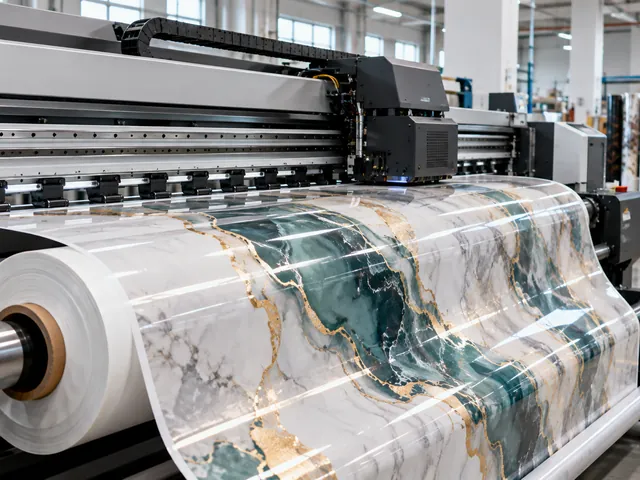
Custom floor decals, custom floor stickers and large custom floor decals are printed from your artwork on wide-format printers, laminated, then contour-cut. When ordering custom floor graphics or customizable floor stickers, specify:
- Size and shape; large floor decals and large floor stickers over about 1.2 m (4 ft) may need panels.
- Floor type and condition.
- Duration: one-day event, short promotion or long-term.
- Laminate texture and any slip-resistance standard your venue requires.
- Removable adhesive for rented venues.
Sign shops make floor decals from printable vinyl and a floor laminate; single-color shapes and lettering can be plotter-cut from colored vinyl. Our graphic and signage films include cutting vinyl in 80–200 micron and 0.61 m or 1.22 m widths, and our guide on how to make vinyl stickers and decals explains printing and cutting.
Stair riser stickers and peel and stick stair risers
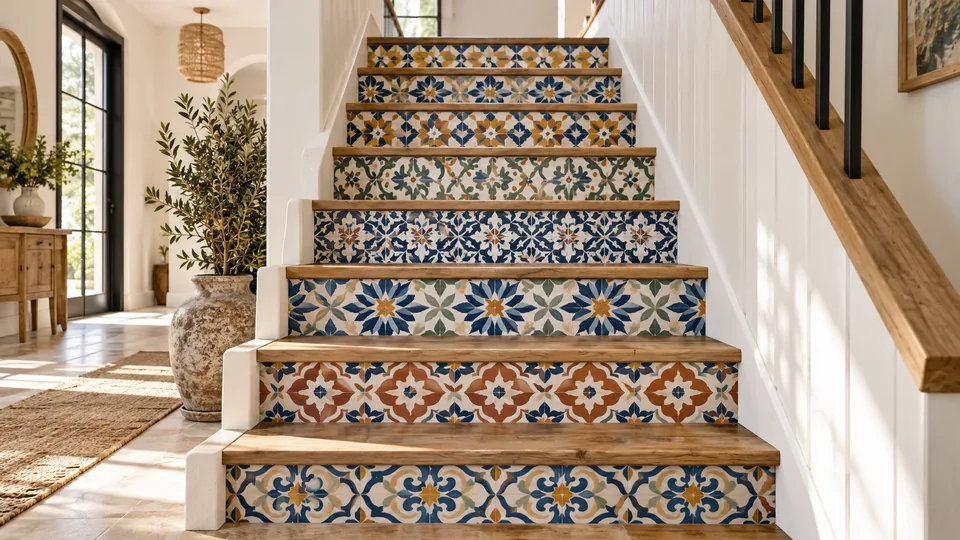
Stair riser stickers (also called stair stickers, stairs decals for the riser, staircase stickers or stickers for stairs) are printed vinyl strips cut to fit the vertical face of each step. They are popular with Moroccan tile, wood and marble patterns because a plain staircase becomes a feature in an afternoon.
- Sizing: residential risers are commonly about 7–7.75 in (178–197 mm) tall and 36 in (914 mm) wide or more. Measure every riser; older stairs vary by several millimeters.
- Surface: painted or sealed wood and MDF work best. Sand and prime raw wood first.
- Risers only: peel and stick for stairs should go on risers, not treads, unless the product is a slip-rated tread film.
- Edges: start at the center and smooth outward, then press the top and bottom edges hard; shoes scuff the lower edge first.
A self-adhesive decorative film can also be cut into stair riser peel and stick strips from a roll, which is cheaper for long or unusual staircases.
For retailers, sign shops and installers
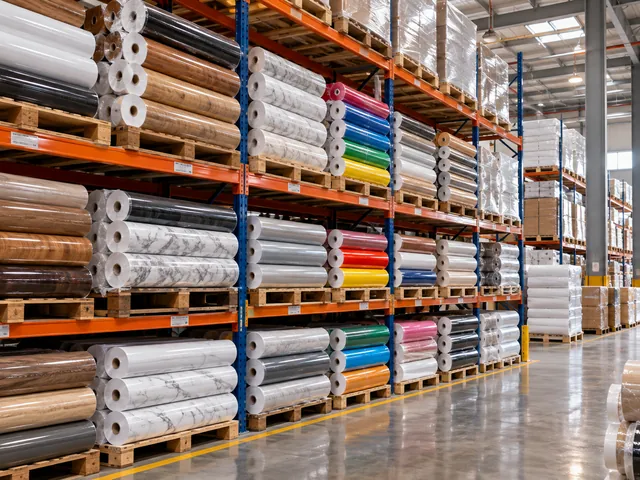
If you sell tile stickers, floor stickers or peel and stick stair riser decals online, most returns come from a mismatch between film and surface: wall-grade stickers sold for floors, or thin film used on textured tile. State the film thickness, finish and recommended surface clearly. We supply printed self-adhesive PVC film, floor rolls and cutting vinyl, with custom patterns and private-label packaging from 100 rolls and 15–25 days lead time.
Next step
Send us your target product (wall tile stickers, floor film or riser strips), sizes, patterns and quantities, and we will recommend a film and adhesive. Contact us for free A4 samples and a quote within 24 hours.
Frequently Asked Questions
Do tile stickers really work?
Tile stickers work well on smooth, sound glazed wall tile such as backsplashes and bathroom walls, where they can last several years indoors. They work less well on floors, textured tile or inside showers. Clean and degrease the tiles thoroughly, let them dry for 24 hours, and press every edge firmly for the best result.
Are tile stickers waterproof?
Most tile stickers are made from PVC film, which is waterproof, so they tolerate splashes, wiping and steam. Water can still get under the edges if they are not pressed down firmly or if they are installed inside a direct shower spray. Allow 24 to 72 hours before exposing new stickers to water.
Can you put tile stickers on a bathroom floor?
You can put tile stickers on a bathroom floor if the tiles are flat, the grout is shallow and the room has light traffic. Choose floor-grade stickers at least 0.2 mm thick with a textured, slip-resistant surface. Avoid wet-room floors and areas where water pools, because standing water weakens the adhesive.
What is the difference between floor decals and floor graphics?
Floor decals and floor graphics are largely the same thing: printed self-adhesive vinyl applied to a floor. Floor decals often means single shapes or logos, while floor graphics can mean larger printed areas for branding or wayfinding. Both need a clear textured overlaminate so the surface is slip-resistant and the print does not scuff.
How long do floor decals last?
Floor decals typically last from a single day for a party or event up to about 6 to 12 months in a retail store, depending on foot traffic, cleaning methods and the laminate used. Outdoor floor decals on concrete or asphalt usually last weeks to a few months. Removable adhesives allow clean removal afterward.
Are stair riser stickers durable?
Stair riser stickers are durable because the vertical riser is not walked on, so they often last several years. The bottom edge takes the most wear from shoe scuffs. Apply them to painted or sealed wood, press the top and bottom edges firmly, and do not use riser stickers on the treads.
Can you put peel and stick on stairs?
You can use peel and stick on stairs for the risers, which are the vertical faces, using printed vinyl strips cut to each riser's height and width. Treads, the horizontal surfaces you step on, need a slip-rated tread product instead, because standard decorative vinyl becomes slippery and wears through quickly under foot traffic.