Key takeaways
- Waterproof vinyl flooring is made entirely of PVC-based layers, so water cannot swell its core, but seams and edges can still let water reach the subfloor.
- Water resistant flooring such as most laminate tolerates spills for a limited time, while waterproof materials such as vinyl and porcelain tolerate standing water.
- Sheet vinyl is the most forgiving bathroom floor covering because it can cover a whole room with few or no seams.
- A wet dynamic coefficient of friction (DCOF) of 0.42 or higher is the usual benchmark for slip resistance on level interior floors that get wet.
- Taping a 60 × 60 cm plastic sheet to a basement slab for 24–48 hours is a simple test for rising moisture before installing vinyl.
Waterproof vinyl flooring is flooring made entirely of PVC-based layers, with no wood fiber core, so water cannot swell or delaminate it. Sheet vinyl, glue-down vinyl tile (LVT) and rigid-core click planks (SPC or WPC) are the main types. For bathrooms, sheet vinyl or tightly seamed LVT is safest; for kitchens and basements, rigid-core planks are the most popular choice.
The word "waterproof" on the box describes the plank or tile, not the finished floor. Water can still get through seams and around the edges and reach the subfloor. Below we compare the main waterproof flooring options, show which suit bathrooms, kitchens, basements and laundry rooms, and explain what to check when you buy or import vinyl flooring.
What is waterproof vinyl flooring?
Vinyl flooring is built from polyvinyl chloride (PVC) layers. A typical modern plank or tile has four layers: a clear wear layer on top, a printed decor film, a core and, often, an attached underlay. The wear layer protects against scratches and is measured in mil (1 mil = 0.001 in = 25.4 micron). Residential products typically have 6–12 mil (0.15–0.3 mm) wear layers; 20 mil (0.5 mm) or more is usual for light commercial use.
The core decides how a product reacts to water:
- SPC (stone plastic composite): limestone powder and PVC. Rigid, dense and dimensionally stable; the most common core for waterproof LVP.
- WPC (wood plastic composite, or foamed PVC): lighter and softer underfoot; also waterproof despite the name.
- Flexible PVC: used in glue-down LVT, sheet vinyl and peel-and-stick tiles.
Waterproof vs water resistant flooring
Water resistant flooring tolerates spills if they are wiped up within a set time, often 24–72 hours, but can be damaged by standing water. Most laminate waterproof flooring and water resistant wood flooring fall here: they have a fiberboard or plywood core with a water-repellent coating and sealed joints. A fully PVC vinyl floor, porcelain tile and rubber are waterproof in the material sense. If a floor may see a flooded tub, a leaking dishwasher or a damp basement slab, choose a waterproof material.
Waterproof flooring options compared
This table compares the waterproof flooring options people most often weigh up for wet rooms. Costs are relative and vary widely by market.
| Flooring | Water performance | Seams | DIY difficulty | Relative cost | Best rooms |
|---|---|---|---|---|---|
| Sheet vinyl | Waterproof material; few or no seams | Fewest; often one piece per room | Moderate (large, heavy rolls) | Low | Bathrooms, laundry rooms, kitchens |
| Rigid-core click LVP/LVT (SPC, WPC) | Waterproof planks; seams can let water through to the subfloor | Many; tight click joints | Easy | Low to medium | Kitchens, basements, whole-home |
| Glue-down LVT | Waterproof; adhesive limits water travel under seams | Many; butted | Moderate | Low to medium | Bathrooms, commercial, kitchens |
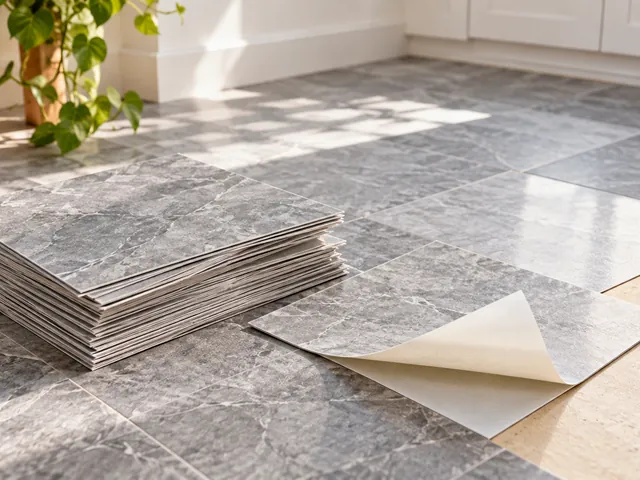
| Peel-and-stick vinyl tile or roll | Waterproof surface; seams vulnerable | Many | Easiest | Lowest | Small bathrooms, laundry rooms, rentals |
| Ceramic or porcelain tile | Waterproof tile; grout needs sealing | Grout lines | Hard | Medium to high | Showers, bathrooms, kitchens |
| Linoleum (lino) | Water resistant; natural linseed material | Sheet or tiles | Moderate | Medium | Kitchens, low-moisture bathrooms |
| Waterproof laminate | Water resistant for a rated time | Click joints | Easy | Low to medium | Kitchens, powder rooms |
| Rubber and interlocking tiles | Waterproof; drains through joints | Many | Easy | Low to medium | Basements, gyms, garages |
For a detailed comparison of the older resilient floors, see sheet vinyl vs vinyl tile vs linoleum.
What is the best flooring for bathrooms?
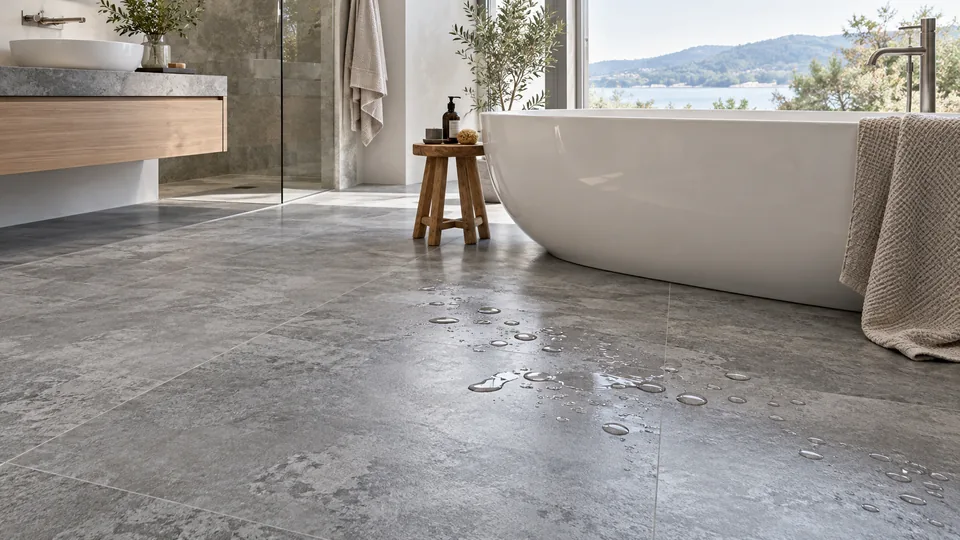
The best flooring for bathrooms is waterproof, slip resistant when wet and has as few seams as possible near the tub, shower and toilet. In practice that means sheet vinyl, glue-down vinyl tile or porcelain tile. Rigid-core click vinyl works in bathrooms too, provided the perimeter is sealed with flexible silicone and the toilet flange area is caulked.
- Sheet vinyl and bathroom lino flooring: one-piece coverage makes it the most forgiving bathroom floor covering. Note that true linoleum is water resistant rather than waterproof, so many "lino" floors sold today are actually vinyl sheet.
- LVT bathroom flooring: realistic stone and wood looks, warmer than tile and quieter underfoot.
- Porcelain tile: the standard for shower floors and wet rooms; choose a textured or matte tile for grip.
- Peel-and-stick vinyl: the easiest bathroom flooring to install and an inexpensive option for a small bathroom or a rental update, but not for shower floors.
Non slip bathroom flooring and anti slip tiles
Slip resistance matters more than looks in a bathroom. Tile and vinyl makers commonly publish a wet dynamic coefficient of friction (DCOF); 0.42 or higher is the usual benchmark for level interior floors that get wet. Matte, embossed and textured surfaces grip better than polished ones, and small tiles with more grout lines give extra traction in a shower. Non slip vinyl flooring and anti slip vinyl tiles add an embossed or grit-filled wear layer for the same reason.
Bathroom floor tile ideas
Popular bathroom flooring ideas in vinyl and tile include:
- Bathrooms with white floor tiles, such as hexagon or penny mosaics, paired with darker grout.
- Marble look waterproof vinyl flooring in 12 × 24 in (30 × 60 cm) tiles for a modern bathroom.
- Black and white checkerboard or encaustic-style patterns for cool bathroom flooring with character.
- Pink floor tiles for bathrooms, terrazzo and other unique bathroom floor tile in soft colors.
- Neutral bathroom floor tile in grey or beige running from floor to wall, using the same tile floor and wall for a seamless look.
Avoid using vinyl flooring for shower walls or a vinyl shower floor unless the product is specifically rated for continuous water exposure. Standard vinyl floor tiles and tile sheets for shower walls are different products, and wall panels need a waterproof backer behind them.
What is the best kitchen flooring?
The best kitchen flooring resists water, grease, dropped pans and constant foot traffic, and is comfortable to stand on. Rigid-core vinyl plank is now one of the most popular kitchen flooring choices because it is waterproof, warmer than tile and installs over most existing floors. Porcelain and ceramic kitchen floor tile is the most durable kitchen flooring for heavy use but is harder underfoot and colder.
Other kinds of kitchen flooring to consider:
- Sheet vinyl: low cost kitchen flooring with no seams to trap crumbs.
- Waterproof laminate: crisp wood looks, but treat it as water resistant.
- Linoleum: natural, durable and repairable, needs periodic sealing.
Kitchen floor plan and layout tips
Your kitchen floor plan affects which flooring looks best. In a galley or small kitchen, run planks along the longest wall to make the room feel longer. In an open-plan layout, continue the same waterproof flooring from kitchen to living area to avoid thresholds. Fit flooring before cabinets or, if cabinets stay, under the dishwasher and range opening so appliances can be pulled out. A washable vinyl kitchen mat or vinyl runner mat in front of the sink protects the most-used area.
Vinyl flooring for basements
Basements are below grade, so moisture comes from the concrete slab itself, not just spills. Vinyl tile flooring and rigid-core vinyl for basements are popular because they are unaffected by damp. Interlocking basement floor tiles, waterproof rubber flooring rolls and raised subfloor panels are alternatives over slabs that stay damp.
Before installing, tape a 60 × 60 cm (2 × 2 ft) sheet of plastic to the slab for 24–48 hours. Condensation under the sheet means moisture is rising through the concrete, and a vapor barrier or a floating floor with an attached underlay is needed. Glue-down and peel-and-stick tiles need a dry, clean and flat slab; our guide to subfloor preparation for peel-and-stick and glue-down vinyl covers moisture testing and leveling.
Laundry rooms, outdoor areas and other wet spaces
Vinyl flooring for a laundry room should be fully waterproof and run under the washer, with a drip tray if the machine is on an upper floor. Sheet vinyl or glue-down vinyl tile is ideal; peel-and-stick tiles work if the floor is sealed at the perimeter.
Waterproof outdoor flooring is a different category. Indoor vinyl is not designed for UV, freezing or standing rain, so for patios and steps use non slip outdoor tiles such as textured porcelain, interlocking deck tiles or outdoor-rated vinyl decking membranes. In hospitals and commercial kitchens, specified safety flooring with a certified slip rating is required. For more on those situations, read whether peel-and-stick tiles work outdoors, in garages or commercial spaces.
How do you install waterproof vinyl flooring in a bathroom?
These steps cover peel-and-stick or glue-down vinyl tile, the most common DIY bathroom floor tile project.
- Remove the toilet and baseboards. Turn off the water, drain the tank and lift the toilet; plug the drain opening with a rag.
- Prepare the subfloor. Existing smooth vinyl, sealed tile or plywood is fine. Fill grout lines and dips with a leveling compound, then sand and vacuum.
- Acclimatize the tiles. Leave them in the room for 24–48 hours at 18–27 °C (65–80 °F).
- Find the center and dry-lay a row. Snap chalk lines and dry-lay tiles so cut pieces at the walls are at least half a tile wide.
- Prime if required, then lay tiles. Press each tile firmly; roll the floor with a 45 kg (100 lb) floor roller or a hand roller to reach full bond.
- Cut around the flange and tub. Use a paper template and a utility knife; leave a 3–6 mm (1/8–1/4 in) gap at the tub and walls.
- Seal the perimeter. Run a bead of clear silicone along the tub, walls and around the toilet flange, then reinstall the toilet with a new wax ring.
Buying and importing waterproof vinyl flooring
Retailers, contractors and online sellers sourcing waterproof vinyl flooring should specify total thickness, wear-layer thickness, core type, slip rating, adhesive type and test reports for each SKU. Clearance and on-sale stock is often older or a discontinued pattern; check the wear layer and the production date before buying waterproof vinyl flooring clearance in bulk.
Our self-adhesive floor film range covers the decorative, light-traffic end of the market: embossed, skid-resistant PVC floor films 0.25–0.3 mm thick in 0.61 m and 1.22 m × 50 m rolls, plus a 350+ micron waterproof hexagon bathroom flooring film on 0.61 m × 3 m rolls. These suit rentals, pop-up retail and quick bathroom or laundry updates rather than high-traffic commercial floors. Our peel-and-stick vinyl flooring import checklist lists what to confirm before ordering.
Next step
Send us the room type, pattern, roll width and quantity you need, and we will reply with a quotation within 24 hours. Free A4 samples are available so you can test adhesion and slip on your own subfloor. Request samples or a quote.
Frequently Asked Questions
Is vinyl flooring really waterproof?
Fully PVC vinyl flooring, including sheet vinyl, LVT and SPC or WPC rigid-core planks, is waterproof as a material: water does not swell or damage it. The installed floor is only as waterproof as its seams and edges, so in bathrooms and laundry rooms seal the perimeter with silicone and keep seams tight.
What is the best waterproof flooring for a bathroom?
Sheet vinyl is usually the best waterproof flooring for a bathroom because it covers the room with few or no seams. Glue-down vinyl tile and porcelain tile are also excellent. Choose a matte or textured surface with a wet DCOF of 0.42 or higher, and seal around the tub and toilet.
What is the difference between waterproof and water resistant flooring?
Waterproof flooring, such as vinyl, porcelain and rubber, is unaffected by standing water. Water resistant flooring, such as most laminate and engineered wood, has a moisture-sensitive core protected by coatings and sealed joints, and tolerates spills only if they are wiped up within a rated time, often 24 to 72 hours.
Is laminate waterproof flooring good for kitchens?
Laminate marketed as waterproof is generally water resistant: it handles everyday spills if wiped up but its fiberboard core can swell if water sits on it or gets under the joints. It works in kitchens with careful use, but rigid-core vinyl plank is the safer choice where leaks are possible.
What flooring is best for a basement?
Rigid-core vinyl plank, vinyl tile and interlocking rubber or plastic tiles are the most common basement choices because damp does not damage them. Test the concrete slab for moisture first, use a vapor barrier where needed, and avoid wood-based floors such as solid hardwood or standard laminate below grade.
Is lino flooring waterproof?
True linoleum, made from linseed oil, wood flour and jute, is water resistant rather than fully waterproof and needs sealing in wet areas. Many floors called lino today are actually vinyl sheet, which is waterproof. Check the product specification to see which material you are buying before using it in a bathroom.
Can you put peel and stick vinyl tiles in a bathroom?
Yes, peel-and-stick vinyl tiles work on bathroom floors if the subfloor is clean, dry and smooth, the tiles are rolled firmly and the perimeter is sealed with silicone. They are a good, inexpensive option for small bathrooms and rentals, but are not suitable for shower floors or continuously wet areas.
How thick should the wear layer be on vinyl flooring?
For most homes, a wear layer of 12 mil (about 0.3 mm) is a good balance of durability and price; 6 to 8 mil suits low-traffic rooms. Busy kitchens, homes with pets and light commercial spaces benefit from 20 mil (about 0.5 mm) or more.