Key takeaways
- Peel-and-stick vinyl flooring works well on smooth, dry, primed subfloors in light to moderate traffic rooms, and fails mainly because of poor preparation or moisture.
- Typical retail peel-and-stick vinyl tiles are 1.2–2 mm thick with a thin wear layer, while glue-down LVT is usually 2–3 mm with a thicker wear layer for heavier traffic.
- Self-adhesive vinyl is usually the cheapest flooring to install because it needs no grout, mortar, underlayment or specialist labor, only a knife, a straightedge and a roller.
- Vinyl tile that looks like wood, marble, slate or concrete is printed on a film beneath a clear wear layer, so the wear layer, not the total thickness, sets scratch resistance.
- Thin self-adhesive PVC floor film of 0.25–0.35 mm suits rentals, pop-up shops, event flooring and quick refreshes over smooth existing floors rather than heavy commercial traffic.
Yes, peel-and-stick vinyl flooring really works, as long as it goes onto a smooth, clean, dry subfloor in a room with light to moderate traffic. Self-adhesive vinyl tiles are the cheapest and fastest floor most people can install themselves, but they are thinner than glue-down LVT or ceramic tile, so preparation and expectations matter.
This honest guide explains how peel-and-stick tiles compare with other vinyl tile flooring, what they cost, which rooms suit them, the wood, stone and marble looks available, and the mistakes that make them lift. There is also a section for retailers and installers buying in volume.
Do peel-and-stick floor tiles really work?
They work when three conditions are met: the subfloor is flat and sealed, the room stays within a normal temperature range, and the floor does not take heavy rolling loads. Under those conditions a quality self adhesive vinyl floor tile can last many years in a bedroom, hallway, laundry room or rental kitchen.
They fail for predictable reasons:
- Dust or a porous subfloor. The pressure-sensitive adhesive grips the dust, not the floor, and corners curl.
- Moisture from below. Damp concrete softens the adhesive and tiles slide or bubble.
- Uneven or textured floors. Grout lines and ridges show through and edges lift where tiles bridge a gap.
- Temperature swings. Direct sun through a patio door or an unheated room makes vinyl expand and shrink, opening gaps.
- Heavy point loads. Furniture without pads, rolling office chairs and appliances dent thin tiles.
Almost every failure above is a preparation issue. Our guide to subfloor preparation for peel-and-stick flooring covers leveling, moisture testing and primers.
Peel-and-stick vs LVT flooring vs sheet vinyl vs ceramic tile
Vinyl flooring is made from polyvinyl chloride (PVC), a flexible plastic that is naturally water-resistant. The main resilient formats differ in thickness, wear layer and how they are fixed.
| Floor type | Typical thickness | Typical wear layer | Installation | Best for |
|---|---|---|---|---|
| Self-adhesive PVC floor film (rolls) | 0.25–0.35 mm | Printed, embossed top coat | Peel and stick over a smooth floor | Rentals, pop-ups, events, quick refreshes |
| Peel-and-stick vinyl tiles (e.g. 12x12 vinyl tile) | 1.2–2 mm | About 4–12 mil (0.1–0.3 mm) | Peel and stick, roll | Bedrooms, laundry, utility, budget kitchens |
| Sheet vinyl | 1.5–3 mm | Varies widely | Loose-lay, perimeter or full glue | Bathrooms, kitchens (few seams) |
| Glue-down LVT (luxury vinyl tile) | 2–3 mm | 12–20 mil (0.3–0.5 mm) | Pressure-sensitive glue on the subfloor | Kitchens, shops, offices |
| Rigid-core click LVP / LVT | 4–8 mm | 12–22 mil | Floating, snap and lock | Whole-home, uneven floors |
| Ceramic or porcelain tile | 7–12 mm | Glazed surface | Mortar and grout | Long-term kitchens and bathrooms |
LVT flooring stands for luxury vinyl tile, and LVP means luxury vinyl plank; "luxury" refers to the thicker build, realistic print and embossing, not to a specific material. A mil is one thousandth of an inch, or 25.4 microns. LVT tile flooring sits between budget tile and vinyl sheet flooring on one side and ceramic on the other, which is why it is often marketed as upscale vinyl flooring or luxury tile vinyl. For a closer comparison of plank formats, see peel-and-stick plank vs click-lock LVP vs glue-down.
What is the best vinyl flooring?
The best vinyl flooring is the one matched to the room and subfloor, not the thickest. A practical rule of thumb:
- Uneven floors or whole-home projects: rigid-core click plank, which floats and bridges small dips.
- Kitchens, shops and offices on a flat slab: glue-down LVT tile, because flooring with glue under every tile resists rolling loads and shifting.
- Bedrooms, laundry rooms, rentals and quick refreshes: adhesive vinyl tiles for the floor, or vinyl flooring with adhesive on the back in roll form.
- Wet rooms with few seams: sheet vinyl, sometimes called floor vinyl or vinyl tile sheet flooring when printed with a tile pattern.
How much does vinyl flooring cost?
Vinyl flooring cost depends on format, thickness and labor. In many US markets, peel-and-stick vinyl tiles typically sit at the bottom of the price range per square foot, sheet vinyl and glue-down LVT in the middle, and rigid-core plank and ceramic tile higher. The cost of vinyl flooring and installation together is where peel-and-stick wins most clearly, because a DIYer can do the whole job.
- Materials: peel-and-stick tiles and film are usually the cheapest vinyl flooring per square foot; thicker LVT costs several times more.
- Installation: professional fitting of LVT or tile often costs as much as the material again; peel-and-stick needs only a utility knife, a straightedge and a roller.
- Preparation: leveling compound, primer and old floor removal can add as much as the tiles themselves on a poor subfloor.
- Waste: add 5–10% for cuts, or 10–15% for diagonal layouts and patterned tiles.
What is the cheapest flooring to install?
If you are looking for cheap flooring that is still a real hard floor, cheap vinyl flooring in peel-and-stick form is the usual answer. Among durable, hard-surface options, self-adhesive vinyl is usually the cheapest flooring to install, followed by roll-out sheet vinyl and floating laminate. Affordable flooring and inexpensive flooring options for temporary needs include vinyl floor mats, interlocking foam floor tiles and self-adhesive floor film. For inexpensive flooring that still looks good, spend the savings on preparation: a flat, primed subfloor makes cheap floor tiles look far more expensive. Be wary of bargain vinyl flooring with no stated wear layer or thickness; ask for the specification before you buy.
Vinyl tile that looks like wood, stone and marble
Vinyl tile flooring is printed: a high-resolution photograph of wood, stone or ceramic sits under a clear wear layer, with embossing to mimic grain or texture. That is why the same product family can cover nearly every style.
- Wood tiles and wood grain tile: tile flooring that looks like wood comes as ceramic floor tile that looks like wood (porcelain planks) or as vinyl. A ceramic wood tile floor is the choice for wet rooms and heated floors. Vinyl flooring that looks like wood is warmer and softer underfoot; ceramic wood tile is harder and colder but suits wet rooms long term.
- Stone and slate: stone vinyl flooring and slate look vinyl flooring use deep embossing so the surface feels textured and less slippery.
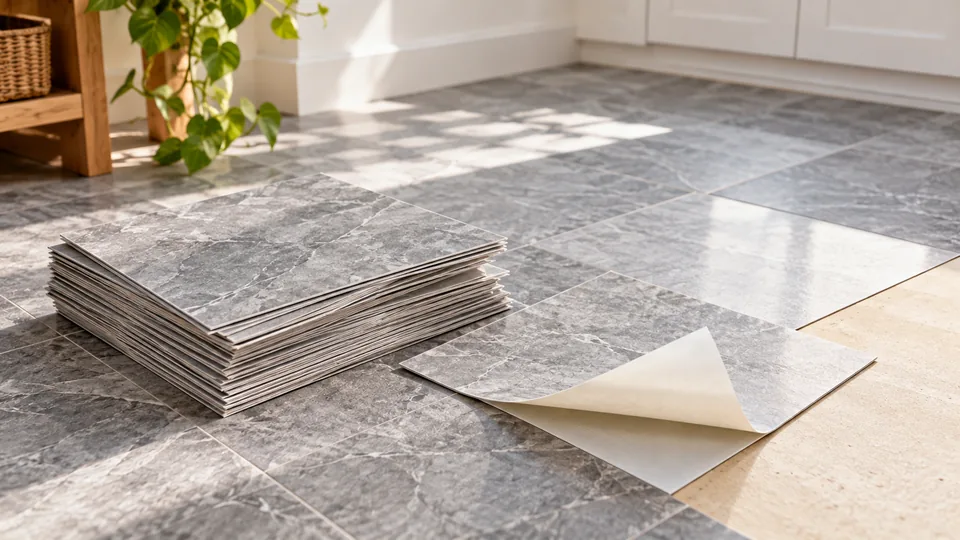
- Marble: marble look vinyl flooring and peel and stick marble tiles suit bathrooms and entryways; a gloss finish looks more like polished stone, a matte finish hides scratches.
- Patterned and retro: black and white check floor tiles, hexagon and Moroccan mosaic vinyl tile, brick floor tile and terrazzo prints are popular for kitchens and cafes.
- Classic squares: 12x12 vinyl floor tiles remain the standard peel-and-stick size, with 18x18 and 12x24 formats for vinyl flooring that looks like tile in larger spaces.
- Concrete and solid colors: concrete look vinyl flooring, white vinyl flooring and black vinyl flooring suit modern rooms and shops.
Our 3D self-adhesive PVC vinyl floor tiles cover hexagon, checkerboard and mosaic designs; mosaic and checkerboard prints are among the most popular tile designs for kitchens and cafes.
Is vinyl flooring good for kitchens and bathrooms?
Vinyl is a good flooring for kitchens and bathrooms because the surface is waterproof, easy to clean and softer underfoot than ceramic tile. The weak point of tiles is the seams: water that sits on the floor can creep between tiles and loosen the adhesive.
- Kitchens: when choosing floor tiles for kitchen use, remember that vinyl tile flooring in a kitchen should be well rolled at seams and protected at the sink and dishwasher with a vinyl floor mat. Glue-down LVT in a kitchen handles heavy traffic better than thin tiles.
- Bathrooms: sheet vinyl or large tiles mean fewer seams. Around a toilet, cut tiles precisely, seal the perimeter with clear silicone and avoid standing water.
- Living rooms and bedrooms: floor tiles for the living room, lounge room floor tiles and bedroom floor tiles see dry traffic, so peel-and-stick performs well; use felt pads on furniture.
- Entryways and foyers: grit acts like sandpaper, so add a door mat and choose a thicker wear layer.
How long do peel-and-stick tiles last and how durable are they?
Vinyl tile durability depends mainly on the wear layer, the subfloor and the traffic. On a well-prepared floor in a home, quality peel-and-stick tiles typically last several years to a decade; on dusty or damp concrete they can lift within weeks.
- Scratch resistance: a thicker wear layer and a matte or embossed finish make scratch resistant flooring; high gloss vinyl flooring shows scratches sooner.
- Slip resistance: embossed or textured vinyl tile gives better grip than smooth gloss, which matters in kitchens and bathrooms.
- Dents: use wide furniture cups under heavy pieces and a chair mat under rolling chairs.
- Fading: long exposure to direct sun can fade prints; use blinds or UV window film near large glass doors.
What is the best adhesive for vinyl flooring?
Peel-and-stick tiles carry a factory-applied pressure-sensitive adhesive, so the best glue for vinyl flooring of this kind is usually none, just a floor primer on porous surfaces. If tiles lift at doorways or in kitchens, an acrylic based adhesive for vinyl flooring or a pressure sensitive floor adhesive troweled thinly under them adds holding power. Dry-back LVT always needs a pressure-sensitive floor glue spread on the subfloor. A wood floor adhesive, or any floor adhesive for wood floors, is a different chemistry made for timber movement and should not be used under vinyl.
The quick installation sequence for self adhesive vinyl floor tiles is:
- Clean, level and prime the subfloor, and let tiles acclimate in the room for 24–48 hours.
- Snap two center lines at right angles and dry-lay a row each way to balance the cuts at the walls.
- Peel the backing and lay the first tile in the center corner, pressing from the middle outward.
- Butt each tile tightly to its neighbors, checking that arrows on the back point the same way.
- Cut edge tiles with a utility knife and straightedge, scoring and snapping thin tiles.
- Roll the whole floor with a heavy roller, paying extra attention to seams.
Some vinyl tiles are groutable: you leave a 3 mm (1/8 in) gap and fill it with a flexible vinyl tile grout, which looks more like ceramic and seals seams. Standard peel-and-stick tiles are designed to butt together without grout. Step-by-step details are in our guide on how to install peel-and-stick floor tiles.
Can you use vinyl floor tiles on walls?
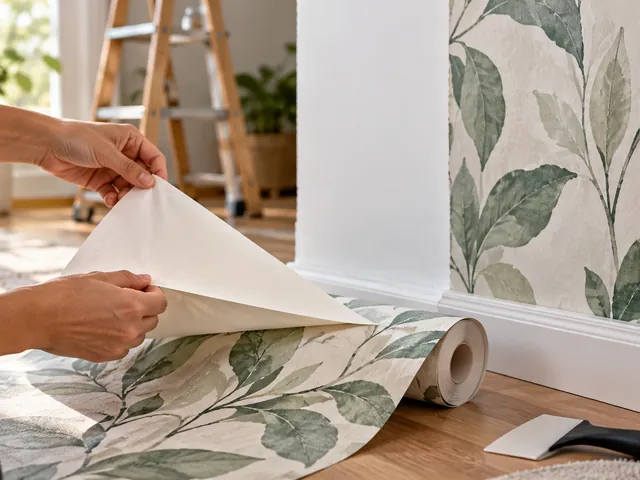
Yes, thin vinyl flooring on walls is a popular way to make an accent wall, a backsplash or a wainscot, and wood vinyl flooring that sticks on the wall gives a plank-wall look without carpentry. Use it on smooth, painted, fully cured walls and press firmly. Heavy tiles may need a bead of construction adhesive on vertical surfaces, and behind a stove choose a heat-resistant kitchen film instead.
Buying self-adhesive vinyl flooring in volume
Self-adhesive film is also the usual answer to temporary flooring needs: event flooring, trade-show stands, retail pop-ups and short-let rentals where the floor must look finished for months rather than decades, as in our retail pop-up flooring case study. Low cost flooring options like this also suit landlords who need a durable, slip resistant flooring surface between tenants.
For retailers, e-commerce sellers and contractors, self-adhesive PVC floor film is an easy line to stock: it is light, ships in rolls and covers temporary and rental jobs that thicker floors do not suit. Our peel-and-stick PVC vinyl floor tile rolls are 0.3 mm thick, embossed and skid-resistant, in 0.61 m and 1.22 m widths on 50 m rolls, with CE and SGS test reports, in wood, checkerboard, stone, concrete and diamond designs. Stock patterns ship from 1 roll in 7–10 days; custom designs and private-label packaging start at 100 rolls with 15–25 days lead time.
Next step
Send us the patterns you are interested in, the intended rooms or project type and an estimated quantity, and we will recommend a format and thickness. Free A4 samples let you test the adhesive and print quality on your own floor. Request samples or a quotation through our contact page.
Frequently Asked Questions
How long do peel and stick floor tiles last?
On a flat, clean, primed and dry subfloor in a home, quality peel-and-stick vinyl tiles typically last from several years to around a decade. The wear layer thickness, the traffic level and moisture from below matter most. Tiles laid over dusty or damp concrete, or in rooms with large temperature swings, can lift within weeks.
Is vinyl flooring better than tile?
Vinyl flooring is cheaper, warmer, softer underfoot and much easier to install than ceramic tile, and it is waterproof on the surface. Ceramic or porcelain tile is harder, more heat resistant and longer lasting, especially in wet areas and high traffic. Choose vinyl for budget and speed, and tile for a floor meant to last decades.
What is the cheapest flooring option?
Self-adhesive vinyl tiles or floor film are usually the cheapest hard flooring to buy and install, because no grout, mortar, underlayment or professional labor is needed. Roll-out sheet vinyl and floating laminate come next. For short-term needs, vinyl floor mats and interlocking foam tiles are even cheaper but less durable.
Can you put peel and stick tiles over existing vinyl flooring?
Yes, if the existing vinyl is a single layer, firmly bonded, flat and free of wax. Clean and degloss it with a scuff pad, repair tears, and fill any deep embossing with a skim compound so the pattern does not show through. Cushioned or loose vinyl should be removed before installing peel-and-stick tiles.
What is LVT flooring?
LVT stands for luxury vinyl tile, a thicker vinyl flooring, usually 2 to 8 millimeters, with a realistic printed layer and a clear wear layer of roughly 12 to 22 mil. It comes in glue-down and click-lock versions and imitates stone, ceramic or wood. LVP, luxury vinyl plank, is the same construction in plank shape.
Is peel and stick vinyl flooring waterproof?
The vinyl surface itself is waterproof, so spills wipe off easily. The seams between tiles are the weak point: water left standing on the floor can creep between tiles and weaken the adhesive. In bathrooms and kitchens, use large tiles or sheet formats, roll seams firmly, seal edges with clear silicone and wipe spills promptly.
Do peel and stick tiles need grout?
Standard peel-and-stick vinyl tiles do not need grout; they are designed to butt tightly together. Some groutable vinyl tiles are made to be laid with a gap of about 3 millimeters, filled with a flexible vinyl tile grout, which gives a ceramic look and helps seal the seams. Never use rigid cement grout on vinyl.
Can you use floor tiles on walls?
Yes, thin vinyl floor tiles and planks can be used on walls for accent walls, wainscoting and backsplashes. The wall must be smooth, painted and fully cured, and tiles should be pressed firmly. On vertical surfaces heavier tiles may need a bead of construction adhesive, and areas directly behind a stove need a heat-resistant material.