Key takeaways
- Peel-and-stick wallpaper uses a pressure-sensitive adhesive and usually comes off dry when peeled slowly at an angle of 30 degrees or less.
- Traditional pasted wallpaper is removed by scoring, soaking with hot water or stripper solution for 10 to 15 minutes, or steaming, then scraping at a low angle.
- Drywall needs minimal water and a rounded plastic scraper, because tearing its paper face causes bubbling when the wall is painted.
- You can paint over wallpaper only if it is well bonded and not vinyl-coated, and it must be primed with an oil-based or shellac-based primer first.
- Removable wallpaper comes off most cleanly when it uses a removable acrylic adhesive, a film of at least 0.12 mm, and is installed on cured, primed paint.
How to remove wallpaper depends on what is on the wall, and the best way to remove wallpaper differs by type. Peel-and-stick removable wallpaper lifts off dry at a low angle in minutes. Traditional pasted wallpaper needs scoring, soaking with a wallpaper stripper solution or hot water, or steaming, then scraping. Go slowly on drywall to avoid tearing it.
This guide explains how to remove old wallpaper and how to take off wallpaper of every common type, which wallpaper removal tool and solution to use, how professionals remove wallpaper, what it typically costs, and when you can paint over wallpaper instead. At the end there is advice for choosing removable wallpaper that will come off cleanly next time.
First, identify what kind of wallpaper you have
Before you buy a wall paper remover or rent a steamer, spend five minutes testing a corner. Lift an edge with a putty knife and pull slowly. What happens tells you which method to use, and whether easy wallpaper removal is realistic or you are in for a weekend of scraping.
| Wallpaper type | How to recognize it | Best removal method | Typical effort (12 × 12 ft room) |
|---|---|---|---|
| Peel-and-stick (self-adhesive PVC) | Thin vinyl film, no paste, pressure-sensitive adhesive on the back | Peel dry at 30° or less; warm stubborn spots with a hairdryer | 1–2 hours |
| Strippable (solid vinyl) | Whole sheet peels off dry, often leaving no backing | Peel dry, then wash off any paste | 2–4 hours |
| Peelable (vinyl face, paper backing) | Vinyl face peels off but a paper layer stays on the wall | Peel the face, then soak and scrape the backing | 4–6 hours |
| Traditional paper or non-woven | Tears in small pieces, nothing peels cleanly | Score, soak with stripper solution, or steam, then scrape | 1–2 days |
| Painted-over wallpaper | Paint film on top, seams visible under the paint | Score heavily, steam, scrape; expect repairs | 2+ days |
Also check the wall underneath. Knock on it: drywall sounds hollow, plaster sounds solid. Plaster tolerates water and scraping far better than drywall, which is the main reason removing wallpaper from drywall needs more care.
Tools for stripping wallpaper
A basic wallpaper removal kit is inexpensive. Most of these items are already in a typical toolbox:
- Scoring tool: a round wall paper remover tool with small wheels that perforate the surface so liquid can reach the paste. Use light pressure; deep scoring marks drywall.
- Wide scraper or 3–6 in (75–150 mm) putty knife: a flexible plastic or rounded-corner steel blade. Sharp corners gouge walls.
- Pump sprayer or sponge for applying hot water or stripper solution.
- Wallpaper steamer: a water tank, hose and steam plate. Rental is common; buying one makes sense if you strip several rooms.
- Drop cloths, painter's tape and trash bags: wet paper is heavy and sticky.
- Hairdryer or heat gun on low for peel-and-stick wallpaper and vinyl.
- Sponge, bucket and mild detergent for washing off paste residue at the end.
Turn off power to the room's outlets and switches and remove the cover plates before using water or steam near them.
How to remove wallpaper step by step
This is how to remove wallpaper from a wall when it is traditional pasted paper, the hardest case. For peel-and-stick, skip to the next section.
- Prepare the room. Move furniture out, lay drop cloths, tape plastic along the baseboards and shut off electricity to wall outlets.
- Test a corner. Try a dry peel first. If the face layer comes off, peel as much as possible dry; it saves time and water.
- Score the surface. Run a scoring tool over the wall in light circles so the solution can penetrate. Skip this step on drywall if the paper is already porous.
- Apply hot water or stripper solution. Spray or sponge an area about 1 m² (10 sq ft) at a time and let it soak 10–15 minutes. Do not flood the wall.
- Scrape at a low angle. Hold the scraper at 20–30° and push under the softened paper. If it resists, wet it again rather than forcing it.
- Steam stubborn areas. Hold the steam plate on one spot for 15–30 seconds, then scrape immediately while the paste is soft.
- Wash off the paste. Paste left on the wall will crack new paint and stop new wallpaper from bonding. Wash with warm water and a little detergent until the wall no longer feels slippery.
- Repair and prime. Let the wall dry for at least 24 hours, patch gouges with joint compound, sand, and apply a primer-sealer before painting or re-papering.
Does peel and stick wallpaper come off easily?
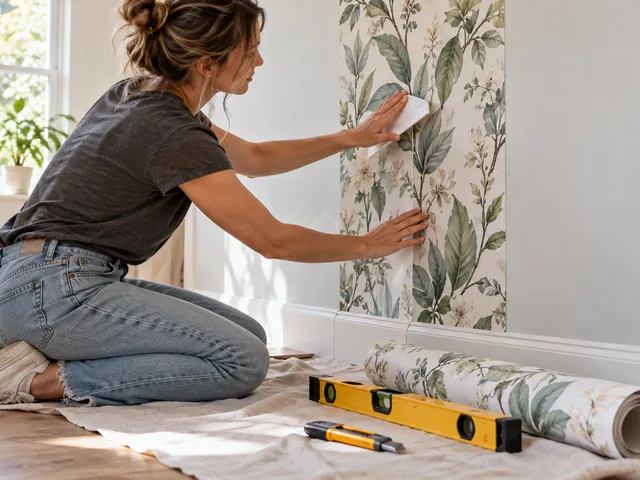
Usually, yes. Self adhesive removable wallpaper, often sold as removable wallpaper peel and stick, uses a pressure-sensitive adhesive (PSA), a permanently tacky layer that holds by contact rather than drying hard like paste. On a sound, painted wall it releases when you peel slowly.
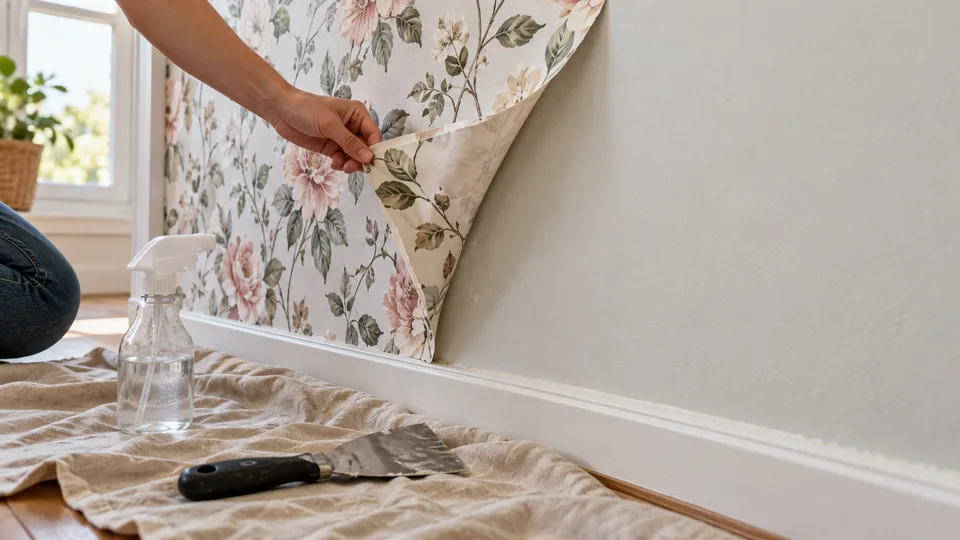
- Start at a top corner and pull the panel back on itself at an angle of 30° or less, close to the wall.
- Pull slowly. Fast peeling raises the force on the paint and can lift it.
- If a section resists, warm it with a hairdryer for 20–30 seconds to soften the adhesive.
- Remove any leftover adhesive with warm soapy water; our guide to removing sticker residue and adhesive covers stubborn spots.
Problems usually come from the wall, not the wallpaper. Flat paint applied less than about four weeks before installation, unprimed new drywall, or a cheap paint with poor adhesion can come away with the film. Satin or eggshell paint over a proper primer is the safest base. Products left up for many years in a sunny room can also bond harder, so allow extra time.
How to remove wallpaper from drywall without damaging walls
Knowing how to strip wallpaper from drywall matters because drywall is gypsum wrapped in paper. If you soak it too long or scrape too hard, you tear that paper face and expose the brown layer underneath, which then bubbles when painted. To strip wallpaper from drywall safely:
- Use the least water that works, and work in small sections.
- Score lightly or not at all, because the wheels can perforate the drywall face too.
- Choose a plastic scraper with rounded corners.
- If the drywall was never primed before papering, the paste may be bonded directly to its paper face. In that case consider leaving the backing layer, sealing it and skim-coating rather than stripping.
- Seal any torn areas with an oil-based or shellac-based primer before applying joint compound; water-based products make torn paper swell.
Wallpaper stripper solution, steamer or vinegar: which works best?
There are three main ways to soften paste. The best way to remove old wallpaper is often a combination: solution for most of the wall, steam for problem areas.
| Method | How it works | Best for | Watch out for |
|---|---|---|---|
| Commercial wallpaper stripper solution | Enzymes or surfactants break down cellulose and starch paste | Large areas, layered paper, plaster walls | Follow dilution on the label; ventilate |
| Homemade wallpaper remover | Hot water with a little dish soap or fabric softener (roughly 1 part to 3–4 parts water) | Light jobs, porous paper | Slower than enzyme products |
| Vinegar solution to remove wallpaper | Hot water and white vinegar, about 1:1; mild acid softens paste | Small rooms, people avoiding chemical strippers | Smell; still needs scoring on vinyl faces |
| Stripping wallpaper with a steamer | Heat and moisture soften paste quickly | Painted-over or multiple layers, plaster | Burn risk; can over-wet drywall |
Using vinegar to remove wallpaper is popular because it is cheap and mild, but it is no faster than plain hot water on thick vinyl. Removing wallpaper with a steamer is the most effective method on plaster and painted-over paper. Wear gloves and long sleeves, and never hold the plate overhead without eye protection.
How do professionals remove wallpaper, and what does it cost?
Professionals follow the same steps but with better tools: commercial steamers, wide scrapers, enzyme strippers and a skim-coat finish at the end. They also price in wall repair, which is often the bigger part of the job.
The cost to remove wallpaper varies widely. In many US markets, professional removal is typically quoted per square foot of wall, often roughly $1–$4, with higher rates for multiple layers, painted-over paper or rooms needing extensive drywall repair. A small bathroom can take a full day; a large living room with original paper can take several. When you ask how much to remove wallpaper, get a quote that separates removal, repair and priming.
Can you paint over wallpaper?
You can paint over wallpaper, but only when the paper is well bonded, smooth and not vinyl-coated. It is a shortcut that makes any future removal much harder.
- Check every seam and edge. Glue down loose areas with seam adhesive.
- Clean the surface and let it dry.
- Prime with an oil-based or shellac-based primer. Water-based primer can soak the paper and cause bubbles.
- Skim seams with lightweight compound if you want them hidden, then sand and re-prime.
- Apply two coats of paint.
Do not paint over vinyl-faced paper, peel-and-stick film or wallpaper in bathrooms; paint does not adhere reliably to PVC, and humidity lifts the paper underneath. If you are tempted to paint over wallpaper in a rental, removing it is almost always the better choice.
Choosing removable wallpaper that comes off cleanly next time
Once your wall is bare, the easiest way to remove wallpaper in future is to install something designed to come off. The best removable wallpaper for renters, and removable wallpaper for apartments generally, has three properties: a removable-grade acrylic PSA, a film thick enough not to tear when peeled, and a smooth wall underneath. Our explainer on peel-and-stick wallpaper covers how long it lasts.
- Film thickness: peel-and-stick PVC wallpaper is typically 0.12–0.3 mm thick (about 5–12 mil). The most affordable removable wallpaper is usually the thinnest, and thinner film is more likely to stretch or tear on removal.
- Adhesive grade: ask for a removable acrylic adhesive, not a permanent one. Permanent grades suit furniture, not painted walls.
- Textured walls: removable wallpaper on textured walls bonds only on the high points. Light orange-peel texture is usually fine; knockdown or heavy texture needs a smooth skim coat first.
- Kitchens and bathrooms: removable wallpaper for a bathroom or kitchen should be a waterproof, mould-proof grade; see our guide to waterproof bathroom and kitchen wallpaper.
- Refrigerators and furniture: removable wallpaper for refrigerators works on smooth painted steel, but a thicker furniture film holds up better to handles and cleaning.
- Dorms and classrooms: removable wallpaper for dorm rooms and classrooms should be fire-retardant where the building requires it.
Color and pattern do not affect removal, so pick freely: black removable wallpaper and dark removable wallpaper for accent walls, white, beige or grey removable wallpaper for a quiet base, black-and-white or retro patterns, or a removable wallpaper mural or 3D removable wallpaper for a feature wall. Our self-adhesive wallpaper and floor films range covers all of these in PVC and XPE foam. Always order removable wallpaper samples and test them on your actual wall for a week before covering a room.
For retailers, landlords and installers
If you sell or install wallpaper for rental properties, the removal experience is what drives returns and reviews. Specify a removable adhesive, a film of at least 0.12 mm, and clear instructions to install on cured, primed paint. We supply self-adhesive wallpaper in 0.61 m × 3 m retail rolls and 0.61 m or 1.22 m × 50 m trade rolls, with waterproof, mould-proof and fire-retardant grades. See how a rental apartment project used removable wallpaper between tenancies.
Next step
If you are sourcing removable wallpaper for retail, rental or hospitality projects, contact us with the patterns, roll size and quantity you need. We send free A4 samples so you can run your own peel test on local wall paint, and we quote within 24 hours.
Frequently Asked Questions
What is the easiest way to remove wallpaper?
The easiest way to remove wallpaper is to try a dry peel first, because strippable and peel-and-stick wallpaper come off without water. If only the face layer peels, soak the remaining backing with hot water or a stripper solution for 10 to 15 minutes, then scrape it off with a wide plastic scraper held at a low angle.
Can you paint over wallpaper?
Yes, you can paint over wallpaper if it is firmly bonded, smooth and not vinyl-coated. Glue down loose seams, clean the surface, prime with an oil-based or shellac-based primer, then apply two coats of paint. Avoid it in bathrooms and on peel-and-stick film, and remember that painted wallpaper is much harder to remove later.
Does peel and stick wallpaper come off easily?
Peel-and-stick wallpaper usually comes off easily from a sound, primed and fully cured painted wall. Peel slowly from a top corner, pulling the panel back on itself at 30 degrees or less. Warm stubborn sections with a hairdryer. Fresh flat paint or unprimed drywall can lift with the film, so test a small area first.
Does vinegar remove wallpaper?
A vinegar solution can remove wallpaper. Mix hot water and white vinegar roughly one to one, score the paper so the liquid can reach the paste, then soak each section for about 15 minutes before scraping. It works well on porous paper but is slower than enzyme-based stripper solutions on vinyl-faced or painted-over wallpaper.
How do professionals remove wallpaper?
Professionals remove wallpaper by testing the paper type, scoring lightly, applying an enzyme stripper solution or using a commercial steamer, then scraping with wide blades. They wash off all remaining paste, repair torn drywall with a sealing primer and joint compound, and often finish with a skim coat so the wall is ready for paint or new wallpaper.
How much does it cost to remove wallpaper?
The cost to remove wallpaper professionally varies by region, wall condition and layers. In many US markets it is typically quoted per square foot of wall, often roughly one to four dollars, with higher prices for painted-over paper, several layers or extensive drywall repair. Ask for a quote that separates removal, repair and priming.
Is it hard to remove wallpaper from drywall?
Removing wallpaper from drywall is not hard but needs care, because soaking or aggressive scraping can tear the drywall's paper face. Use minimal water in small sections, score lightly, and use a rounded plastic scraper. If the paper face tears, seal it with an oil-based or shellac-based primer before patching with joint compound.
What is the best removable wallpaper for renters?
The best removable wallpaper for renters is a self-adhesive PVC film with a removable acrylic adhesive and a thickness of at least 0.12 mm, so it does not tear when peeled. Install it on smooth, primed paint that has cured for about four weeks, and test a sample on your wall for a week before covering a room.