Key takeaways
- Peel-and-stick vinyl tiles are designed for indoor floors and usually fail outdoors because of UV, heat, water and freeze-thaw cycles.
- Interlocking deck tiles, porcelain pavers and rubber tiles are the most practical outdoor flooring for concrete patios and balconies.
- Hot tire pickup makes self-adhesive vinyl unsuitable for garages, where interlocking polypropylene or PVC garage tiles perform better.
- Commercial grade vinyl flooring typically has a wear layer of 20 mil (0.5 mm) or more and is glued down or heat-welded.
- Self-adhesive floor film suits short-term or light-traffic commercial uses such as retail pop-ups, exhibition stands and showrooms.
Peel-and-stick vinyl tiles are made for indoor floors, so they are a poor choice for outdoor flooring and most garages: sunlight, rain, freezing and hot tires break down the adhesive within months. Outdoors, use interlocking deck tiles, porcelain pavers or rubber tiles. In garages, use interlocking plastic tiles. In commercial spaces, peel-and-stick works only for light-traffic or temporary projects.
Interlocking floor tiles, not adhesive ones, are the common thread in most outdoor and garage solutions. Below is why self-adhesive flooring struggles in each setting, what to use instead, and where thin vinyl floor film is still the smart, low-cost option, such as retail pop-ups, showroom displays and short-term office refreshes.
Can you use peel-and-stick tiles outdoors?
Not reliably. Peel-and-stick tiles use a pressure-sensitive adhesive (PSA), a soft acrylic or rubber layer that bonds when pressed. That adhesive is formulated for interior conditions, typically 10–35 °C (50–95 °F) with no standing water. Outdoors, four things go wrong:
- UV radiation fades the printed design and embrittles PVC within a season unless the film is UV-stabilized.
- Heat on a sunny patio can push surface temperatures above 60 °C (140 °F), softening the adhesive so tiles slide and curl.
- Water runs under seams, and on concrete it also rises from below, breaking the bond.
- Freeze-thaw cycles expand and contract the tile and slab at different rates, opening every joint.
A covered porch or enclosed sunroom is the only partly outdoor area where peel-and-stick sometimes survives, and only on a sealed, dry slab out of direct sun and rain.
What is the best outdoor flooring for patios and decks?
Good outdoor flooring drains, resists UV and stays slip-resistant when wet. These are the main patio flooring options:
| Option | Typical format | Install over | Pros | Watch for |
|---|---|---|---|---|
| Interlocking wood deck tiles | 12 × 12 in (30 × 30 cm) on plastic base | Concrete, pavers, flat roofs | Warm natural look, no tools, removable | Needs oiling; hardwoods like teak outdoor flooring last longest |
| Interlocking composite deck tiles | 12 × 12 in snap-together | Concrete, balconies | Low maintenance, no splinters | Can get hot in full sun |
| Porcelain pavers (exterior tile) | 60 × 60 cm, 20 mm (3/4 in) thick | Pedestals, gravel or mortar bed | Very durable, frost-resistant, slip-rated | Heavier, higher cost |
| Exterior rubber tiles | 50 × 50 cm or 1 × 1 m, 20–40 mm | Concrete, compacted gravel | Soft, slip-resistant, good for play areas | Utility look |
| Vinyl decking membrane | Sheet, heat-welded seams | Plywood deck surfaces | Waterproof walkable roof over living space | Professional install |
| Interlocking patio tiles (plastic) | Grid tiles with drainage holes | Grass, dirt, gravel, concrete | Portable, cheap, quick | Basic appearance |
For a concrete patio, deck tiles interlocking on a plastic base are usually the easiest patio floor covering: they float over the slab, let water drain beneath, and lift out for cleaning. Outdoor patio tiles over concrete non slip enough for pool decks should carry a slip-resistance rating for wet, barefoot areas, such as around pools.
How to install interlocking deck tiles over concrete
- Clean the slab. Sweep, remove moss and check for low spots where water ponds.
- Plan the layout. Start at the most visible straight edge, usually the house wall, and work outward.
- Snap tiles together. Align the connector tabs and press down until they click. Alternate grain direction for a parquet look.
- Cut edge tiles. Cut wood or composite tiles with a fine-tooth saw; trim plastic tabs as needed.
- Leave drainage. Keep a 5–10 mm (1/4 in) gap at walls and do not block slab slope or drains.
Covered patio, porch and balcony floor ideas
Covered patio floor ideas can be more decorative because the surface is shielded from direct rain. Exterior porcelain in wood or stone looks, stained concrete, and composite deck tiles all work well. For porch floor covering on timber boards, use exterior-rated paint or outdoor vinyl decking membrane rather than indoor tile.
Balcony tiles floor projects have two extra rules: keep the total weight within the balcony's load limit, and never block the drainage slope or outlets. Lightweight interlocking deck tiles are popular here because they add little weight and lift out to clear debris.
If you need inexpensive outdoor flooring or cheap outdoor floor tiles, interlocking plastic floor tiles and polypropylene outdoor rugs are the lowest-cost coverings. They will not last as long as porcelain or hardwood, but they drain, resist UV and can be replaced one tile at a time.
What is the best temporary outdoor flooring over grass?
For events, weddings and markets, temporary outdoor flooring over grass or dirt is usually interlocking polypropylene event tiles or roll-out plastic tracking. Portable outdoor flooring tiles connect without tools, spread loads so chairs and heels do not sink, and drain through perforations. Portable outdoor tent tile systems follow the same principle. Self-adhesive vinyl has no place here, because there is nothing for the adhesive to bond to.
What are the best garage flooring tiles?
Garage floors face hot tires, oil, road salt, jacks and dropped tools. Peel-and-stick vinyl usually fails in garages through hot tire pickup, when tires coming in at 50–70 °C soften the adhesive and pull tiles up, and through plasticizer staining from rubber tires. Better options:
- Interlocking garage floor tiles in rigid polypropylene, typically 12 × 12 in and about 1/2 in (12–13 mm) thick. They snap together, need no adhesive, and handle vehicle loads.
- Flexible PVC interlocking tiles are quieter and more comfortable underfoot, and resist chemicals well.
- Garage floor tiles with drainage have open or raised grids so snowmelt and wash water run underneath.
- Rubber tile flooring for garage gyms and workshops absorbs impact and noise.
- Coatings such as epoxy or polyaspartic are permanent alternatives to a floor covering for garage slabs.
Snap together garage flooring floats over the slab, so it tolerates small cracks and can move with you. Check the slab for moisture first: trapped dampness under tiles can cause garage tiles mold. Raised, vented tiles reduce this risk.
Garage floor tile ideas and designs
Because interlocking tiles come in several colors, garage floor tile designs are easy to customize. Common layouts include a checkerboard in black and grey, a contrasting border around the room, a parking pad outlined in a different color to guide the car in, and safety-yellow edging around workbenches. Modular garage flooring tiles also let you replace a stained or damaged tile in seconds.
What is commercial vinyl flooring?
Of all commercial flooring types, vinyl is the most widely specified. Commercial vinyl flooring is resilient flooring built for heavy foot traffic, rolling loads and frequent cleaning. The key difference from residential vinyl is the wear layer, the clear top film that protects the printed design.
| Grade | Typical wear layer | Typical use |
|---|---|---|
| Residential | 6–12 mil (0.15–0.3 mm) | Homes, bedrooms, low traffic |
| Light commercial | 12–20 mil (0.3–0.5 mm) | Small offices, boutiques, hotel rooms |
| Commercial grade vinyl flooring | 20–28 mil (0.5–0.7 mm) | Retail, schools, clinics, corridors |
| Heavy duty commercial vinyl flooring | 28–40 mil (0.7–1 mm) or homogeneous sheet | Hospitals, airports, commercial kitchens |
Most commercial tile flooring is installed with a full-spread glue-down adhesive, or as sheet vinyl with heat-welded seams for hygiene areas. Commercial kitchen vinyl flooring needs slip-resistant, welded sheet with coved skirting. Interlocking vinyl tile and loose-lay LVT are used where floors must be lifted for access.
Can you use peel-and-stick flooring in commercial spaces?
Yes, in the right projects. Peel-and-stick and self-adhesive floor film are useful where speed, low cost and easy removal matter more than a 10-year life:
- Retail pop-ups and exhibition stands laid on smooth, sealed floors for days or weeks.
- Flooring for showroom displays that change with each season or product launch.
- Low-traffic office flooring refreshes in meeting rooms and private offices.
- Rental units and serviced apartments between tenants.
- Floor graphics and wayfinding on top of existing commercial floors.
Avoid it in entrances, corridors, restaurants and anywhere with carts, wheelchairs or wet mopping several times a day. There, specify commercial vinyl flooring tiles with a 20 mil or thicker wear layer, glued down. For decals and directional markings, see our guide to floor decals and floor graphics.
Which flooring works where? A quick comparison
| Location | Peel-and-stick vinyl | Recommended instead |
|---|---|---|
| Open patio or deck | No | Interlocking deck tiles, porcelain pavers, vinyl deck membrane |
| Covered porch or balcony | Rarely, on a sealed dry slab | Composite deck tiles, porch floor tiles rated for exterior |
| Garage | No, due to hot tire pickup | Interlocking PP or PVC garage tiles, epoxy coating |
| Basement or laundry | Yes, if slab is dry and primed | Peel-and-stick, loose-lay or glue-down vinyl |
| Office, showroom, pop-up | Yes, light traffic or short term | Commercial LVT for long-term high traffic |
| Restaurant or commercial kitchen | No | Welded slip-resistant sheet vinyl |
For interior rooms where peel-and-stick does fit, our honest guide peel-and-stick floor tiles: do they really work? covers durability and expectations.
For shopfitters, event contractors and distributors
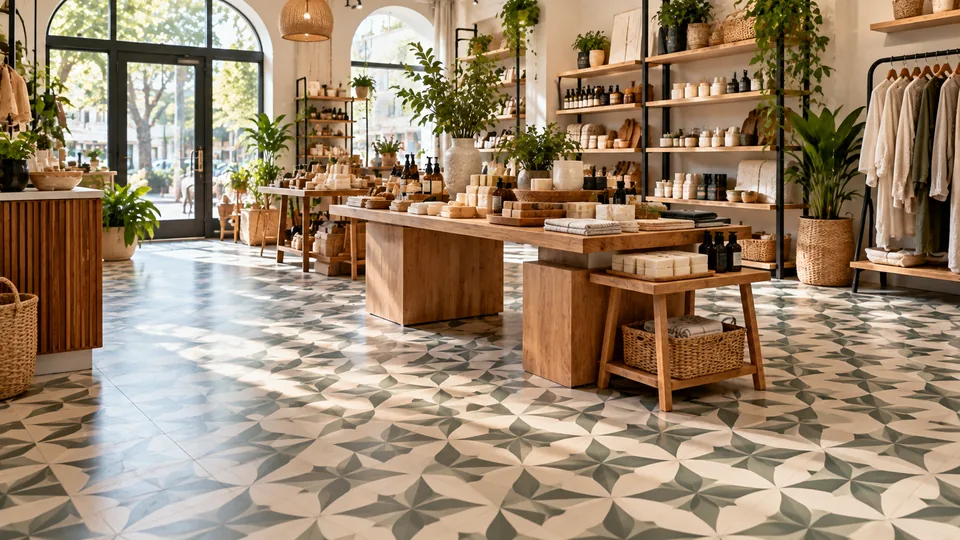
We manufacture indoor self-adhesive PVC floor film for short-term commercial and residential use. Our grey concrete self-adhesive vinyl floor is 0.3 mm with an embossed, skid-resistant surface in 1.22 m or 0.61 m × 50 m rolls, and wood grain, stone, marble and carpet patterns are also available. Wide 1.22 m rolls cover a showroom or stand quickly with few seams. The retail pop-up flooring project shows a typical application. Stock rolls ship from 1 roll in 7–10 days; custom patterns start at 100 rolls.
Next step
Tell us the space (showroom, stand, office or rental), floor area, existing floor type and how long the floor must last, and we will recommend a pattern and roll width. Free A4 samples and a quotation within 24 hours are available through our contact page.
Frequently Asked Questions
Can you use peel and stick tiles outside?
Peel and stick tiles are not suitable for exposed outdoor areas. Their pressure-sensitive adhesive is designed for indoor temperatures, and sunlight, surface heat above 60 °C, rain and freeze-thaw cycles cause fading, curling and lifting, often within one season. For patios and decks, interlocking deck tiles, porcelain pavers or rubber tiles are far more durable.
What is the best flooring for a concrete patio?
Interlocking wood or composite deck tiles are usually the easiest flooring for a concrete patio because they snap together, float over the slab and let water drain underneath. Porcelain pavers about 20 mm thick are the most durable and frost-resistant choice, while rubber tiles suit play areas and spaces that need a softer, slip-resistant surface.
Can you put peel and stick tile in a garage?
Peel and stick vinyl tile usually fails in garages. Warm tires soften the adhesive and pull tiles up, a problem called hot tire pickup, and chemicals in tires can stain vinyl. Interlocking polypropylene or PVC garage floor tiles, about 1/2 inch thick, are a better choice because they need no adhesive and handle vehicle weight.
What is the difference between commercial and residential vinyl flooring?
The main difference is the wear layer, the clear protective top film. Residential vinyl typically has a 6 to 12 mil wear layer, while commercial grade vinyl flooring usually has 20 mil or more. Commercial products are also typically glued down or heat-welded and tested for slip resistance, fire performance and rolling loads.
What is the best temporary outdoor flooring over grass?
Interlocking polypropylene event tiles are the most common temporary outdoor flooring over grass or dirt. They connect without tools, spread the weight of people and furniture so nothing sinks, drain through perforations and pack away after the event. Roll-out plastic tracking is a cheaper option for walkways, while self-adhesive vinyl cannot bond to grass.
Are interlocking garage floor tiles worth it?
Interlocking garage floor tiles are worth it for many homeowners because they install in a few hours without adhesive, hide minor cracks and stains, resist oil and road salt, and can be removed if you move. Choose rigid polypropylene for vehicle loads, flexible PVC for comfort and noise, and vented tiles with drainage for wet climates.
Can peel and stick flooring be used in an office or showroom?
Yes, for light traffic or short-term use. Self-adhesive vinyl floor film works well in meeting rooms, private offices, showrooms, exhibition stands and retail pop-ups laid over smooth, sealed floors. Avoid it in entrances, corridors and areas with carts, where glue-down commercial vinyl tiles with a 20 mil wear layer last much longer.