Key takeaways
- The five main kitchen cabinet door styles are Shaker, slab or flat panel, raised panel, glass-front and specialty styles such as beadboard and louvered.
- A Shaker door is a five-piece door with a square frame and a flat center panel recessed about 1/4 inch.
- Full overlay doors cover almost the entire cabinet frame, partial overlay leaves part of the frame visible, and inset doors sit flush inside it.
- MDF is the most common material for painted cabinet doors because it is stable and does not show joint lines.
- If cabinet boxes are sound, replacing, painting or vinyl-wrapping the doors is usually far cheaper than a full kitchen replacement.
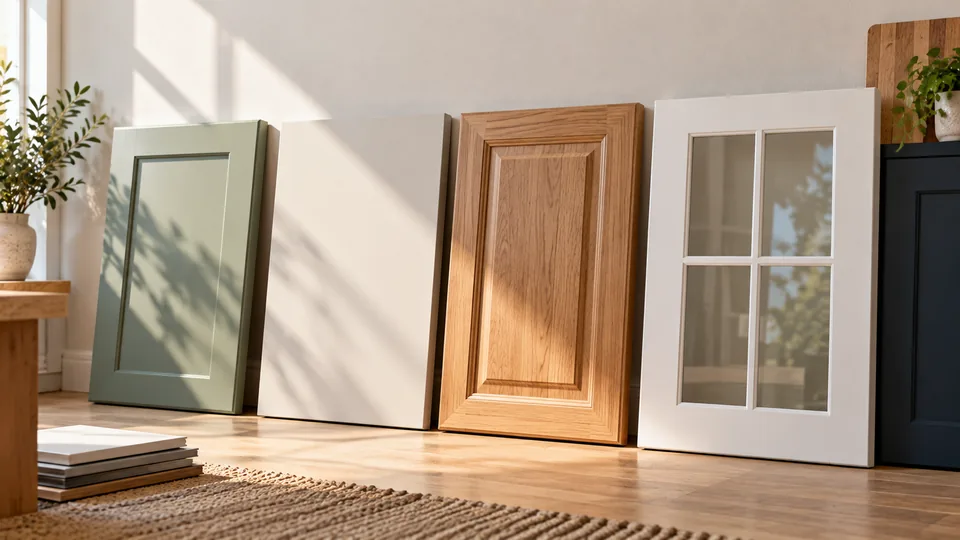
Kitchen cabinet doors come in five main styles: Shaker (a flat recessed panel inside a square frame), slab or flat panel (one plain sheet), raised panel (a beveled center panel), glass-front, and specialty styles such as beadboard or louvered. Each comes in solid wood, MDF, plywood or vinyl-wrapped versions, and in full overlay, partial overlay or inset mounting.
Door style sets the character of a kitchen more than any other single choice, and it also decides how easy the cabinets are to clean, paint or update later. This guide covers every common cabinet door style, the materials behind them, overlay types and standard cabinet door sizes, and what to do when you only want to change kitchen doors rather than the whole kitchen.
Kitchen cabinet door styles at a glance
Most cabinet door types are built either as a single piece (a slab) or as a five-piece door: two vertical stiles, two horizontal rails and a center panel. The profile of that frame and panel defines the style.
| Style | Construction | Look | Cleaning | Suits |
|---|---|---|---|---|
| Shaker | Five-piece, flat recessed panel, square edges | Clean, versatile | Easy; small ledge on bottom rail | Transitional, farmhouse, modern |
| Slab / flat panel | Single piece of MDF, plywood or wood | Minimal, contemporary | Easiest | Modern, Scandinavian, handleless kitchens |
| Raised panel | Five-piece, center panel beveled to stand proud | Formal, traditional | Harder; dust collects in profiles | Traditional, country, classic |
| Recessed / flat inset panel | Five-piece with decorative profile on frame | Traditional to transitional | Moderate | Classic homes |
| Glass-front | Frame with glass insert | Open, display | Glass needs regular wiping | Wall cabinets, display units |
| Beadboard | Frame with vertical grooved panel | Cottage, rustic | Grooves collect grease | Farmhouse, coastal |
| Louvered | Frame with angled slats | Airy, coastal | Hardest | Pantries, laundry, vented storage |
Shaker cabinet doors: why they are the default
The Shaker door cabinet is the best-selling style in many markets because it sits between traditional and modern. A Shaker door has square inner edges, a frame typically 2–3 in (50–75 mm) wide, and a flat center panel recessed about 1/4 in (6 mm). Shaker cabinet door profiles vary slightly: a slim-rail Shaker with 1–1.5 in stiles reads more modern, while a wide traditional Shaker suits farmhouse kitchens.
Shaker style door cabinets look good painted white, navy or green, or in natural oak. Custom Shaker cabinet doors are also one of the easiest styles to make yourself, because the frame needs only square joints and a flat panel. If you are refreshing existing flat doors, adding trim to flat cabinet doors creates a Shaker look for a fraction of the cost of new doors.
Slab and flat panel cabinet doors
Slab cabinet doors are a single flat piece with no frame and no panel. They define modern cabinet door styles and contemporary kitchen cabinet doors, especially in high-gloss, matte lacquer, wood veneer or laminate finishes. Flat panel cabinet doors are often used with integrated handles, edge pulls or push-to-open hinges.
- MDF slab: stable, smooth and ideal for paint or vinyl wrapping.
- Plywood slab cabinet doors: show the layered edge as a design feature; strong and light.
- Veneered slab: a real wood face, such as white oak cabinet doors, over an MDF or particleboard core, with matching edge banding.
- Laminate kitchen cabinet doors: high-pressure laminate or melamine faces that resist scratches and are common in flat-pack cabinets.
Because white flat cabinet doors show every mark, many people choose a light wood grain or a soft matte color instead. A flat panel door makeover is also the easiest kind to cover with self-adhesive film, since there are no grooves to work the film into.
Raised panel cabinet doors
Raised panel cabinet doors have a center panel whose edges are beveled or profiled so the middle stands level with or proud of the frame. They are the signature of traditional cabinet door styles, typically in maple, cherry or oak. Variants include square raised panel cabinet doors, cathedral (arched) tops and double-raised designs.
Raised panel kitchen cabinet doors suit formal or country kitchens. The downside is maintenance: the profiled edges trap dust and grease, and they are difficult to paint smoothly or to wrap with film. If you like the traditional look but want easier cleaning, a recessed panel with a simple ogee frame is a compromise.
Glass cabinet doors and glass-front cabinets
Glass cabinet doors turn wall cabinets into display space and make a small kitchen feel larger. Glass fronts for cabinets come in several forms:
- Clear glass: for display, glassware and open-look upper cabinets.
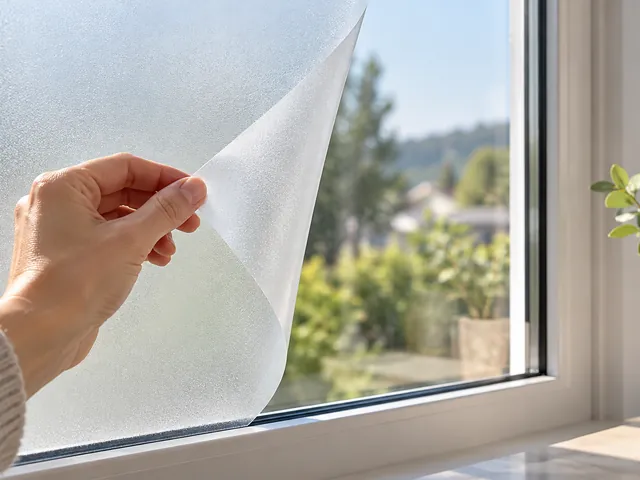
- Frosted or reeded glass: hides clutter while letting light through. Frosted film is an inexpensive way to create this on existing glass; see our frosted window film guide.
- Mullion or divided-light doors: a grid of wood bars for a traditional look.
- Aluminum-frame glass doors: slim metal frames for modern kitchens.
- Mirror cabinet doors: mostly for bathroom cabinet doors and vanities.
Glass ready cabinet doors are frames with the center routed out and a rebate ready to receive a glass insert, which lets you mix solid and glass door cabinet doors in the same style. Use tempered or laminated safety glass, typically 4 mm (5/32 in) thick, especially for large glass cabinet doors.
Best materials for cabinet doors
The wood for cabinet doors, or the board behind the finish, affects durability, cost and how well the door holds paint.
| Material | Strengths | Weaknesses | Best for |
|---|---|---|---|
| Solid hardwood (maple, oak, cherry, white oak) | Real grain, repairable, long-lasting | Moves with humidity; panels can crack at joints if painted | Stained or natural wood kitchens |
| MDF (medium-density fiberboard) | Stable, smooth, ideal for paint and routed profiles | Heavy; swells if water gets into raw edges | Painted Shaker and slab doors |
| Plywood | Strong, light, holds screws well | Edges need banding or a design decision | Slab doors, modern kitchens |
| Vinyl wrapped / thermofoil | Seamless, wipeable, low cost | Can peel near heat sources like ovens if adhesive is poor | Budget and rental kitchens |
| Laminate / melamine | Scratch- and stain-resistant | Hard to repair once chipped | Flat-pack and commercial cabinets |
Maple cabinet doors take paint and stain evenly; oak kitchen cabinet doors show strong open grain; cherry cabinet doors darken richly with age. MDF cabinet doors are the most common choice for painted kitchens because they do not show joint lines as solid wood does. Unfinished, raw or ready to finish cabinet doors, often pre primed, let you choose your own paint or stain.
Cabinet overlay: full, partial and inset doors
Cabinet overlay describes how much of the cabinet frame or box a closed door covers.
- Full overlay cabinet doors cover almost the entire face frame, leaving gaps of about 1/8 in (3 mm) between doors. They give a continuous, modern look and are standard on frameless cabinets.
- Partial (standard) overlay covers the frame partly, leaving about 1–1.5 in of face frame visible. It is common and economical in older kitchens.
- Inset doors sit flush inside the face frame. They look high-end but require precise fitting and lose a little interior space.
Overlay determines the hinge type, so when ordering cabinet doors with hinges, specify the overlay in millimeters or inches and the hinge cup position.
Standard cabinet door sizes
Common cabinet door sizes follow the cabinet box. Typical figures in the US market:
- Base cabinets: 34.5 in (876 mm) tall boxes; doors usually 24–30 in tall beneath a drawer.
- Wall cabinets: 30, 36 or 42 in (762, 914 or 1,067 mm) tall, so doors are a little less than the box height.
- Cabinet widths: 9–36 in in 3 in increments. Cabinets wider than about 24 in usually use double cabinet doors, because a single wide door swings too far into the room.
- Tall pantry doors: 84–96 in cabinets, often split into two stacked doors.
Always measure the existing door height and width and the overlay, rather than the opening, when ordering replacement doors.
Can you change kitchen cabinet doors only?
Yes. If the cabinet boxes are sound, you can change kitchen unit doors without replacing the kitchen, which usually costs a fraction of a full refit. There are three routes:
- Replace the doors. Order new doors in the same sizes and overlay, or buy kitchen cabinet doors only from a door maker. Reuse or replace the hinges.
- Refinish the doors. Clean, sand, prime and paint, or add molding to kitchen cabinet doors to change the style.
- Wrap the doors. Cover existing doors with self-adhesive PVC film, which works best on slab and simple Shaker doors.
The cost of replacing kitchen cupboard doors depends on material and quantity; painting and wrapping are usually the least expensive. Our guide to cabinet refacing vs replacing vs wrapping compares the results and costs in more detail.
Vinyl wrapped cabinet doors and cabinet door covers
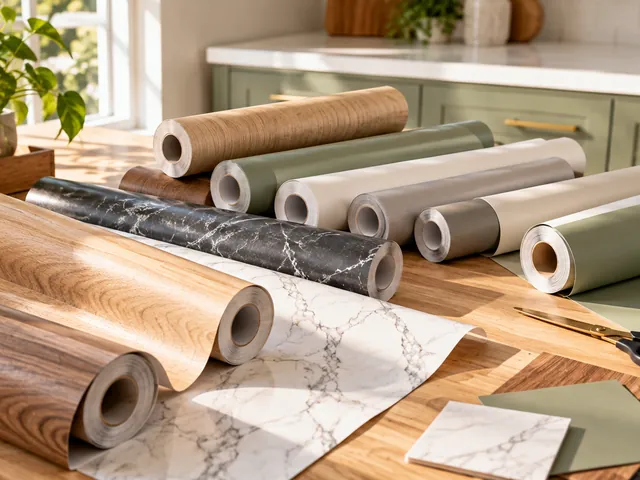
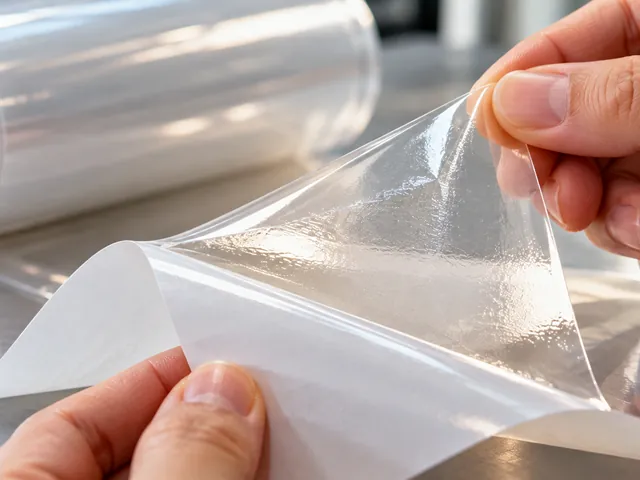
A kitchen cabinet door wrap uses decorative PVC film with a pressure-sensitive adhesive to give old doors a new color or wood grain. Our high-gloss wood grain cabinet film is 0.5 mm thick and comes in 1.22 m × 50 m rolls, and the wider furniture decorative film range adds marble, matte and solid colors with a 3-year warranty. Thicker films like this hide minor dents and survive daily wiping better than thin contact paper; see contact paper vs vinyl wrap for kitchen cabinets. For a real-world example, see our cabinet refacing project.
Next step
Send us photos of your cabinet doors, the finish you want and the approximate number of doors or rolls, and we will recommend a film and send a quotation within 24 hours. Contact us for free A4 samples to test on a door before you commit.
Frequently Asked Questions
What are the different types of kitchen cabinet doors?
The main types of kitchen cabinet doors are Shaker doors with a flat recessed panel, slab or flat panel doors made from one piece, raised panel doors with a beveled center, glass-front doors, and specialty styles such as beadboard, louvered and mullion glass. Each style can be made in solid wood, MDF, plywood, laminate or vinyl-wrapped board.
What is the most popular kitchen cabinet door style?
The Shaker door is the most popular kitchen cabinet door style in many markets. Its square frame and flat recessed panel suit traditional, farmhouse, transitional and modern kitchens, and it looks good painted or in natural wood. Slab doors are the most popular choice for strictly modern and handleless kitchen designs.
Can you replace just the kitchen cabinet doors?
Yes. If the cabinet boxes are structurally sound, you can replace just the doors and drawer fronts. Measure each existing door's height, width and overlay, then order new doors in the same sizes or reuse the hinges. Painting or wrapping the existing doors with vinyl film are cheaper alternatives to buying new ones.
What is the best material for kitchen cabinet doors?
Solid hardwood such as maple, oak or cherry is best for stained, natural-wood doors and can be repaired. MDF is best for painted doors because it is stable and smooth. Plywood is strong and light for slab doors, while laminate and vinyl-wrapped doors offer wipeable, low-cost finishes for busy or rental kitchens.
What does full overlay mean on cabinet doors?
Full overlay means the closed door covers almost the entire face of the cabinet box or frame, leaving only a small gap of about 1/8 inch between neighboring doors. It gives a continuous modern look and is standard on frameless cabinets. Partial overlay leaves more frame visible, and inset doors sit flush inside the frame.
What are standard kitchen cabinet door sizes?
In the US, base cabinets are typically 34.5 inches tall, with doors around 24 to 30 inches tall under a drawer. Wall cabinets are commonly 30, 36 or 42 inches tall. Cabinet widths usually run from 9 to 36 inches in 3-inch steps, and openings wider than about 24 inches normally use double doors.
Can you wrap kitchen cabinet doors with vinyl?
Yes. Self-adhesive PVC film can wrap kitchen cabinet doors in a new color, wood grain or marble finish. It works best on smooth slab and simple Shaker doors that are clean, degreased and free of loose paint. Thicker films around 0.5 mm hide minor dents and survive daily wiping better than thin contact paper.