Key takeaways
- Vinyl plank flooring is installed three ways: peel-and-stick, glue-down in trowelled adhesive, or floating click-lock rigid core.
- Wear layer thickness in mil, not total plank thickness, is the main predictor of how long a luxury vinyl plank floor lasts.
- A 12 mil wear layer suits most residential rooms, while 20–22 mil suits busy households and light commercial use.
- Rigid core SPC and WPC planks tolerate imperfect subfloors far better than thin peel-and-stick or glue-down planks.
- Vinyl planks are waterproof, but water can still pass through seams, so bathrooms and basements need tight seams and moisture control.
Vinyl plank flooring comes in three installation types: peel-and-stick planks with a factory adhesive, glue-down planks set in a trowelled adhesive, and click-lock rigid core planks that float over the subfloor. Peel-and-stick is cheapest and fastest, glue-down is thin and stable, and rigid core is thickest and most forgiving of imperfect subfloors.
All three are sold as luxury vinyl plank flooring (LVP) and are waterproof at the surface, but they differ sharply in thickness, wear layer, durability and cost. This guide compares them side by side and helps you choose the best vinyl plank flooring for each room.
What is luxury vinyl plank flooring?
Luxury vinyl flooring is a multi-layer PVC floor covering with a printed design film protected by a clear wear layer. "Plank" describes the shape — long, narrow boards that imitate wood — while luxury vinyl tile (LVT) uses square or rectangular formats that imitate stone or ceramic. L V P and LVT share the same construction; only the format and design differ.
A typical luxury vinyl plank is built in layers, top to bottom:
- UV-cured coating for stain and scuff resistance.
- Clear wear layer, measured in mil (1 mil = 0.001 in = 25.4 micron). This is the main durability factor.
- Printed décor film carrying the wood, stone or tile look.
- Core: flexible PVC (peel-and-stick and glue-down) or rigid core — SPC (stone-plastic composite) or WPC (wood-plastic composite).
- Back layer: a pressure-sensitive adhesive with release liner, a plain back for glue, or an attached foam or cork pad on click planks.
Peel-and-stick vs click-lock vs glue-down vinyl plank flooring
| Feature | Peel-and-stick planks | Glue-down vinyl plank | Click-lock rigid core |
|---|---|---|---|
| Typical total thickness | 1.5–3 mm (1/16–1/8 in) | 2–3 mm | 4–8 mm plus pad |
| Typical wear layer | 4–12 mil | 12–20 mil (up to 28+ mil commercial) | 12–22 mil and up |
| How it holds | Factory pressure-sensitive adhesive | Trowelled vinyl plank adhesive | Interlocking edges, floating |
| Subfloor tolerance | Low: every bump shows | Low to medium | Highest: bridges small dips |
| Best uses | Rentals, closets, laundry rooms, RVs, quick refreshes | Commercial spaces, rolling loads, sunrooms | Whole-house, kitchens, basements |
| DIY difficulty | Easiest | Hardest (adhesive work) | Easy to moderate |
| Relative material cost | Lowest | Medium | Medium to high |
Peel-and-stick vinyl plank flooring
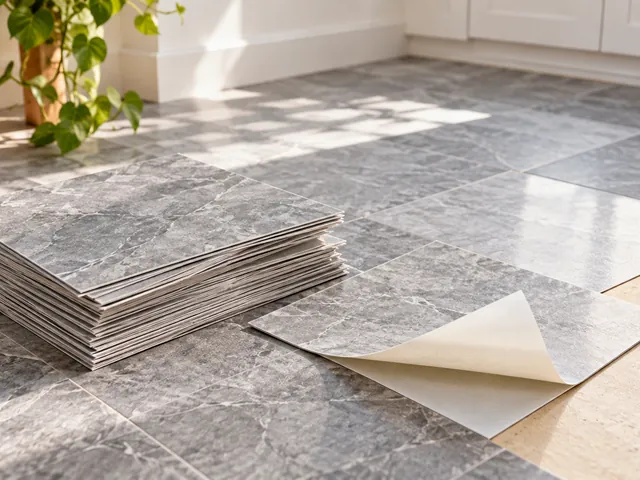
Vinyl wood plank flooring peel and stick products are the entry point: peel the liner, press the plank down, roll it. They are thin, light and cut with a utility knife. The trade-off is that adhesion depends entirely on subfloor prep, and the thin profile shows every grain of grit beneath. They are an honest choice for light-traffic rooms and short-term upgrades, and the cheapest route to a wood look. Our honest guide to peel-and-stick flooring covers where they work and where they fail.
Glue-down vinyl plank flooring
Glue down vinyl plank flooring (often called dryback, and sold as glue down vinyl tile in square formats) is set into a full-spread adhesive. Because it is bonded across its whole area, it does not shift under rolling loads, expands less in sunlit rooms and can run continuously through large spaces without transition strips. That is why commercial vinyl plank flooring is usually glue-down, and why glue down LVP flooring and other glue down vinyl flooring is still specified in hotels, shops and offices. The best adhesive for vinyl plank flooring is the one the plank maker specifies — typically a pressure-sensitive acrylic vinyl glue for residential vinyl glue down flooring, or a two-part adhesive for heavy commercial loads.
Click-lock and rigid core vinyl plank flooring
Click lock flooring and click lock vinyl tile have tongue-and-groove edges that fold together; the floor floats over the subfloor with a 6–10 mm (1/4–3/8 in) expansion gap at the walls. Rigid core vinyl plank flooring adds an SPC or WPC core that resists denting and bridges small subfloor dips, which is why rigid core flooring dominates "best rated vinyl plank flooring" lists. You will also see it sold as rigid vinyl plank flooring or rigid core luxury vinyl plank flooring. SPC is denser and more dent-resistant; WPC is slightly softer and warmer underfoot. Click lock vinyl plank flooring and click lock vinyl tile flooring in tile formats work the same way. Interlocking vinyl plank flooring is the easiest professional-looking DIY option, and click together flooring can be lifted and re-laid if a plank is damaged.
Wear layer and thickness: 12 mil, 20 mil or 22 mil?
Total thickness tells you about comfort and subfloor tolerance; the wear layer tells you about lifespan. A 12 mm vinyl plank flooring listing usually refers to laminate or to total thickness including pad, so always check the wear layer separately.
- 4–8 mil: light residential — bedrooms, closets, guest rooms.
- 12 mil vinyl plank flooring: standard residential, including kitchens and family rooms in most homes.
- 20 mil and 22 mil vinyl plank flooring: busy households with pets and children, and light commercial use. A 20 mil LVP flooring is a common "buy once" choice.
- 28 mil and above: commercial grade vinyl plank flooring for retail and hospitality.
Thick vinyl plank flooring is not automatically more durable; a 6 mm plank with a 6 mil wear layer will wear through sooner than a 3 mm glue-down plank with a 20 mil wear layer.
Is luxury vinyl flooring good for bathrooms, kitchens and basements?
Yes, with the right type. The vinyl itself is waterproof, but water can pass through seams, so installation matters as much as the product.
- Vinyl plank flooring bathroom: glue-down or rigid core with tight seams; caulk the perimeter at the tub with 100% silicone. Luxury vinyl tile for bathroom floors in stone looks is equally popular, and luxury vinyl flooring bathroom installs benefit from fewer seams, so wider formats help. Peel-and-stick works in a half bath with care but is not ideal around a shower.
- Luxury vinyl flooring in kitchen: rigid core is the usual pick; leave the expansion gap and do not pin it under cabinets.
- Vinyl plank flooring basement: rigid core over a moisture barrier is the standard approach on concrete. Test slab moisture first; peel-and-stick adhesives fail on damp concrete.
Waterproof vinyl plank flooring, or luxury vinyl plank waterproof claims in general, describe the plank, not the subfloor. LVP waterproof flooring will not stop water reaching wood subfloors through gaps, so mop spills promptly. Our guide to waterproof vinyl flooring for bathrooms and kitchens goes deeper.
Choosing colors and looks: wood look, tile look and stone look
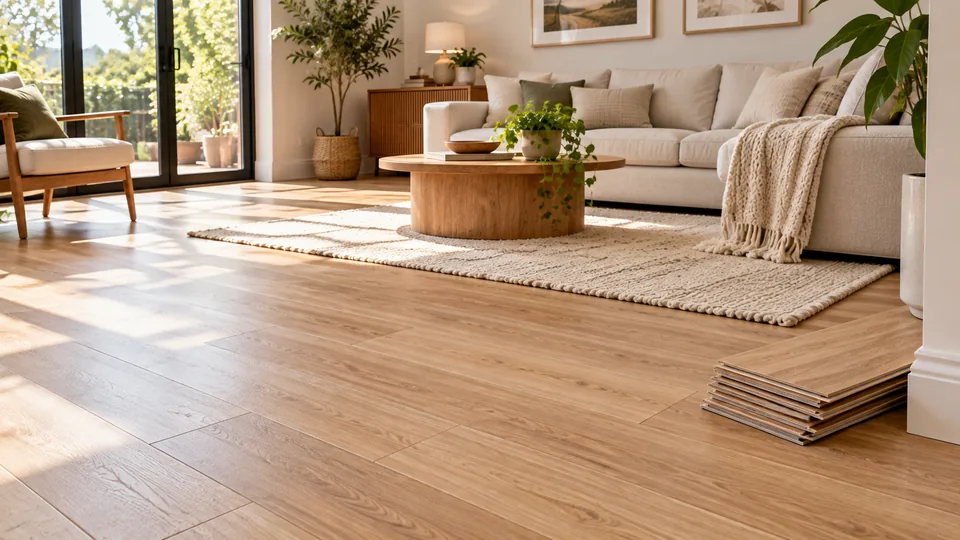
LVP flooring colors follow wood trends. White oak vinyl flooring (including white oak vinyl plank flooring and white LVP flooring), light oak vinyl plank flooring and light gray vinyl flooring brighten small rooms; dark grey vinyl flooring and black vinyl plank flooring hide less dust than you might expect, so they suit low-traffic spaces. Grey vinyl plank flooring and gray vinyl plank flooring have softened toward warm "greige" tones. Wood look vinyl flooring, and especially hardwood look vinyl flooring, benefits from embossed-in-register texture, where the surface relief follows the printed grain.
Wide plank vinyl flooring (18–23 cm / 7–9 in and wider) and 12 inch wide vinyl plank flooring look more like premium hardwood and suit large rooms. For a tile appearance, vinyl plank flooring that looks like tile, stone look vinyl plank flooring and luxury vinyl tile flooring stone look products use rectangular formats, sometimes with grouted-look bevels. Patterned luxury vinyl flooring adds encaustic and checkerboard designs. Wood look tile flooring in porcelain is the ceramic alternative — harder and colder, and much harder to install — while wood look vinyl tile and wood look linoleum are softer, warmer options.
Vinyl plank layout patterns
- Random stagger: offset end joints by at least 15–20 cm (6–8 in); the most natural look.
- Brick or third offset: regular and tidy, best for tile-look LVT.
- Herringbone and chevron: need planks made for the pattern, or glue-down planks cut to length.
- Diagonal: makes narrow rooms look wider but increases waste to around 15%.
How to choose the best luxury vinyl plank flooring
Highest rated vinyl plank flooring and top rated vinyl plank flooring lists change every year, and the best brand of luxury vinyl plank flooring for one house may be wrong for another. Instead of chasing a name, compare specifications. Good vinyl plank flooring, and the highest quality LVP flooring, will publish all of the following:
- Wear layer in mil, not just "commercial grade" or "heavy duty".
- Core type (flexible PVC, SPC or WPC) and total thickness in mm.
- Locking system or adhesive and the installation instructions you will be held to under warranty.
- Attached underlayment details, or whether a separate pad is allowed.
- Test reports for slip resistance, formaldehyde or VOC emissions and fire behavior where your market requires them.
- Batch or dye-lot number printed on each carton.
Cheap vinyl plank flooring and inexpensive vinyl plank flooring usually save money on wear layer and core density first, so a low price is fine for a guest room but false economy in a hallway.
Luxury vinyl plank flooring cost per square foot
Vinyl plank flooring cost depends on type, wear layer and installation. In many US markets, peel-and-stick planks are the cheapest vinyl plank flooring per square foot, glue-down sits in the middle, and rigid core with a thick wear layer costs the most. Professional installation of glue-down usually costs more than floating click-lock because of adhesive work and subfloor prep. Clearance vinyl plank flooring and closeout vinyl plank flooring can be good value for small rooms, but buy 10% extra from the same batch — dye lots vary and discontinued colors cannot be matched later.
How to install peel-and-stick vinyl plank flooring
- Acclimate the planks in the room for 24–48 hours at 18–29 °C (65–85 °F).
- Prepare the subfloor: remove old adhesive, fill dips and seams, sand ridges and vacuum. A common flatness guideline is within 3 mm over 1.8 m (1/8 in over 6 ft).
- Prime porous floors such as concrete or new plywood if the manufacturer recommends it.
- Snap a center line so cut rows at both walls are similar in width.
- Lay planks with staggered joints, pressing each one down and butting the ends tightly without stretching.
- Cut planks with a utility knife: score, snap and trim. A dedicated LVP cutting tool or guillotine is faster for rigid core.
- Roll the floor with a 45–50 kg (100 lb) floor roller or a hand roller to set the adhesive, then avoid washing for 48 hours.
For subfloor details, see our subfloor preparation guide.
Vinyl planks for walls: peel and stick shiplap and wood wall planks
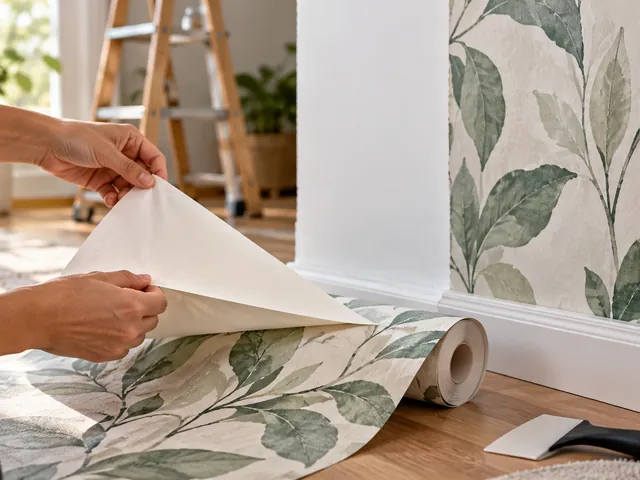
The same products work vertically. Peel and stick shiplap, wood wall planks and peel and stick wood paneling create a wood plank accent wall in an afternoon, and peel and stick panels for walls are among the most popular peel and stick accent wall projects. Lightweight self adhesive wood panels for walls, peel and stick wood panels for walls, thin wood planks for walls and stick on wood panels are typically thin PVC, PS foam or real-wood veneer; reclaimed wood planks and barnwood wall planks give a rustic look, while peel and stick wall boards in white suit coastal interiors. Avoid heavy flooring planks on walls unless you add construction adhesive. For a flat, lightweight option, wood plank wallpaper and wood-grain self-adhesive film give a similar look with no added depth; see our wood wall paneling ideas.
For retailers, contractors and pop-up fit-outs
For resale and short-term projects, thin self-adhesive vinyl flooring rolls are an economical complement to plank products. Our wood grain self-adhesive PVC floor is a 0.3 mm embossed, skid-resistant film in 0.61 m and 1.22 m widths by 50 m, MOQ one roll, suited to light-traffic indoor floors, displays and retail pop-up flooring. It is a decorative overlay, not a substitute for a 20 mil wear-layer LVP in a busy kitchen; specify by traffic level.
Next step
Send us the pattern, width, roll length, thickness and quantity you need, plus the intended use (retail, rental, pop-up or project). We provide free A4 samples and a quotation within 24 hours through our contact page.
Frequently Asked Questions
What is the best vinyl plank flooring?
For most homes, the best vinyl plank flooring is a rigid core click-lock plank with a wear layer of at least 12 mil, or 20 mil for pets and heavy traffic. Glue-down planks suit commercial spaces and rolling loads, while peel-and-stick planks are best for rentals, closets and quick, low-cost refreshes in light-traffic rooms.
Is peel and stick vinyl plank flooring any good?
Peel-and-stick vinyl plank flooring is good for light-traffic rooms, rentals, laundry rooms and short-term updates, and it is the cheapest and easiest vinyl plank to install. It needs a very smooth, clean, dry subfloor, has a thinner wear layer than most click or glue-down planks, and can shift or gap if the subfloor is poorly prepared.
What is the difference between luxury vinyl tile and vinyl plank?
Luxury vinyl tile and luxury vinyl plank share the same layered PVC construction and wear layers. The difference is format and design: planks are long, narrow boards that imitate wood, while luxury vinyl tile uses square or rectangular pieces that imitate stone, ceramic or concrete, sometimes with grout-look edges.
Is glue down vinyl plank flooring better than click lock?
Glue-down vinyl plank is better for commercial spaces, rolling loads, sunrooms and large open areas because it is bonded in place and moves less. Click-lock is better for most DIY homes because it floats, installs faster, tolerates small subfloor dips and can be lifted and re-laid. Choose based on traffic, room size and subfloor condition.
Is vinyl plank flooring waterproof enough for a bathroom?
The planks themselves are waterproof, so luxury vinyl plank works well in bathrooms if seams are tight and the perimeter at the tub or shower is sealed with silicone. Glue-down and rigid core planks are better choices than peel-and-stick near showers. Remember that water passing through gaps can still damage a wood subfloor.
What wear layer do I need for vinyl plank flooring?
Choose 4 to 8 mil for light-use bedrooms and closets, 12 mil for standard residential rooms including kitchens, and 20 to 22 mil for households with pets, children or light commercial traffic. Commercial spaces such as shops and hotels typically specify 28 mil or more. The wear layer matters more than total plank thickness.
Can you put vinyl plank flooring in a basement?
Yes. Rigid core click-lock vinyl plank over a moisture barrier is the usual choice for basement concrete, because it floats and is unaffected by occasional dampness. Test the slab for moisture before installing. Peel-and-stick planks are not recommended on basement slabs because moisture coming through the concrete breaks down the adhesive.
Laminate or vinyl plank flooring: which is better?
Vinyl plank flooring is the better choice for kitchens, bathrooms, basements and anywhere water is likely, because its PVC core is waterproof. Laminate has a fiberboard core that can swell when wet, but it often has a harder, more scratch-resistant surface and a more convincing wood texture. For dry living areas, either can work well.