Key takeaways
- The best RV flooring is light, thin, waterproof and flexible, which is why vinyl outperforms laminate, carpet and ceramic tile on the road.
- A 0.3 mm self-adhesive PVC vinyl film weighs roughly 0.4 kg per square meter, far less than rigid click-lock planks.
- Under slide-outs, measure the clearance first and choose flooring under 2 mm thick so the slide still closes.
- Most RV linoleum flooring is actually sheet vinyl, which is lighter and more water tolerant than true linoleum.
- Soft spots in an RV floor signal water damage that must be repaired before any new flooring goes down.
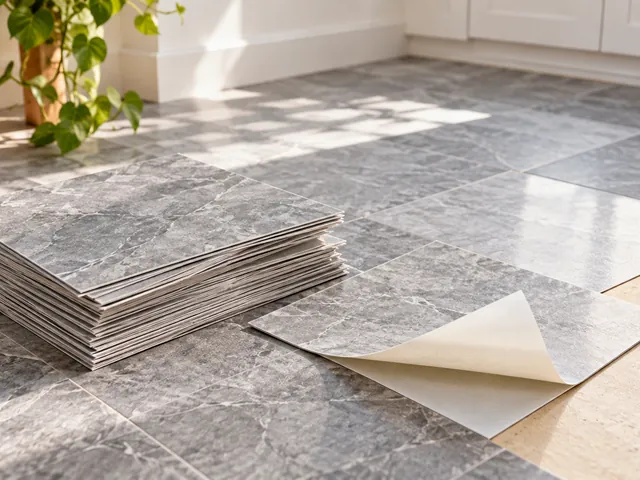
The best RV flooring is light, thin, waterproof and flexible: peel-and-stick vinyl plank, vinyl tile or self-adhesive vinyl sheet. These add little weight, flex with the chassis, shrug off muddy boots and spills, and stay thin enough for slide-outs to clear. Rigid click-lock planks and ceramic tile are heavier and more likely to crack or buckle on the road.
An RV, camper or motorhome floor lives a harder life than a house floor. It bounces down highways, sits through freezing winters and baking summers in storage, and has a slide-out room dragging across it. This guide compares camper flooring options, explains how to replace and refresh an RV floor, and covers mobile home and trailer house flooring, with notes for dealers and renovators who buy flooring by the roll.
What makes RV flooring different?
Four conditions set flooring for RV campers apart from residential flooring:
- Weight. Every kilogram counts against the vehicle's cargo capacity and fuel use. A 0.3 mm PVC vinyl film weighs roughly 0.4 kg/m² (under 0.1 lb/ft²), while rigid-core click planks can weigh 8–10 kg/m² (about 1.6–2 lb/ft²).
- Flex and vibration. The floor twists slightly as the frame moves. Grouted or rigid products crack at joints; flexible vinyl moves with the subfloor.
- Temperature swings. A stored camper can see −20 °C to over 50 °C (−4 °F to 120 °F) inside. Materials expand and contract, and adhesives must hold at both ends.
- Slide-outs. Many slide rooms roll or drag over the main floor. Thick flooring can stop a slide from closing or get torn by its rollers.
Best flooring for RV campers and motorhomes compared
This table compares the most common RV flooring ideas by thickness, weight and how they handle life on the road. Thickness and weight are typical ranges.
| Flooring type | Typical thickness | Weight | Waterproof | Slide-out friendly | DIY difficulty |
|---|---|---|---|---|---|
| Self-adhesive vinyl sheet / film | 0.25–0.5 mm | Very light | Yes (face) | Yes | Easy |
| Peel-and-stick vinyl tile or plank (LVT) | 1.5–3 mm | Light | Yes | Usually | Easy |
| Glue-down sheet vinyl ("RV linoleum") | 1.5–3 mm | Light | Yes | Yes | Moderate |
| Click-lock vinyl plank (LVP) | 4–8 mm | Medium to heavy | Yes | Often not | Moderate |
| Laminate | 6–12 mm | Heavy | No (swells) | No | Moderate |
| Carpet | 6–15 mm | Medium | No | No | Moderate |
| Ceramic tile | 8–12 mm plus mortar | Very heavy | Yes | No | Hard; cracks with flex |
For most owners, RV vinyl flooring wins: it is light, waterproof, easy to clean and simple to replace section by section. Peel-and-stick tiles and planks are the easiest DIY route; self-adhesive vinyl sheet is the lightest and thinnest.
Is RV linoleum flooring the same as vinyl?
Usually not. Owners call the factory floor "linoleum", but almost all RV linoleum flooring is actually sheet vinyl. True linoleum is made from linseed oil, cork and jute; it is heavier, less flexible and less water tolerant than PVC vinyl. When you buy a replacement, vinyl is the better match for an RV.
What is the best flooring for RV with slides?
The best flooring for RV with slides is the thinnest waterproof option that keeps the slide's clearance unchanged: self-adhesive vinyl sheet or thin peel-and-stick vinyl plank. Before you buy anything, measure the gap between the bottom of the slide-out and the main floor with the slide closed. If you have only a few millimeters, stay under 2 mm total thickness.
Two more tips: stop the new flooring just short of the slide path if the slide rides on rollers, and finish the edge with a thin metal or vinyl transition strip so the slide cannot catch and peel the flooring. Floating click planks are a poor choice under slides because the slide can push the floating floor and open the joints.
RV vinyl plank flooring: peel-and-stick or click-lock?
RV vinyl plank flooring comes in two main forms. Peel-and-stick planks bond to the subfloor, so they move with it and do not need expansion gaps beyond a few millimeters at walls. Click-lock planks float over an underlayment, which needs a 6–10 mm (1/4–3/8 in) expansion gap around the perimeter and can creak or separate in a vehicle that flexes.
Vinyl plank flooring in motorhome conversions works when the floor is flat and there are no slides, but for most campers peel-and-stick is lighter and more forgiving. Our comparison of peel-and-stick vinyl plank vs click-lock LVP vs glue-down explains the trade-offs in more depth.
How to replace camper floor coverings step by step
This sequence covers RV floor replacement of the floor covering. If the plywood or luan underneath is soft, it must be repaired first; flooring only hides a rotten subfloor for a short time.
- Remove old flooring. Pull up carpet, staples and old vinyl. Heat stubborn sheet vinyl with a heat gun and scrape it off.
- Check for water damage. Press every area with your heel, especially near doors, the shower and under windows. Soft or dark patches mean leaks; find and seal the leak, then cut out and replace the damaged subfloor.
- Level and smooth the subfloor. Sink screw heads, fill gaps and seams with floor patch, and sand ridges. Thin vinyl telegraphs every bump.
- Clean and prime. Vacuum, wipe with a damp cloth and let dry. Apply a flooring primer to raw plywood or luan so the adhesive does not soak into the wood.
- Acclimatize and install. Bring the flooring inside at 18–25 °C (65–77 °F) for 24 hours. Lay from the center out, pressing each piece firmly.
- Roll the floor. Use a flooring roller or rolling pin across every tile or plank to fully engage the pressure-sensitive adhesive.
- Finish the edges. Fit transition strips at doorways, the entry step and slide-outs, and seal around the shower base with silicone.
Our guides on subfloor preparation and installing peel-and-stick floor tiles so they do not lift cover the details.
Motorhome flooring replacement tips
Motorhome flooring replacement follows the same steps, with extra care around the driver's area and engine cover, which get hot. Keep thin vinyl film away from engine covers and heater outlets, and use a heavier vinyl tile or rubber mat there. Pre-cut templates from kraft paper for cab areas and wheel wells save material.
RV flooring ideas and design choices
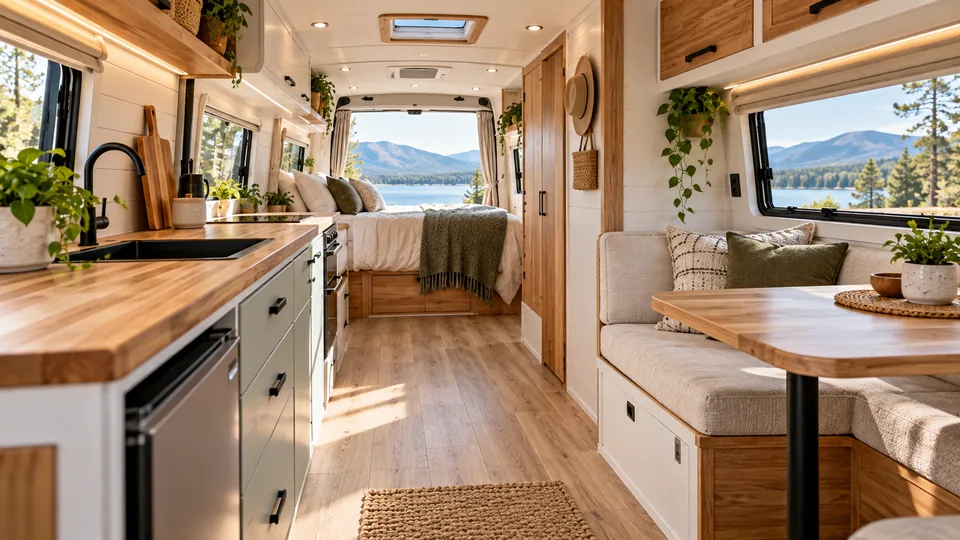
Popular RV flooring ideas and motorhome flooring ideas focus on making small spaces feel bigger and hiding dirt:
- Light wood grain in grey or natural oak makes a narrow camper feel wider, especially laid lengthwise.
- Mid-tone wood or stone patterns hide sand, dust and pet hair between cleanings.
- Checkerboard and hexagon tiles add a retro touch to vintage trailers and bathrooms.
- Concrete-look vinyl suits modern van conversions and toy haulers.
Matching the floor to wood-grain cabinet film creates a cohesive look on a budget.
How to care for motorhome vinyl flooring
The best flooring for camper and the best flooring for motorhome use only stays that way if it is looked after. Vinyl is low maintenance, but life on the road brings grit, temperature swings and occasional leaks. A few habits keep motorhome vinyl flooring looking new for years:
- Sweep or vacuum often. Sand and grit act like sandpaper underfoot. A washable mat at the entry door catches most of it.
- Mop with mild detergent. Use warm water and a pH-neutral cleaner. Avoid solvent cleaners, steam mops and wax, which can dull the wear layer or weaken edges.
- Protect from point loads. Put felt pads under removable table legs and chair feet, and use a chair mat at a desk.
- Control heat and sun. Close blinds in storage. Direct sun through a windshield can fade and soften thin vinyl near the cab.
- Fix lifted edges early. Warm a lifting corner with a hairdryer, press it down and roll it. If it will not stay, add a small amount of flooring adhesive.
Can you lay new flooring over old RV flooring?
Often, yes. Thin self-adhesive vinyl can go over existing sheet vinyl that is flat, well bonded and free of cushioned texture. Clean it thoroughly, degrease, lightly scuff glossy areas and prime if the manufacturer recommends it. Never install over carpet, cushioned vinyl that dents under a fingernail, or a floor with soft spots; remove those first. Laying over old flooring keeps weight and work down, which is why it is a common choice among flooring for motorhomes being refreshed rather than rebuilt.
Trailer house flooring for mobile homes
Mobile homes share some RV issues, such as lightweight subfloors and humidity, but they do not move, so heavier products are an option. Trailer house flooring is often laid on particleboard or OSB decking, which swells if it gets wet. That makes waterproof vinyl the safest choice for kitchens, bathrooms and laundry areas.
Self-adhesive vinyl flooring is also popular for refreshing a dated mobile home floor quickly: it goes directly over smooth, well-bonded existing vinyl after cleaning and degreasing, with no demolition.
For RV dealers and renovators: buying camper vinyl flooring in rolls
Dealers, refurbishers and van-conversion workshops can cut cost by buying camper vinyl flooring by the roll instead of by the box. Our self-adhesive PVC floor films include embossed, skid-resistant wood, stone, concrete and carpet patterns in 0.3 mm thickness, supplied as 1.22 m or 0.61 m × 50 m rolls (about 48 or 24 in × 164 ft), with a 5-year warranty on many lines and an MOQ from one roll for stock items. For larger orders, read our peel-and-stick vinyl flooring import checklist.
Next step
Tell us the floor area, pattern, roll width and whether the flooring goes under slide-outs or on a wet floor. Contact us for free A4 samples of our vinyl flooring for campers and a quotation within 24 hours.
Frequently Asked Questions
What is the best flooring for an RV?
The best flooring for an RV is lightweight, waterproof vinyl, either peel-and-stick vinyl plank, vinyl tile or self-adhesive vinyl sheet. Vinyl flexes with the chassis, resists water and mud, cleans easily and stays thin enough for slide-outs. Laminate, carpet and ceramic tile are heavier and handle moisture, vibration or flex poorly.
Can you put peel and stick flooring in a camper?
Yes. Peel-and-stick vinyl is one of the most popular camper flooring choices because it is light and easy to install. The subfloor must be solid, smooth, clean and primed, and the flooring should be installed at room temperature and rolled firmly so the adhesive holds through temperature swings in storage.
What flooring is best for an RV with slide-outs?
Choose the thinnest waterproof option that keeps the slide's clearance, usually self-adhesive vinyl sheet or thin peel-and-stick vinyl plank under 2 mm. Measure the gap under the closed slide first, stop the flooring at the slide path if it rides on rollers, and protect the edge with a thin transition strip.
Can you use vinyl plank flooring in a motorhome?
Yes, but peel-and-stick planks usually suit a motorhome better than floating click-lock planks. Click planks need a perimeter expansion gap, add more weight and can separate or creak as the vehicle flexes. Glued or self-adhesive planks bond to the subfloor and move with it, and they work well under slides.
How do you replace a camper floor?
Remove the old flooring, then check the subfloor for soft spots that indicate water damage. Repair leaks and replace rotten plywood, level seams and screw heads, clean and prime the surface, then install the new vinyl from the center out. Roll it firmly and finish doorways and slide-outs with transition strips.
Is RV linoleum flooring the same as vinyl?
Usually it is not true linoleum. Most RV linoleum flooring is sheet vinyl made from PVC, which is lighter, more flexible and more water resistant. Real linoleum is made from linseed oil, cork and jute. When replacing an RV floor, choose vinyl sheet, tile or plank for the best match.
What is the best flooring for a mobile home?
Waterproof vinyl is the best flooring for most mobile homes because the particleboard or OSB decking underneath swells if it gets wet. Use vinyl in kitchens, bathrooms and laundry areas at minimum. Self-adhesive vinyl can also go over smooth, well-bonded existing vinyl for a fast refresh without demolition.