Key takeaways
- Thermal laminating sheets bond with a heat-activated EVA layer at roughly 90–140 °C, while cold and self-laminating sheets use a pressure-sensitive adhesive that bonds at room temperature.
- Laminating pouch thickness is usually quoted per side in mil, where 1 mil equals 0.001 inch or 25.4 microns, so a 5 mil pouch has about 127 microns of film on each face.
- Self-laminating sheets need no machine and suit heat-sensitive items such as photos, thermal paper and inkjet prints that could bubble or darken in a hot laminator.
- Printed vinyl stickers and signs are protected with a cold overlaminate, a clear self-adhesive film applied over the print to add UV, scratch and abrasion resistance.
- Laminated paper cannot normally be un-laminated without damage, so scan or copy important originals such as certificates before laminating them.
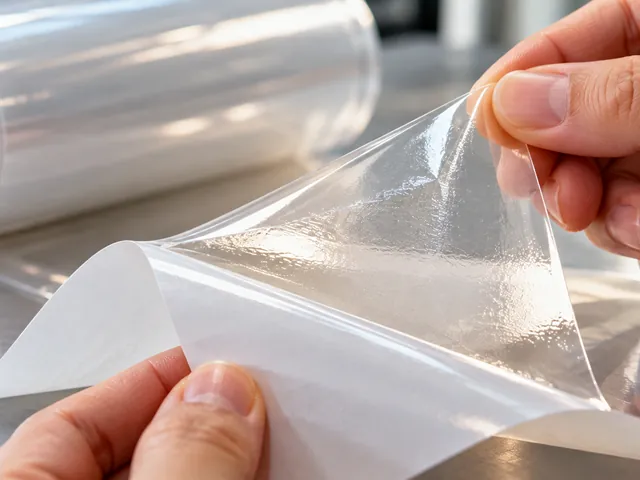
Laminating sheets are clear plastic films that seal paper, cards or prints between protective layers so they resist water, tearing, smudges and fingerprints. They come in three main types: thermal pouches that need a heated laminator, cold laminating film applied with a roller, and self-laminating sheets you peel and stick by hand with no machine at all.
This guide explains how each type of laminating film works, which thickness to choose, how to laminate at home, and where to get something laminated if you do not want to buy supplies. It also covers cold overlaminate for vinyl stickers and signs, which is where laminating overlaps with self-adhesive films.
What is laminating film made of?
Laminate plastic for paper is almost always polyester rather than PVC. Most laminating film is a two-layer construction: a clear polyester (PET) base film that provides stiffness and clarity, and a bonding layer that grips the paper.
- Thermal laminating film uses EVA (ethylene vinyl acetate), a hot-melt adhesive that softens at about 90–140 °C (195–285 °F) and flows into the paper fibers as it passes through heated rollers.
- Cold laminating film uses a pressure-sensitive adhesive (PSA), typically acrylic, protected by a release liner. It bonds when pressed at room temperature.
- Overlaminate for vinyl graphics is usually a clear PVC or polyester film with a PSA, designed to be applied over printed self-adhesive vinyl.
Thickness is quoted in mil (1 mil = 0.001 in = 25.4 micron) or in microns. Laminating pouch thickness is usually quoted per side, so a 3 mil pouch has about 75 microns of film on each face, and a 10 mil pouch about 250 microns. Thicker film is stiffer and more durable, but harder to fold and slower to run.
Thermal vs cold vs self-laminating sheets
| Type | How it bonds | Equipment | Best for | Watch out for |
|---|---|---|---|---|
| Thermal laminating pouches | Heat-activated EVA | Pouch laminator | Documents, menus, ID cards, classroom materials | Heat can damage photos, thermal paper and some inkjet prints |
| Thermal laminating film roll | Heat-activated EVA | Roll laminator | Schools, print shops, posters, high volume | Needs correct temperature and core size |
| Self-laminating sheets | Pressure-sensitive adhesive | None; hand or ruler | Home, office, photos, quick one-offs | Bubbles if applied too fast; less edge seal |
| Cold laminating film roll | Pressure-sensitive adhesive | Cold roll laminator or squeegee | Large-format prints, posters, signs | Dust trapped under film shows clearly |
| Cold overlaminate for vinyl | Pressure-sensitive adhesive | Roll laminator | Printed stickers, decals, vehicle and floor graphics | Must match base vinyl's stretch and durability |
Thermal lamination gives a very strong, fully sealed edge because the two films fuse beyond the paper. Cold lamination is safer for heat-sensitive items and needs no warm-up, which is why self laminating sheets and self laminating pages are popular in homes and offices without a machine.
Laminating pouches, sleeves and sheet sizes
Laminating pouches, also called laminating sleeves, are two sheets of film sealed along one edge. You slip the document inside and feed it through a pouch laminator sealed edge first.
- Common sizes: letter (9 × 11.5 in), legal, A4, A3, menu, photo, business card and ID card sizes. Large laminating sheets for posters go up to tabloid and A3; long laminating sheets suit banners and timelines.
- Thickness: 3 mil is light and flexible for frequent-use pages; 5 mil is the all-round choice for menus and signs; 7–10 mil heavy duty laminating sheets are rigid enough for luggage tags, card laminating sheets and outdoor notices.
- Finish: gloss gives the brightest colors; matte reduces glare under classroom and office lights and can be written on with pencil.
Thermal laminating sheets in pouch form are the usual choice for laminate pages in schools and offices because they seal all four edges. Clear laminate sheets in gloss show colors best; laminate papers that will be read under strong light are easier on the eye in matte.
Leave a 3–5 mm (1/8–3/16 in) border of film around the paper. This seals the edge and stops water creeping into laminated paper.
Laminating film rolls for schools and print shops
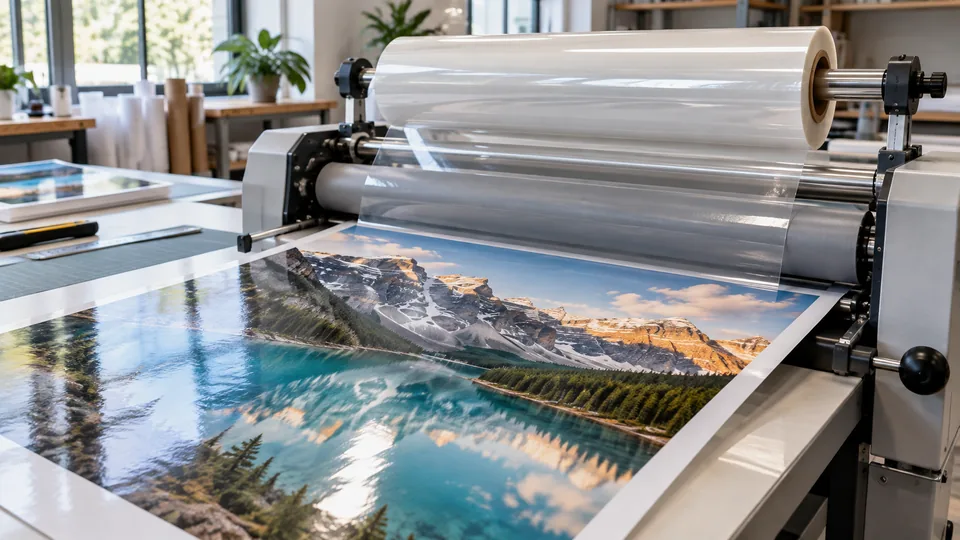
A lamination roll suits anyone laminating every day. Roll laminators take a top and a bottom roll and fuse them around the item as it passes through. Laminating film roll specifications to check include:
- Width: commonly 12, 18, 25 and 27 in (about 305, 460, 635 and 685 mm) for school and office machines, and wider for large-format.
- Core size: the cardboard core diameter, often 1 in (25 mm) or 2.25 in (57 mm), must match the laminator.
- Thickness: standard laminating film for school machines is typically 1.5–3 mil; heavier thermal lamination film runs more slowly.
- Adhesive: standard EVA for paper, or low-melt adhesive for heat-sensitive prints.
Some machines use cartridge-style rolls with a proprietary loader. Check that the replacement film fits your laminator model before ordering.
How to laminate at home with or without a laminator
If you only laminate a few pages, self sealing laminating sheets are the easiest way to laminate documents at home. Here is how to laminate a paper at home without bubbles:
- Prepare the item. Make sure ink is fully dry, trim loose edges and wipe off dust with a soft brush.
- Peel the first corner. Lay the self-laminating sheet adhesive side up, or peel back only the top 2–3 cm of the liner.
- Position the paper. Line up the paper with an even border and press the top edge down first.
- Smooth as you peel. Pull the liner away slowly while pressing from the center outward with a ruler or card.
- Add the back sheet. For double-sided protection, apply a second sheet to the back the same way.
- Trim the edges. Cut around the item, leaving a 3 mm sealed border, and round the corners so they do not peel.
With a pouch laminator, warm it fully, place the item in the pouch, use a carrier sheet if the instructions call for one, and feed it sealed edge first. Do not use a household iron as a laminator: uneven heat causes clouding, bubbles and scorching.
DIY laminate paper alternatives
If you have no laminating paper sheets at hand, clear self-adhesive film works as DIY laminate paper. Clear contact paper, sold for covering books and shelves, is a thin PVC film with a PSA and can laminate pages, recipe cards and labels; it is softer and less clear than PET laminate but cheap and easy to cut. Wide clear packing tape works for small labels. For anything you will handle often, proper self stick laminating sheets or self laminating paper give a flatter, clearer finish.
Where can you get things laminated?
If you need just one or two items, it is often cheaper to get things laminated than to buy supplies. Places that usually laminate include:
- Print and copy shops and office supply stores, which handle letter, A4 and poster sizes.
- Shipping and packaging stores, many of which offer printing and laminating.
- Public libraries, schools and university print rooms, sometimes for a small fee.
- Sign shops, for large posters, mounted prints and outdoor signs.
How to get something laminated in a shop is simple: bring the original, choose the size and thickness, and collect it a few minutes later. Most of the places above are also where to get things laminated in large sizes.
How much does laminating cost?
Lamination cost varies by size, thickness and region. In many US stores, laminating a letter-size page typically costs a few dollars, with posters charged by the foot. Call ahead for large or heat-sensitive items, and ask whether the shop uses hot or cold lamination. If you laminate more than a few pages a month, a basic pouch laminator and a box of pouches usually costs less over a year; how much laminating paper costs per page then depends mainly on pouch thickness and size.
Dry erase laminate and specialty finishes
Dry erase laminate, or dry wipe laminate, is a gloss film with a hard surface that lets you write with dry-erase markers and wipe clean. Dry erase laminate sheets turn charts, checklists, calendars and maps into reusable boards. Other specialty laminates include:
- Matte and anti-glare for presentation boards and photos under lights.
- Textured or linen for artwork and menus.
- Adhesive-backed or laminate peel stick sheets that laminate the front and leave a sticky back, so the item can be stuck to a wall or door.
- UV-inhibiting grades that slow fading on items displayed in windows.
Overlaminate for vinyl stickers, decals and signs
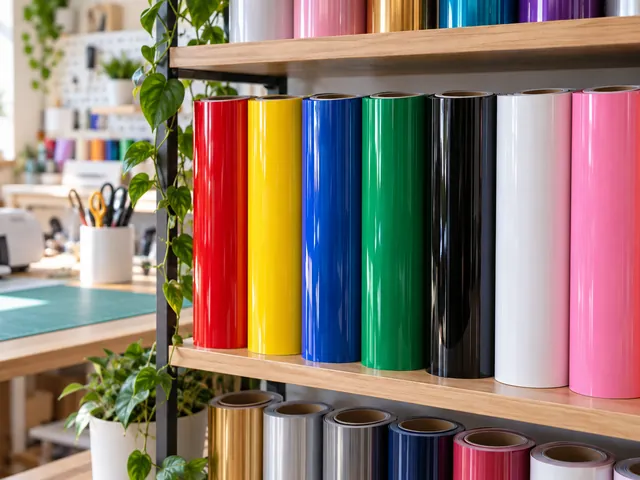
In sign making and sticker printing, laminating has a different job. Printed self-adhesive vinyl is protected with a clear cold overlaminate applied in a roll laminator after printing and before die-cutting or plotter cutting. Laminating material for vinyl adds:
- UV resistance, so inks fade more slowly outdoors.
- Scratch and abrasion resistance for floor graphics, laptop skins and equipment labels.
- Chemical and water resistance for bottles, tools and vehicles.
- A uniform gloss, matte or satin finish over the whole print.
Match the overlaminate to the base film: a calendered vinyl needs a compatible calendered laminate, and a conformable film for curved surfaces needs an equally conformable laminate, or the two will shrink differently and tunnel. Solid-color plotter-cut vinyl, such as our graphic and signage films in 80–200 micron thicknesses, usually needs no laminate because the color runs through the film. For printed stickers, see our guide to making vinyl stickers and decals and the custom die-cut sticker ordering checklist, which covers lamination options.
Choosing laminating supplies for a business
Schools, offices, print shops and sign shops buy laminating supplies on different criteria:
- Schools and offices: thermal rolls or 3–5 mil pouches, matched to the laminator core and width.
- Photo and art printers: cold or low-melt laminating film to protect heat-sensitive prints.
- Sign shops and sticker printers: cold overlaminate rolls in widths matching the printer and base vinyl, typically 0.61 m (24 in) to 1.52 m (60 in). Our sign shop stock programme case study shows how base vinyl widths are planned.
The adhesive behind cold laminate and self-adhesive vinyl works the same way; our article on pressure-sensitive adhesive explained covers the chemistry.
Next step
If you produce stickers, labels or signs, tell us the application, the base vinyl, the finish you need and your monthly volume, and we will recommend a self-adhesive vinyl construction. Free A4 samples are available for print and cutting trials. Request samples or a quotation through our contact page.
Frequently Asked Questions
What is the difference between laminating sheets and laminating pouches?
Laminating pouches are two clear films sealed on one edge that need a heated pouch laminator to bond. Laminating sheets can mean single thermal sheets or self-laminating sheets with a pressure-sensitive adhesive that you apply by hand. Self-laminating sheets need no machine and are safer for heat-sensitive photos and prints.
How do you laminate at home without a laminator?
Use self-laminating sheets. Peel back a small part of the liner, align the paper with an even border, press the top edge down, then smooth outward with a ruler while slowly removing the liner. Add a second sheet to the back if needed and trim, leaving a 3 millimeter sealed edge. Avoid using a household iron.
What thickness of laminating pouch should I use?
Pouch thickness is usually quoted per side in mil. A 3 mil pouch is light and flexible for frequently handled pages, 5 mil is a good all-round choice for menus and signs, and 7 to 10 mil gives a rigid result for ID cards, tags and outdoor notices. Check your laminator's maximum rated thickness first.
Where can I get something laminated?
Print and copy shops, office supply stores and many shipping stores laminate documents while you wait, usually in letter, A4 and poster sizes. Public libraries, schools and university print rooms often offer laminating for a small fee, and sign shops handle large posters and outdoor prints. Ask whether they use hot or cold lamination.
What is cold laminating film?
Cold laminating film is a clear plastic film coated with a pressure-sensitive adhesive and protected by a release liner. It bonds at room temperature when pressed with a roller or squeegee, so it is safe for heat-sensitive prints, photos and printed vinyl. Sign shops use cold overlaminate to protect stickers, decals and graphics.
Can you remove lamination from paper?
Thermal lamination usually cannot be removed without damaging the paper, because the adhesive soaks into the fibers. Gentle heat can sometimes soften the film enough to peel it from glossy photo paper, but results are unpredictable. Self-laminating sheets may lift more easily. Copy or scan valuable documents before laminating them.
Can you write on laminated paper?
You can write on laminated paper with dry-erase or wet-erase markers, which wipe off gloss laminate, and with permanent markers for lasting notes. Dry erase laminate is designed for repeated writing and cleaning. Matte laminate accepts pencil and some pens, while standard gloss laminate repels most ballpoint ink.