Key takeaways
- Printed vinyl stickers are made by printing on printable vinyl, laminating and cutting, while vinyl decals are cut from solid-color adhesive vinyl and applied with transfer tape.
- Inkjet printable vinyl only works in inkjet printers, and laser printers need vinyl rated to withstand fuser heat.
- Most home-printed inkjet stickers need a clear laminate to become truly waterproof and UV resistant.
- Adhesive cutting vinyl is typically 80–200 micron thick and is sold with either permanent or removable adhesive.
- Cut lines should be at least 0.5–1 mm wide, and printed stickers need about 3 mm of bleed beyond the cut line.
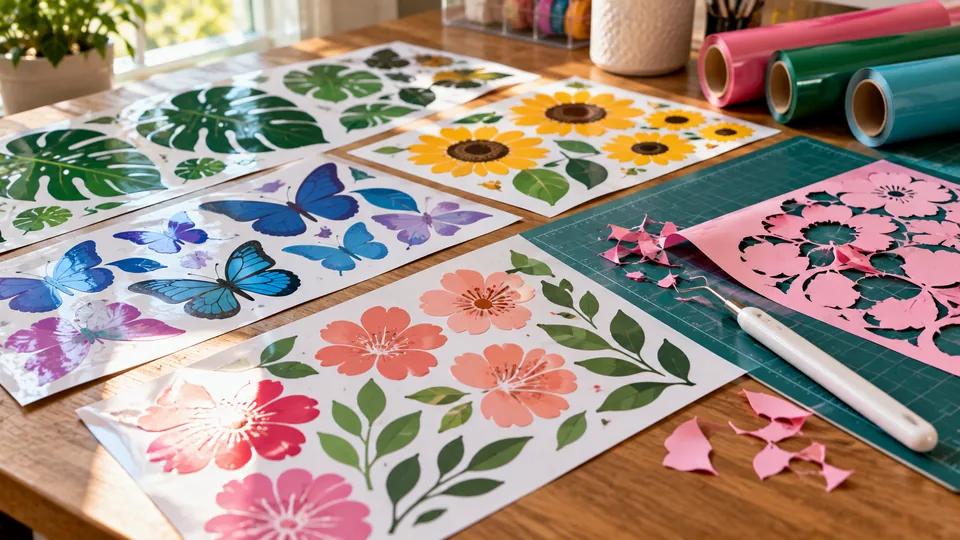
Here is how to make vinyl stickers: print your design on printable vinyl sticker paper, laminate it for water and UV resistance, and cut it out with a cutting machine or scissors. To make a vinyl decal, cut a design from solid-color adhesive vinyl on a plotter, weed away the excess and apply it with transfer tape. Printed stickers suit full-color art; cut decals suit lettering and logos.
Both methods are easy to learn at home, and both scale up to small-business production. This guide explains the difference between sticker paper and vinyl, the materials and equipment you need, step-by-step methods for printed stickers and cut vinyl decals, design rules that prevent cutting problems, and when it makes more sense to order custom decals from a print shop or factory.
Vinyl stickers vs vinyl decals vs paper stickers
People use "sticker" and "decal" interchangeably, but makers usually separate them like this:
- Vinyl sticker: a printed image on a vinyl face film with adhesive, cut to shape and peeled straight off its liner. Full color, any shape.
- Vinyl decal: a design cut from solid-color vinyl, with the background removed, so only the letters or shapes remain. It needs transfer tape to move it to the surface.
- Paper sticker: printed on paper label stock. Cheap and fine for packaging and planners, but not waterproof.
| Material | Printing | Water resistance | Typical life | Best for |
|---|---|---|---|---|
| Paper sticker paper | Inkjet or laser | Low | Indoor, short term | Labels, packaging, planners |
| Printable vinyl sticker paper (white) | Inkjet or laser (check type) | Water resistant; waterproof once laminated | Months to a few years | Laptop, bottle and logo stickers |
| Clear or transparent sticker paper | Inkjet or laser | As above | As above | Glass stickers, product labels |
| Solid-color cutting vinyl | None; color is in the film | Waterproof | Typically several years outdoors | Lettering, door decals, car and window decals |
| Factory die-cut vinyl stickers | Commercial digital or offset print, laminated | Waterproof | Typically several years | Branding, merchandise, stickers for sale |
What materials do you need to make vinyl stickers?
Sticker paper and printable vinyl
Printable vinyl, also sold as vinyl sticker paper or decal vinyl paper, is a thin white or clear PVC or polypropylene film with a receptive top coat, an adhesive and a paper liner. Printable vinyl sheets are usually letter or A4 size; printable vinyl rolls exist for wide-format printers.
- Inkjet sticker paper works only in inkjet printers; laser vinyl must withstand fuser heat. Using the wrong one can smear or melt.
- Waterproof sticker paper resists splashes, but most inkjet prints still need laminating to survive dishwashers, rain or repeated handling.
- Clear sticker paper and transparent printable vinyl let the surface show through. White areas do not print on home printers, so design accordingly.
- Full sheet sticker paper lets you cut any shape; pre-cut label sheets suit standard sizes.
Cutting vinyl for decals
Adhesive cutting vinyl is a three-layer material: a colored PVC face film, a pressure-sensitive adhesive and a release liner. It is usually 80–200 micron thick (about 3–8 mil). Choose permanent adhesive for outdoor, car, mug and glassware decals, and removable adhesive for walls, windows and temporary signs. Our glossy and matte cutting vinyl comes in permanent and removable versions on 0.61 m and 1.22 m rolls, and our cutting vinyl buyer's guide explains how to choose.
What kind of adhesive is used for stickers?
Almost all vinyl stickers and decals use a pressure-sensitive adhesive (PSA): a permanently tacky layer that bonds when pressed, with no water, heat or glue needed. The two main chemistries are:
- Acrylic PSA: the standard for vinyl. It resists UV, water and plasticizer migration and builds bond strength over 24–72 hours, which is why permanent stickers grip harder the day after application.
- Rubber-based PSA: high initial tack and good grip on low-energy plastics such as polyethylene and polypropylene, but less resistant to heat and sunlight.
Permanent stickers for plastic, powder-coated metal or textured surfaces need a high-tack permanent adhesive; removable adhesive is the best adhesive for stickers that must peel off walls, glass or laptops without residue. You do not need extra sticker glue for vinyl; if a sticker will not stay down, the surface is usually dirty, too cold or incompatible with the adhesive. Our guide to pressure-sensitive adhesive covers the chemistry in more detail.
Vinyl sticker equipment
- Printer: a home inkjet printer is enough for printed stickers; pigment inks fade more slowly than dye inks.
- Cutting machine or vinyl cutter: a desktop cutting machine handles sheets up to about 30 cm (12 in) wide; a roll-fed plotter cuts 0.61–1.22 m (24–48 in) widths for large vinyl decals.
- Laminate: clear self-adhesive overlaminate in gloss or matte.
- Transfer tape, a squeegee, a weeding hook and a craft knife.
A machine that prints and cuts vinyl stickers in one pass, a print-and-cut plotter, is mainly used by sign shops and sticker businesses.
How to make vinyl stickers with a printer
This print-and-cut method is the most common way to make full-color stickers at home.
- Design the sticker. Create artwork at 300 dpi in a design program, add a 3 mm (1/8 in) bleed beyond the cut line and draw an offset contour cut path around each sticker.
- Print on printable vinyl. Load inkjet or laser printable vinyl sticker paper that matches your printer, select a photo or glossy paper setting and print at high quality.
- Let the ink dry. Allow inkjet prints to dry for at least 30–60 minutes, ideally overnight, before laminating, so the ink does not smear or cloud.
- Laminate the sheet. Apply a clear self-adhesive laminate over the print with a squeegee, working from one edge to avoid bubbles. Lamination adds water, scratch and UV resistance.
- Cut the stickers. Use a cutting machine's print-then-cut mode to kiss-cut through vinyl and laminate but not the liner, or cut by hand with scissors or a craft knife.
- Peel and apply. Peel each sticker from the liner and press it onto a clean, dry, smooth surface, rubbing firmly from the center out.
How to make a vinyl decal from cut vinyl
Cut vinyl decals are how most vinyl letter stickers, vinyl number stickers, business door decals and car window graphics are made.
- Design in vector format. Create text or shapes in SVG, DXF or AI format. Weld script letters so they cut as one piece, and keep lines at least 0.5–1 mm (about 1/32 in) wide.
- Mirror only if needed. Adhesive vinyl is cut face up and not mirrored; only heat transfer vinyl or reverse-applied window decals are mirrored.
- Cut the vinyl. Load solid-color adhesive vinyl shiny side up and set the blade so it cuts the vinyl and adhesive but only lightly scores the liner. Run a small test cut first.
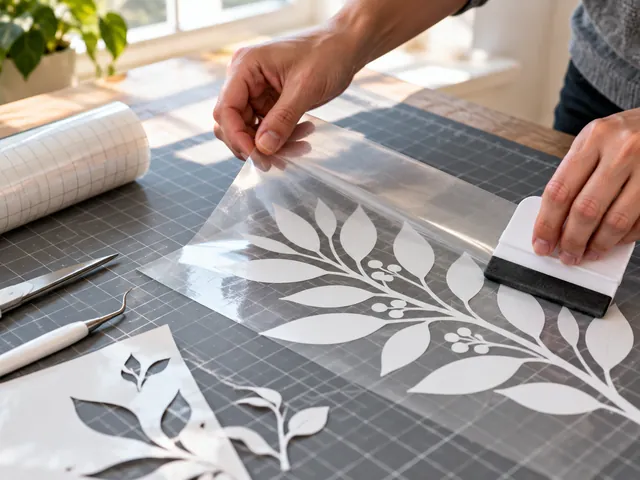
- Weed the design. Peel away the excess vinyl around the design and pull out letter centers with a weeding hook.
- Apply transfer tape. Lay transfer tape over the weeded design, burnish firmly with a squeegee and peel the liner away at a sharp angle.
- Apply and burnish. Position the decal on a clean surface, use a hinge of masking tape for alignment on large pieces, squeegee down and peel the transfer tape back slowly at 180 degrees.
Choosing the right tack of transfer tape matters: our vinyl transfer tape guide explains clear vs paper tape and tack levels.
Sticker design tips that prevent cutting problems
- Resolution: 300 dpi at final size for printed stickers; vector files for cut vinyl.
- Bleed and safe zone: extend the background 3 mm past the cut line and keep text 3 mm inside it.
- Minimum detail: keep cut lines at least 0.5–1 mm wide and letters roughly 10 mm (3/8 in) tall or larger for easy weeding.
- Contour offset: a white border of 2–3 mm around die-cut stickers hides small cutting misalignment.
- Color: design in CMYK for printing; for cut vinyl, match designs to the film's actual colors.
Are vinyl stickers waterproof?
Vinyl itself is waterproof, but printed ink is the weak point. Waterproof vinyl stickers need either waterproof inks (solvent, eco-solvent, UV or latex, as used by print shops) or a laminate over home-printed inkjet. Solid-color cut vinyl decals are waterproof by nature because there is no ink to wash off.
For outdoor stickers and outdoor vinyl decals, the main enemies are UV light and heat. Typical life depends on film quality and exposure: calendered vinyl usually lasts a few years outdoors, cast vinyl longer. Laminated, UV-resistant stickers on a vertical surface last longer than unlaminated ones on a sun-facing horizontal surface. Hand-wash custom decals for glassware and tumblers; dishwashers shorten the life of almost any decal.
Applying decals to doors, glass and walls
- Door decals and glass stickers: clean with isopropyl alcohol, let dry and apply at 10–30 °C (50–86 °F).
- Large vinyl decals: use the hinge method with masking tape, or a wet application with a light soap solution so you can reposition.
- Inside-glass window decals: cut mirrored and applied face-to-glass so they read correctly from outside.
- Wall decor letters stickers: use removable vinyl on cured satin or eggshell paint.
Making stickers to sell: DIY or order custom decals?
Home production is ideal for one-off vinyl stickers, prototypes and small runs. Once you sell stickers in volume or need consistent logo stickers for marketing, ordering custom decals from a print shop or factory is usually cheaper per piece and more durable. Vinyl sticker pricing depends on size, quantity, number of shapes, lamination, adhesive and finish; per-piece cost drops sharply as quantity rises.
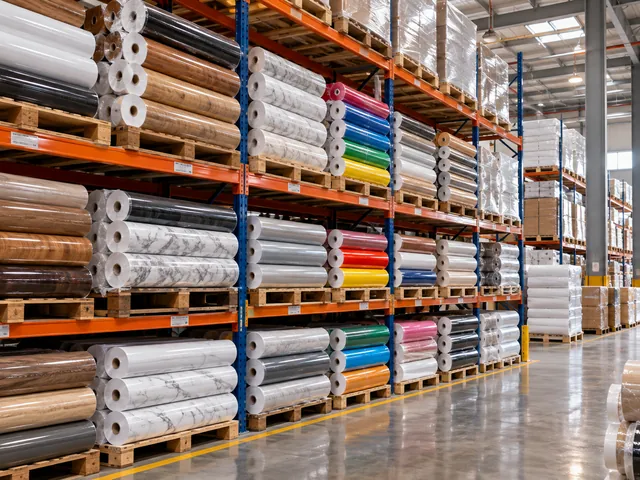
Sign shops and sticker businesses buying cutting vinyl in rolls should standardize colors and finishes and test new film on their own cutter settings, as described in our sign shop stock programme case study. We also produce custom die-cut vinyl stickers and logo decals; our checklist for ordering custom die-cut stickers covers artwork files, materials and MOQ.
Next step
Tell us whether you need cutting vinyl rolls or finished die-cut stickers, plus the colors, sizes, adhesive and quantities. We will send free A4 samples and a quotation within 24 hours. Contact us to request samples.
Frequently Asked Questions
What is the difference between sticker paper and vinyl sticker paper?
Sticker paper is paper label stock with adhesive; it is cheap but tears and is not waterproof. Vinyl sticker paper has a plastic film face, so it is more flexible, tear resistant and water resistant. For stickers that will be handled, washed or used outdoors, choose vinyl and laminate it.
Can you print vinyl stickers at home?
Yes. Print your design on printable vinyl sticker paper with an inkjet or laser printer, using the vinyl type made for your printer. Let the ink dry, apply a clear laminate for durability and cut the stickers out with scissors, a craft knife or a cutting machine's print-then-cut function.
How do you make vinyl stickers waterproof?
Vinyl is waterproof, but home inkjet ink is not. To make vinyl stickers waterproof, let the print dry fully and cover it with a clear self-adhesive laminate before cutting. Solid-color cut vinyl decals are waterproof without lamination because the color is in the film itself.
What vinyl do you use for decals?
Most decals are cut from solid-color self-adhesive PVC vinyl, typically 80 to 200 micron thick. Use permanent adhesive vinyl for cars, outdoor signs, mugs and glassware, and removable adhesive vinyl for walls, windows and temporary displays. Glossy and matte finishes are both available.
Do you need a cutting machine to make vinyl stickers?
No. Printed vinyl stickers can be cut out with scissors or a craft knife, especially simple round or square shapes. A cutting machine makes detailed die-cut shapes, kiss-cut sheets and cut vinyl lettering much faster and more accurately, and is essential for intricate decals.
How long do vinyl stickers last outside?
Outdoor life depends on the vinyl, ink and lamination. Laminated, UV-resistant vinyl stickers typically last a few years outdoors, while unlaminated inkjet prints may fade within months in direct sun. Solid-color cut vinyl decals usually last several years, with cast vinyl outlasting calendered vinyl.
Where can I get vinyl stickers made?
Local sign shops and print shops can produce small runs of custom vinyl stickers and decals, while sticker factories offer lower per-piece prices for larger quantities. Send vector artwork, sizes, quantity, material, finish and adhesive type, and ask for a physical sample before a large order.