Key takeaways
- Sublimation printing works only on polyester or poly-coated items in white or light colors, but leaves no hand feel.
- DTF transfers print full color with a white ink layer, so they work on cotton and dark fabrics.
- HTV is cut from colored film and is the standard method for names, numbers and simple one-color logos.
- Screen printing has high setup cost per color but the lowest cost per piece on large runs.
- Sublimation HTV lets sublimation printers decorate cotton and dark garments by pressing a sublimatable vinyl layer first.
Sublimation printing is best for full-color designs on white or light polyester; DTF transfers handle full color on any fabric color, including cotton; HTV (heat transfer vinyl) suits names, numbers and simple logos; and screen printing is cheapest and most durable for large runs. The right choice depends on fabric, colors and quantity.
All four methods put a design onto a garment, but they work in very different ways, need different equipment and suit different businesses. This guide explains how each one works, compares durability, feel and cost per piece, covers hybrid options such as printable HTV, sublimation HTV and heat transfer paper, and helps print shops, team suppliers and small apparel brands choose.
How does sublimation printing work?
Dye sublimation uses special sublimation ink printed onto sublimation transfer paper. Under a heat press at about 190–205 °C (375–400 °F) for 40–60 seconds, the solid dye turns directly into a gas and bonds into polyester fibers or polymer-coated surfaces. When it cools, the dye is locked inside the fiber rather than sitting on top.
- Pros: no hand feel at all, unlimited colors and photo detail, excellent wash durability, breathable.
- Cons: works only on polyester (at least about 65%, ideally 100%) or poly-coated blanks; only on white or light fabrics, because sublimation ink is transparent and there is no white ink.
Sublimation transfer printing is the standard for all-over-print sportswear, mugs, tumblers, mouse pads and polyester performance shirts. Sublimation sticker paper and sublimation sheets extend it to decals and crafts.
What is DTF heat transfer?
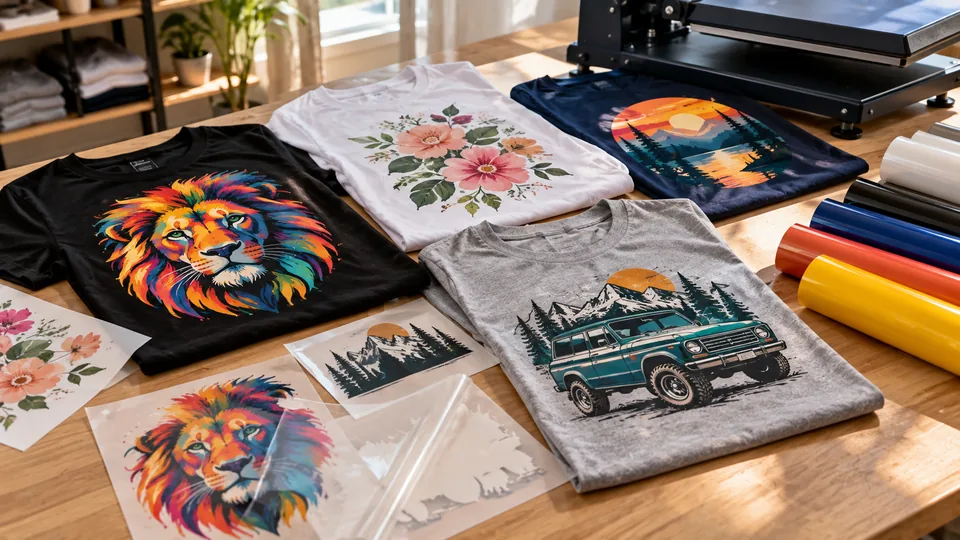
DTF (direct-to-film) prints CMYK pigment ink plus a white ink layer onto a clear PET film. A hot-melt adhesive powder is applied to the wet ink, cured, and the finished transfer is pressed onto the garment, typically at 150–165 °C (300–330 °F) for 10–15 seconds, then peeled hot or cold depending on the film.
- Pros: full color on any fabric color and almost any fiber (cotton, polyester, blends, nylon); no weeding; transfers can be pre-printed and stored; gang sheets let you print many designs at once.
- Cons: a slight rubbery hand feel on large solid areas; needs a DTF printer, powder and curing equipment, or a transfer supplier.
Many small shops order DTF transfers from a print service rather than buying a printer, which makes the method accessible with just a heat press.
What is heat transfer vinyl (HTV)?
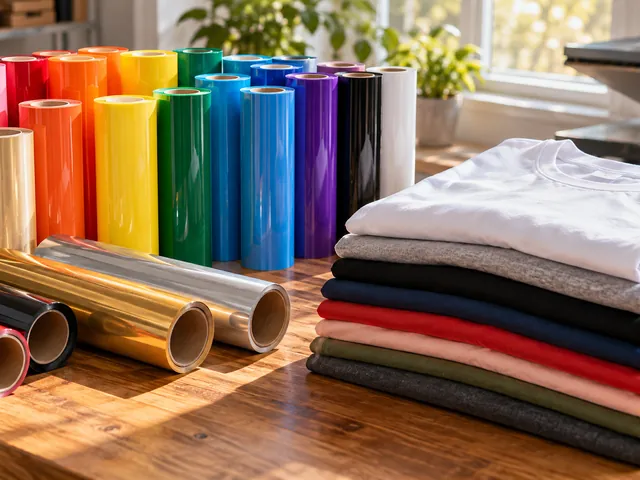
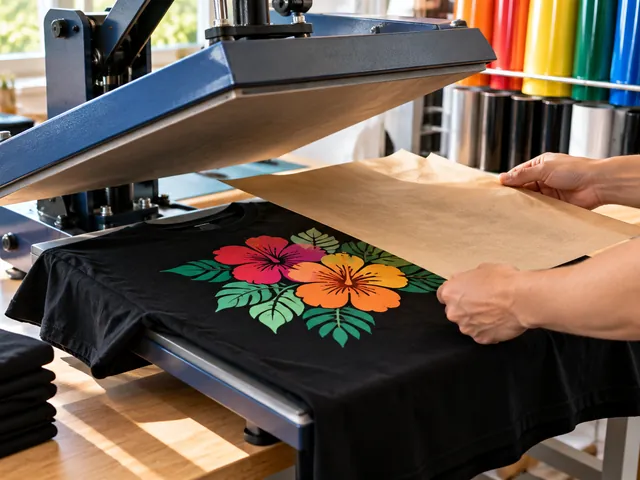
HTV is a colored polyurethane (PU) or PVC film with a heat-activated adhesive on a clear carrier. You cut the design mirrored with a plotter or cutting machine, weed away the excess, then press it, usually at 150–180 °C (300–355 °F) for 10–15 seconds.
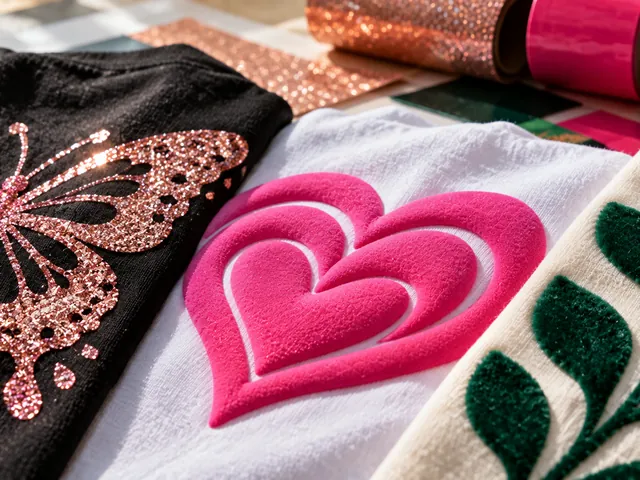
- Pros: very low setup cost; bright, opaque colors on any fabric color; durable; ideal for names, numbers and simple logos; specialty finishes such as glitter, metallic, flock, puff and reflective.
- Cons: one color per layer, so multicolor designs mean layering and longer production; fine detail is slow to weed.
Our heat transfer vinyl range includes PU flex and high-elastic sportswear grades in 0.5 m and 0.61 m widths, with transfer settings of 150–180 °C for 10–15 seconds. For finishes beyond standard colors, see our guide to specialty HTV.
How does screen printing compare?
Screen printing pushes plastisol or water-based ink through a fine mesh stencil, one screen per color, then cures the ink with heat. Setup takes time and costs money for each color, but after setup each print costs very little.
- Pros: lowest cost per piece at volume; very durable; vivid spot colors; specialty inks.
- Cons: setup cost per color makes small runs expensive; photo-realistic gradients are hard.
Plastisol transfers are a hybrid: the design is screen printed onto release paper, stored, and later applied with a heat press, giving screen-print durability without running a press for each order.
HTV vs DTF vs sublimation printing vs screen printing
The table compares the four methods, plus inkjet heat transfer paper, on the factors that matter most. Figures are typical.
| Factor | HTV | DTF | Sublimation | Screen printing | Heat transfer paper |
|---|---|---|---|---|---|
| Fabrics | Cotton, polyester, blends, nylon (grade-dependent) | Almost all | Polyester or poly-coated only | Most | Cotton and blends |
| Fabric colors | Any | Any | White or light only | Any | Light or dark paper versions |
| Colors per design | 1–3 practical | Unlimited | Unlimited | Usually 1–6 | Unlimited |
| Hand feel | Thin film | Slight, soft | None | Slight (plastisol) | Stiffer film |
| Durability | High (often 50+ washes) | High | Very high | Very high | Low to medium |
| Setup cost | Very low | Low (outsourced) to high (own printer) | Medium | High per color | Very low |
| Best quantity | 1–50 pieces | 1–500 pieces | Any, on polyester | 50+ pieces | 1–10 pieces |
| Best for | Names, numbers, simple logos | Full-color designs on cotton or dark shirts | All-over prints, sportswear, mugs | Bulk event and uniform orders | Home and hobby projects |
Printable HTV, sublimation HTV and heat transfer paper
Several hybrid products sit between these methods, and they are often confused.
Printable heat transfer vinyl
Printable HTV is a white or clear PU film that you print with an inkjet or eco-solvent printer, then contour-cut and weed. Printable heat transfer vinyl gives full-color designs without a DTF setup, works on dark fabrics when white-based, and has a softer feel and better wash life than paper transfers. Inkjet printable HTV needs pigment ink for good wash-fastness.
When comparing the best printable heat transfer vinyl, look at stretch, opacity on dark shirts, ink compatibility and the recommended press temperature. Printable tshirt vinyl with a matte face hides minor print banding better than gloss. Because you inkjet print on vinyl rather than paper, the film itself carries the color and the edges are sealed by the contour cut, which is why printable htv vinyl outlasts most paper transfers.
Sublimation HTV and sublimation vinyl
Sublimation HTV, also called sublimation heat transfer vinyl, is a white or glitter HTV with a polyester-friendly top coat that accepts sublimation ink. You press the HTV onto cotton or a dark garment first, then sublimate the design onto it. White heat transfer vinyl for sublimation is how sublimation printers decorate cotton shirts, and sublimation HTV for dark fabric gets around sublimation's light-color limit. Clear sublimation vinyl and sublimation vinyl sticker sheets do the same for hard surfaces, which is how sublimation stickers and sublimation decals for tumblers and laptops are made.
Heat transfer paper for shirts
Heat transfer paper, also sold as inkjet transfer paper, t shirt transfer paper, textile transfer paper, fabric transfer paper or printable heat transfer paper, is the easiest home option. You print the design on an inkjet or laser printer and iron or press it on. Light transfer paper is printed mirrored and used on white or light fabrics; dark heat transfer paper has an opaque white layer, is printed unmirrored and is peeled before pressing. Inkjet transfer paper for shirts and other transfer paper to make t shirts at home is cheap but stiffer and less durable than HTV or DTF, typically lasting 10–25 washes.
Note that "transfer paper for vinyl" usually means transfer tape for adhesive vinyl decals, a different product used to move cut vinyl onto a surface, not a garment transfer.
What equipment does each method need?
Startup cost often decides the method for a new business. Typical equipment for each:
- HTV: a cutting plotter or desktop cutting machine, weeding tools and a heat press (or a household iron for hobby use). This is the lowest-cost professional setup.
- Printable HTV and heat transfer paper: an inkjet or laser printer, a cutter with contour-cut registration for printable vinyl, and a heat press. Use laser jet transfer paper only with laser printers, because inkjet papers can melt in a fuser.
- Sublimation: a printer converted to or built for sublimation ink, sublimation paper, heat-resistant tape and a heat press; mug and tumbler presses for hard goods.
- DTF: a DTF printer with white ink, PET film, adhesive powder and a curing oven or shaker, or simply a heat press if you buy ready-made transfers.
- Screen printing: screens, emulsion and an exposure unit, a press, squeegees, inks and a flash or conveyor dryer. Plastisol ink transfers need only a heat press at the application stage.
A good heat press with even pressure and an accurate thermostat is common to nearly every method, so it is usually the first investment. If you print on transfer paper or film for resale, also plan for storage: DTF and plastisol transfers keep for months in a cool, dry place, while sublimation paper should be protected from humidity.
Which transfer method should you choose?
A quick decision guide:
- Is the garment 100% polyester and white or light? Use sublimation for full-color designs.
- Is it cotton, a blend or a dark color, with a full-color design? Use DTF heat transfer, or printable HTV for small runs.
- Is it names, numbers or a one- or two-color logo? Use HTV. It is the standard for team jerseys and personalization.
- Is it more than about 50 identical pieces with few colors? Use screen printing or plastisol transfers.
- Is it a one-off home project? Heat transfer paper or HTV with an iron will do.
Many shops combine methods: screen print or DTF the team crest, then add each player's name and number in HTV. Our PU vs PVC HTV guide for team jerseys covers that workflow, and the jersey HTV case study shows how HTV is approved on a sample garment.
For print shops and apparel brands: buying HTV in rolls
If HTV is part of your production, buying full rolls directly cuts the cost per meter and keeps colors consistent across batches. When sourcing, confirm the film type (PU or PVC), thickness, stretch and wash-fastness rating, carrier tack, and press settings. Our guide to HTV wash-fastness and heat-press settings explains what the numbers mean. We supply stock colors from one roll with 7–10 day lead times, and custom colors from 100 rolls in 15–25 days.
Next step
Tell us the garments, fabrics, colors and monthly volume you decorate, and we will suggest HTV grades to test. Contact us for free A4 samples and a quotation within 24 hours.
Frequently Asked Questions
What is the difference between sublimation and HTV?
Sublimation turns dye into a gas that bonds inside polyester fibers, so it has no hand feel but only works on white or light polyester. HTV is a colored film cut and pressed onto the fabric surface, works on any color and most fibers, and suits names, numbers and simple logos rather than photo designs.
Is DTF better than sublimation?
Neither is better overall. DTF works on cotton, blends and dark fabrics because it uses white ink, while sublimation only works on light polyester. Sublimation has no hand feel and outstanding durability on polyester. Choose sublimation for sportswear, mugs and all-over prints, and DTF for full-color designs on cotton or dark garments.
Can you sublimate on cotton?
Not directly. Sublimation dye only bonds with polyester or polymer coatings, so on cotton it washes out. To decorate cotton, press a white sublimation HTV or a sublimation-ready transfer layer onto the shirt first, then sublimate onto that layer, or use DTF or printable HTV instead.
What is printable HTV?
Printable HTV is a white or clear heat transfer vinyl you print with an inkjet or eco-solvent printer, then contour-cut, weed and heat press. It allows full-color designs on cotton and dark fabrics without a DTF setup, and it is usually softer and more wash-resistant than heat transfer paper.
How long do heat transfer paper designs last?
Heat transfer paper designs typically last about 10 to 25 washes before cracking or fading, depending on paper quality and washing. Wash inside out in cold water and air-dry to extend life. For longer-lasting results, HTV, DTF or screen printing usually last 50 washes or more.
Is screen printing cheaper than DTF?
For large runs of the same design with few colors, screen printing is usually cheaper per piece because setup is spread across many shirts. For small runs, many colors or many different designs, DTF is usually cheaper because it has no screens or per-color setup. The crossover is often around a few dozen pieces.
What is the difference between light and dark transfer paper?
Light transfer paper is transparent, printed in mirror image and used on white or light fabrics, so the shirt color shows through unprinted areas. Dark transfer paper has an opaque white layer, is printed unmirrored, is peeled before pressing and works on dark fabrics, but feels thicker.