Key takeaways
- PU HTV is thinner (typically 60–90 micron), softer and more elastic, which makes it the default choice for polyester and spandex team jerseys.
- PVC HTV is thicker (typically 120–180 micron), stiffer and more opaque, and works well on cotton tees, bags and rigid textiles where cost matters more than stretch.
- PU presses at a lower temperature (around 140–160 °C) than PVC (around 150–170 °C), which reduces scorch risk on sublimated or heat-sensitive polyester.
- For name-and-number kits, order PU in 0.5 m or 0.61 m rolls with a PET carrier that supports easy weeding of small letters and thin outlines.
- Shanghai Mars supplies both PU and PVC HTV from stock with MOQ of 1 roll, free A4 samples and 7–10 day lead time on standard colours.
For team jerseys, PU heat transfer vinyl is almost always the right choice: it is thinner, stretches with polyester and spandex knits, feels soft against the skin and survives frequent washing without cracking. PVC heat transfer vinyl is thicker, stiffer and cheaper per square metre, which makes it a sensible option for cotton training tees, drawstring bags and one-off promotional shirts, but not for a 20-piece kit that will be washed every week. The rest of this guide explains what sits behind that answer so you can specify the right roll for each job.
What PU and PVC HTV actually are
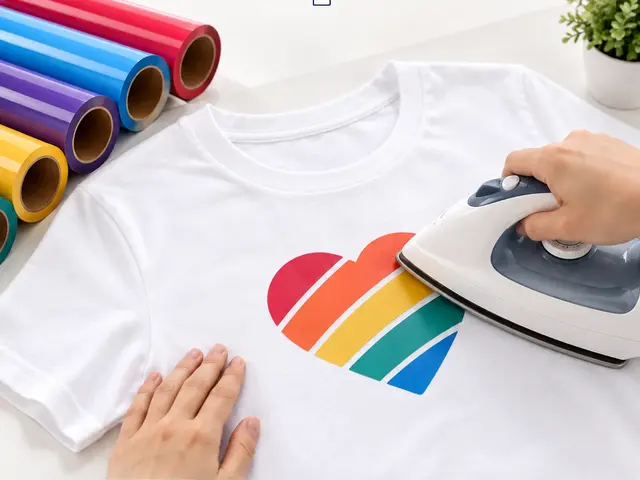
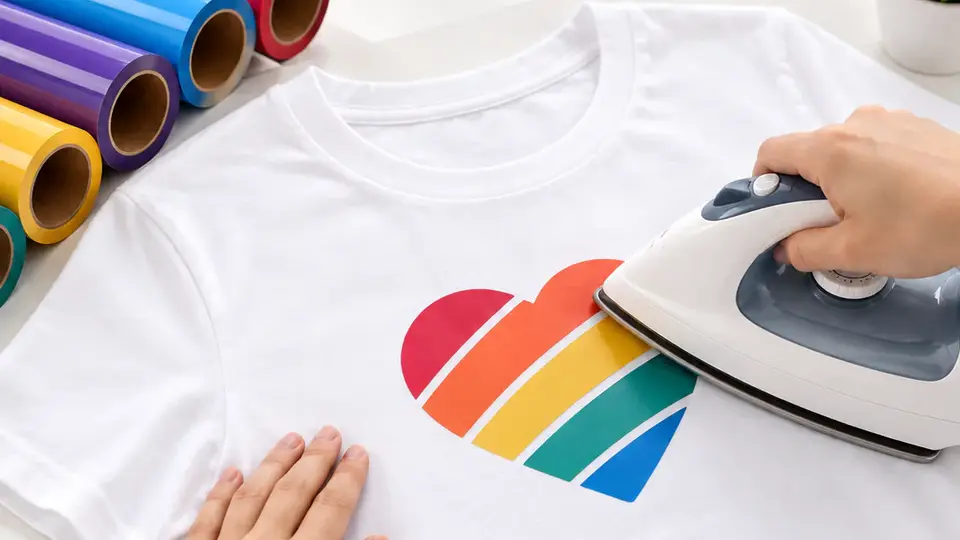
Both materials are a coloured polymer film coated with a hot-melt adhesive on one side and mounted on a clear PET carrier sheet on the other. You cut the design in mirror image on a vinyl plotter, weed away the excess, place the carrier face-up on the garment and press with heat. The adhesive melts into the fibres, the carrier is peeled away and the coloured film stays behind.
The difference is the polymer:
- PU (polyurethane) HTV uses a thin, elastic polyurethane layer. It is the material most brands mean when they say “sports HTV” or “stretch HTV”.
- PVC (polyvinyl chloride) HTV uses a thicker, plasticised vinyl layer. It is the older, lower-cost technology and is still widely used for casual wear and promotional textiles.
Shanghai Mars produces both on the same coating lines, so the carrier, adhesive and colour matching are consistent across the two ranges. You can see the full range on our heat transfer vinyl page.
Side-by-side comparison
| Property | PU HTV | PVC HTV |
|---|---|---|
| Total thickness (film + adhesive) | 60–90 micron (2.5–3.5 mil) | 120–180 micron (5–7 mil) |
| Hand feel | Soft, barely noticeable | Firm, rubbery |
| Elasticity | High; recovers with stretch knits | Low to medium; can crack on spandex |
| Opacity on dark fabric | Good; may need a white underlay for pastel tones | Very good; single layer covers dark cotton |
| Typical press temperature | 140–160 °C (285–320 °F) | 150–170 °C (300–340 °F) |
| Press time | 10–15 s | 12–18 s |
| Peel | Warm or cold, depending on grade | Cold peel is safest |
| Layering | Up to 3 layers with care | 2 layers recommended |
| Suitable fabrics | Polyester, poly-cotton, spandex, nylon (with test) | Cotton, poly-cotton, canvas, non-woven |
| Cost per m² | Higher | Lower |
| Roll widths from Shanghai Mars | 0.5 m, 0.61 m | 0.5 m, 0.61 m |
The figures above are industry-typical ranges. The datasheet for the exact roll you receive is always the reference, because pigment loading and adhesive weight shift the numbers slightly between colours and finishes.
Why stretch matters more than anything else on a jersey
A football, basketball or cycling jersey is a knitted polyester, often blended with 5–15% elastane. During play the fabric across the chest and back stretches by 20–40% and recovers thousands of times. A rigid film sitting on top of that fabric has two failure modes: it either cracks along the stretch direction or it delaminates at the edge where the stress concentrates.
PU films are formulated to elongate with the knit and return to shape. On a cured PU transfer you can pull the garment sideways, watch the number widen, release it and see no whitening or cracking. PVC films can tolerate a few cycles but the plasticiser that gives them flexibility migrates over time and with repeated hot washes, so the film becomes progressively more brittle.
For jerseys, therefore, the specification that matters is elongation, not thickness for its own sake. Thickness is simply the easiest visible proxy: thinner PU stretches more and feels lighter.
Heat sensitivity of sublimated polyester
Many team jerseys are now dye-sublimated polyester. Sublimation dye can re-migrate into a transfer film if it is pressed too hot for too long, which shows as a pink or grey tint on white HTV within a few days. Two things reduce that risk:
- Press at the lower end of the range. PU’s 140–160 °C window is a real advantage here; PVC’s 150–170 °C sits closer to the temperature where sublimation dye becomes mobile.
- Choose a PU grade with a dye-blocking layer if you are printing white numbers on red, black or navy sublimated shirts. Ask for it by name when you request samples so the right grade is sent.
Cotton has none of these issues, which is one reason PVC remains popular for cotton promotional tees.
Cutting and weeding: what changes between the two
Both films cut on standard drag-knife plotters with a 45° blade. Practical differences:
- Blade depth and force. PVC needs slightly more force (typically 90–130 g versus 60–90 g for PU) because the film is thicker. Set the depth so the blade scores the carrier but does not cut through it.
- Small text. Player numbers with thin inner counters and names in narrow fonts are easier to weed in PU on a tacky carrier because the tiny pieces stay anchored while you lift the surround.
- Large shapes. For chest logos and sponsor blocks, PVC lifts as one clean piece and is slightly faster to weed.
- Static. PU carriers are more prone to static cling in dry workshops; an anti-static brush or a humidifier helps.
If you also run a signage side to your business, the same plotter that cuts graphic and signage vinyl will handle HTV; only the blade force and the mirror setting change.
Cost and inventory planning
PVC is typically 20–35% cheaper than PU per square metre, which adds up on high-volume, low-margin promotional runs. The trade-off is return risk: a cracked number on a jersey is a rework for the whole shirt, and on a team order that is 15–25 shirts at once.
A practical way to hold stock for a jersey-focused shop:
- PU in 0.5 m rolls for name and number colours: white, black, red, royal, yellow, navy. These cover most club kits.
- PU shimmer or metallic in gold and silver for premium kits, held in smaller quantities.
- PVC in 0.61 m rolls for cotton tees, tote bags and one-off events where cost per unit matters and the garment is not stretch.
Shanghai Mars ships stock colours from 1 roll with a 7–10 day lead time, so you do not need to overstock slow colours. For custom colours, private-label packaging or special finishes, the MOQ is 100 rolls and the lead time is 15–25 days; details are on our OEM/ODM page.
Common mistakes when switching between PU and PVC
- Using one press setting for both. The two materials sit in different windows; pressing PU at PVC temperatures overcooks the adhesive and can gloss the surface.
- Hot-peeling PVC. Most PVC grades need a cold peel; pulling the carrier while the film is warm lifts the edges.
- Skipping the pre-press. A 3–5 second pre-press removes moisture and flattens seams. Missed pre-press is the single most common cause of poor adhesion in warranty claims.
- Layering PVC three deep. Thick stacks of PVC trap heat unevenly and the top layer often fails to bond. Keep PVC to two layers and use PU where three-colour logos are needed.
- Ordering on colour alone. A colour chip does not tell you the elongation or the peel type. Ask for the datasheet with every new roll.
- Skipping the swatch test. Press one number on a spare shirt, stretch it 20 times, wash it five times at 40 °C and compare with an unwashed reference before pressing the full kit. Our factory runs the same wash test on every production lot; see the quality page.
Next step
If you are deciding between PU and PVC for a specific jersey fabric, send us the garment composition and the design size and we will recommend a grade and a press setting. Free A4 samples of both PU and PVC HTV are available in any stock colour, and quotations for 1 roll upward are usually returned within one working day. Request samples or a quotation through our contact page.
Frequently Asked Questions
Which is better for team jerseys, PU or PVC heat transfer vinyl?
PU is better for most team jerseys because it is thinner, stretches with the fabric and feels softer on polyester and spandex. PVC is a cost-effective alternative for cotton training shirts and bags where stretch is less important.
Can I use PVC HTV on polyester jerseys?
You can, but PVC is stiffer and may crack on high-stretch knits after repeated washing. If you do use it on polyester, keep the design small, press at the lower end of the temperature range and test wash a sample first.
What thickness is PU heat transfer vinyl?
PU HTV is typically 60–90 micron (about 2.5–3.5 mil) including adhesive, while PVC HTV is usually 120–180 micron (about 5–7 mil). Thinner film means a softer hand and better breathability.
Does PU HTV need a different heat press setting than PVC?
Yes. PU generally presses at 140–160 °C for 10–15 seconds with medium pressure, while PVC presses at 150–170 °C for 12–18 seconds with medium to firm pressure. Always confirm with the datasheet for the specific roll.
Is PU or PVC HTV easier to weed?
Both cut cleanly on a standard plotter, but PU on a tacky PET carrier is easier for fine numbers and thin outlines because small pieces stay put. PVC is slightly easier for large, simple shapes because the film is thicker and lifts as one piece.
What is the minimum order for HTV from Shanghai Mars?
Stock colours ship from 1 roll (0.5 m or 0.61 m wide). Custom colours, finishes or private-label packaging start at 100 rolls with a 15–25 day lead time.