Key takeaways
- Puff vinyl is heat transfer vinyl with a foaming agent that expands when pressed, typically rising to around 0.5 to 1 mm.
- Puff, glitter and flock HTV must go on top in layered designs, because other vinyls do not bond well to their surfaces.
- Reflective HTV uses glass microbeads to return light to its source, but decorative reflective vinyl is not automatically certified high-visibility material.
- Stretch HTV is a thin, highly elastic PU film of about 75 to 100 micron designed for leggings, swimwear and performance fabrics.
- Glitter adhesive vinyl for hard surfaces is a different product from glitter HTV, using a pressure-sensitive adhesive instead of a heat-activated one.
Puff vinyl is a heat transfer vinyl (HTV) that rises into a raised, foam-like 3D finish when you heat-press it onto fabric. It belongs to a family of specialty HTV that also includes glitter, flock, reflective, glow in the dark, metallic, patterned and stretch vinyl. Each cuts like standard HTV but needs its own press and layering rules.
Specialty vinyl is where much of the margin is for custom apparel shops: a puff logo or a reflective stripe turns a basic tee into a premium product. This guide explains what each type is made of, typical heat press settings, what you can layer, and how to choose between them.
Different kinds of vinyl: HTV vs adhesive vinyl
Before comparing specialty finishes, it helps to separate the two big vinyl types, because many products share names such as "glitter vinyl" or "patterned vinyl".
- Heat transfer vinyl (HTV, iron-on): a PU (polyurethane) or PVC film with a heat-activated adhesive on a clear PET carrier. It bonds to fabric under heat and pressure. Puff HTV, flock HTV and reflective HTV are all in this group.
- Adhesive vinyl: a PVC film with a pressure-sensitive adhesive on a paper liner, for hard surfaces such as mugs, walls, windows and signs. Glitter permanent vinyl, patterned adhesive vinyl, black gloss vinyl wrap, sage green vinyl and plain adhesive vinyl black are in this group.
The quick test: HTV has a shiny, clear carrier and you cut it mirrored, adhesive-side up; adhesive vinyl has a paper liner and you cut it face-up. Our guide to heat transfer vinyl types covers the basics, and our adhesive vinyl guide covers the other side.
Specialty HTV types compared
Settings vary by product, so always follow the supplier's datasheet. The figures below are typical starting points for a flat heat press with medium to firm pressure.
| Type | What it is | Typical temperature | Typical time | Peel | Layer on top of it? |
|---|---|---|---|---|---|
| Puff HTV | PU film with a foaming agent that expands with heat | 145–160 °C (290–320 °F) | 5–15 s | Usually hot | No; puff goes on top |
| Glitter HTV | Polyester glitter flakes in a PU or PVC base, thicker than standard | 155–165 °C (310–330 °F) | 10–15 s | Warm or cold | No; glitter goes on top |
| Flock HTV | Short rayon or polyester fibers on an adhesive base; velvet feel | 150–160 °C (300–320 °F) | 10–15 s | Hot or warm | No |
| Reflective HTV | Glass microbeads on a PU or PVC film that bounce light back | 150–160 °C (300–320 °F) | 10–15 s | Hot or warm | No |
| Glow in the dark HTV | Film loaded with phosphorescent pigment that charges in light | 150–160 °C (300–320 °F) | 10–15 s | Warm | Limited |
| Metallic and shimmer HTV | PU or PVC with metallic or pearlescent pigments or foil | 150–160 °C (300–320 °F) | 10–15 s | Warm or cold | Usually no |
| Patterned and camo HTV | Printed PU film in camo, plaid, floral, animal and other prints | 150–160 °C (300–320 °F) | 10–15 s | Per product | Usually no |
| Stretch HTV | Thin, highly elastic PU, about 75–100 micron | 150–160 °C (300–320 °F) | 10–15 s | Hot | Yes, as a base layer |
Standard PU HTV from our range presses at 150–180 °C for 10–15 seconds. For a deeper look at what each setting does, read HTV wash-fastness and heat press settings.
What is puff vinyl?
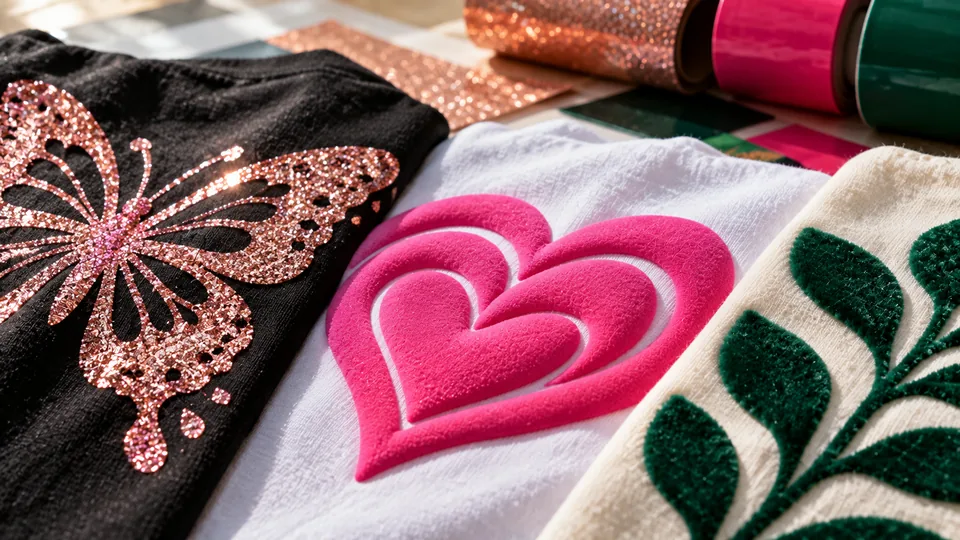
Puff vinyl (puff vinyl HTV, puff heat transfer vinyl, 3D puff vinyl or 3D puff heat transfer vinyl) contains a heat-activated foaming agent. When pressed, the film expands upward, typically to around 0.5–1 mm, giving a soft, raised print similar to screen-printed puff ink. It is popular for hoodies, caps, streetwear logos and kids' clothing.
How to press puff HTV
- Cut mirrored with a slightly higher force. Puff print vinyl is thicker than standard HTV; do a test cut and weed carefully, as fine details under about 3 mm (1/8 in) tend to merge when puffed.
- Pre-press the garment. Press for 3–5 seconds to remove moisture and wrinkles.
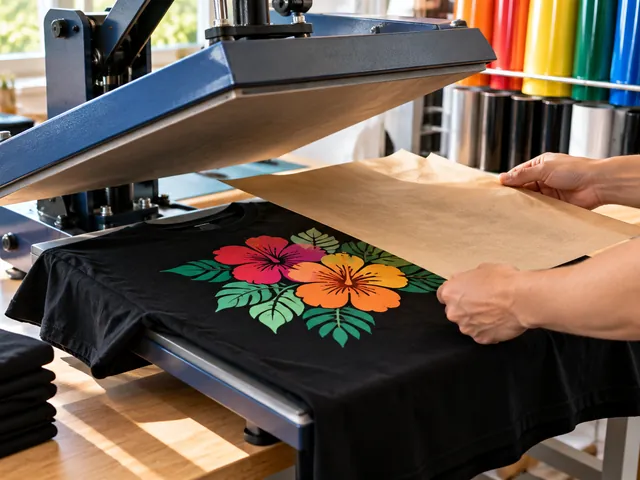
- Position and cover. Place the design carrier-side up and cover with a PTFE sheet or parchment.
- Press. Press at the supplier's temperature, typically 145–160 °C (290–320 °F), for 5–15 seconds with light to medium pressure. Too much pressure flattens the puff.
- Peel and let it rise. Peel the carrier as instructed, usually hot. Some puff films rise fully only after the carrier is removed, or after a brief second press without the carrier.
- Let it cure. Wait 24 hours before washing.
Metallic puff vinyl and gold puff vinyl combine the raised effect with a metallic surface. Because the puff expands, always layer it on top of other HTV, never underneath. Puff vinyl transfers and pre-cut 3D puff transfers save time on repeat logos.
Glitter vinyl and glitter HTV
Glitter vinyl is the most widely used specialty finish. Glitter HTV (heat transfer vinyl glitter) uses real polyester glitter flakes in a thicker film, so it has more texture than standard HTV and does not stretch well. Silver glitter heat transfer vinyl, gold, yellow glitter heat transfer vinyl and glitter orange HTV are best sellers for team spirit wear and party shirts.
- Cut with a deeper blade setting and slower speed; glitter dulls blades faster.
- Glitter goes on top in layered designs because other vinyls will not bond to its textured surface.
- Clear glitter vinyl and glitter transparent vinyl have glitter in a clear base, so the garment color shows through.
For hard surfaces, glitter adhesive vinyl (glitter vinyl self adhesive, glitter permanent vinyl and glitter vinyl sheets) is a different product: a PVC film with pressure-sensitive adhesive for tumblers, signs and decor. Orange glitter vinyl, silver glitter vinyl and gold glitter permanent vinyl are typical colors. Sparkle vinyl sheets and shimmer vinyl are lighter-effect alternatives with fine pearlescent pigment instead of flakes.
Flock HTV: the velvet finish
Flock vinyl (flock HTV, heat transfer flocked film, or strip flock vinyl) has a surface of short fibers that feels like velvet or suede. It gives a premium, matte look on varsity letters, sweatshirts and kids' wear. Strip flock HTV is a thin flock grade made for numbers and letters on sportswear. Flock vinyl heat transfer is best pressed with a cover sheet and medium pressure so the fibers are not crushed. Avoid layering anything on top of flock, and wash garments inside out.
Reflective heat transfer vinyl
Reflective heat transfer vinyl (reflective HTV vinyl, reflective heat transfer film or reflective vinyl transfer) uses tiny glass microbeads that bounce light back toward its source. It looks silver-grey in daylight and bright white in headlights. It is used for safety stripes on running gear, workwear, pet coats and bags. Do not iron over reflective film without a cover sheet, and avoid high-heat dryers, which can dull the beads over time. Note that decorative reflective HTV is not automatically certified high-visibility material; workwear that must meet a safety standard needs certified reflective tape.
Glow in the dark vinyl
Glow in the dark vinyl contains phosphorescent pigment that absorbs light and then glows, usually pale green, for minutes to a few hours depending on the pigment and how long it charged. Glow in the dark heat transfer vinyl is popular for Halloween shirts, kids' pajamas and event wear. Its glow is strongest after exposure to direct sunlight or UV light, and it looks off-white in normal lighting.
Patterned, camo, metallic and stretch HTV
- Patterned HTV: patterned heat transfer vinyl is pre-printed with designs such as plaid, leopard, floral or tie-dye. Camo HTV (camo heat transfer vinyl or camouflage heat transfer vinyl) is the best-selling print for hunting and outdoor brands. Patterned permanent vinyl and patterned vinyl sheets are the adhesive equivalents for hard surfaces.
- Metallic HTV: metallic gold heat transfer vinyl, metallic gold HTV, silver and metallic red HTV give a foil-like shine. Press at the lower end of the range and avoid over-pressing, which can dull the surface.
- Stretch HTV: stretch heat transfer vinyl (stretchable vinyl or stretch vinyl HTV) is a thin, elastic PU that moves with performance fabrics, leggings, swimwear and compression wear. Stretchy vinyl material recovers its shape after stretching instead of cracking. It is not the same as stretchy vinyl fabric, which is a coated textile used for upholstery and fashion.
Our soft-stretch PU heat transfer vinyl and high-elastic athletic grades are made for this kind of stretch work. PU generally stretches and recovers better than PVC, which is why it dominates sportswear.
Buying specialty HTV: rolls, bundles and packages
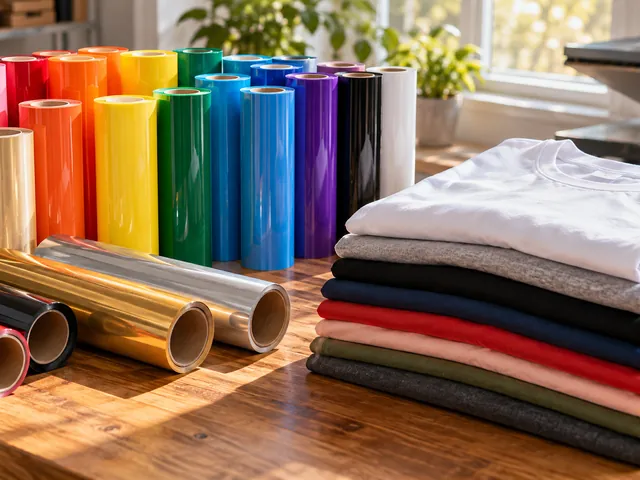
Hobby crafters usually buy vinyl bundles or a vinyl package of 30 × 30 cm (12 × 12 in) sheets in mixed vinyl types. Shops and print-on-demand businesses save significantly by moving to rolls once they know their best sellers. When you compare suppliers, check:
- Width and length: our HTV comes in 0.305 m, 0.5 m and 0.61 m widths, with 25 m and 50 m lengths on some grades.
- Recommended press temperature, time and peel, and whether it is iron-on compatible.
- Wash-fastness rating and the fabrics it is approved for (cotton, polyester, blends, nylon).
- Carrier type: a sticky carrier holds small letters in place for layered designs.
- Batch color consistency, especially for black vinyl rolls and team colors.
For print shops and apparel brands
Most apparel decorators keep standard matte and glossy PU HTV in 20–30 core colors, then add two or three specialty finishes that their customers ask for most. Track which effects sell before committing to rolls, and keep press settings for each film on a card at the press. Our heat transfer vinyl range covers PU and PVC films in matte, glossy, shimmer and metallic gold and silver finishes, plus high-elastic stretch and athletic grades. Stock colors ship from 1 roll in 7–10 days, and custom colors start at 100 rolls. See how a print-on-demand business set up its HTV supply.
Next step
Tell us the finishes, colors, roll widths and monthly quantities you need, and the fabrics you press onto. Contact us for free A4 samples to test on your own heat press and a quotation within 24 hours.
Frequently Asked Questions
What is puff vinyl?
Puff vinyl is a heat transfer vinyl containing a heat-activated foaming agent. When pressed onto fabric, it expands into a soft, raised 3D print, typically around 0.5 to 1 mm high, similar to screen-printed puff ink. It is popular for hoodies, caps and streetwear logos and should always be the top layer in a design.
What temperature do you press puff HTV?
Puff HTV is typically pressed at about 145 to 160 degrees C (290 to 320 degrees F) for 5 to 15 seconds with light to medium pressure, but you should follow the supplier's datasheet. Too much pressure flattens the puff effect, and too little heat stops it rising fully. Test on scrap fabric first.
Can you layer HTV on top of glitter vinyl?
No, you should not layer HTV on top of glitter vinyl. The textured glitter surface does not give other vinyl a smooth area to bond to, so the top layer peels off in the wash. Put standard HTV underneath and the glitter on top, or cut the design as a knockout so the layers sit side by side.
What is flock HTV?
Flock HTV is heat transfer vinyl with a surface of short rayon or polyester fibers that gives a soft, velvet-like feel and matte look. It is used for varsity lettering, sweatshirts and kids' clothing. Press it with a cover sheet and medium pressure so the fibers are not crushed, and do not layer other vinyl on top.
How does reflective heat transfer vinyl work?
Reflective heat transfer vinyl works with tiny glass microbeads embedded in the film that bounce light back toward its source. It looks silver-grey in daylight but shines brightly in car headlights or flashlight beams. It suits running gear, bags and pet coats, but safety workwear that must meet a standard needs certified reflective material.
How long does glow in the dark vinyl glow?
Glow in the dark vinyl usually glows for minutes up to a few hours after charging, depending on the phosphorescent pigment and how long and how strongly it was exposed to light. Direct sunlight or a UV light charges it fastest. The glow is brightest in the first few minutes and then fades gradually.
What is the difference between stretch HTV and regular HTV?
Stretch HTV is a thinner, more elastic polyurethane film, often about 75 to 100 micron, that stretches and recovers with the fabric instead of cracking. Regular HTV is fine on cotton tees but can crack on spandex, leggings, swimwear and compression wear. Stretch HTV can also serve as a base layer in layered designs.