Key takeaways
- Most sticker residue is pressure-sensitive adhesive that splits during peeling, leaving tacky glue on the surface.
- Rubbing alcohol at 90–99% isopropyl dissolves acrylic label glue on glass, metal and hard plastic and evaporates without leaving a film.
- Cooking oil and citrus removers work best on rubber-based residue such as duct tape glue, but must be washed off with soap afterward.
- Acetone is the strongest household adhesive remover but can cloud plastics and soften varnish, so use it only on glass and bare metal.
- Never machine-dry clothing with sticker glue on it, because dryer heat sets the adhesive into the fibers.
Here is how to remove sticker residue: peel off as much label as you can, soften the rest with gentle heat, then dissolve the adhesive with rubbing alcohol (70–99% isopropyl), cooking oil or a citrus-based adhesive remover. Wipe the loosened glue away with a soft cloth or plastic scraper and wash with dish soap.
That four-step routine works on most surfaces, but the best solvent changes with the material. Glass tolerates almost anything, many plastics cloud under strong solvents, unsealed wood absorbs oil, and fabric needs a pre-treat before it goes in the washer. This guide covers each case, explains why sticker glue behaves the way it does, and adds notes for installers and retailers who deal with film and tape residue every week.
Why does sticker residue stay behind?
Most labels, price tags and decals use a pressure-sensitive adhesive (PSA): a permanently tacky polymer, usually acrylic or rubber-based, that bonds when pressed rather than when it dries. When you peel a label, the bond between the adhesive and the surface can be stronger than the bond between the adhesive and the paper face, so the glue splits and stays on the surface.
Three things make it worse: age (the adhesive flows into the surface texture over months), heat and sunlight (which can harden rubber adhesives into a crusty film), and paper face stock that tears instead of releasing. Knowing the adhesive type helps you choose a solvent. Acrylic PSAs respond well to isopropyl alcohol; rubber-based PSAs, common on cheap tape and price labels, dissolve more readily in oils and citrus solvents. Our explainer on pressure-sensitive adhesive chemistry goes deeper.
How to remove sticker residue: step by step
This is the best way to remove sticker residue from a hard, non-porous surface such as glass, metal, glazed tile or sealed plastic. Always test any solvent on a hidden spot first.
- Peel what you can. Lift a corner with a fingernail or plastic card and pull slowly at a low angle, close to 180°. Slow peeling leaves less glue behind than a fast rip.
- Warm the residue. Use a hairdryer on medium heat held 10–15 cm (4–6 in) away for 30–60 seconds. Warm adhesive is softer and often rolls off under your thumb.
- Apply a solvent. Dampen a cloth or cotton pad with rubbing alcohol, vegetable oil or a citrus adhesive remover and press it onto the residue for 2–5 minutes so it can penetrate.
- Lift the softened glue. Rub in small circles with the cloth, or push the glue off with a plastic scraper or old gift card. Reapply solvent as it evaporates.
- Clean and dry. Wash the area with warm water and a drop of dish soap to remove any oily film, then dry with a lint-free cloth.
On most surfaces this takes five to ten minutes. If the residue has hardened into a brittle layer, repeat steps 2 and 3 rather than scraping harder.
What is the best adhesive remover?
There is no single best adhesive remover for every job; the right choice depends on the surface and the adhesive. The table below compares the common options, from household products to stronger solvents.
| Remover | Works best on | Avoid on | Notes |
|---|---|---|---|
| Rubbing alcohol (70–99% isopropyl) | Glass, metal, hard plastics, glazed tile | Acrylic sheet, shellac, some painted finishes | Evaporates cleanly; 90%+ is faster than 70% |
| Cooking oil, baby oil or peanut butter | Plastic, glass, sealed wood, painted metal | Unsealed wood, fabric, paper, drywall | Slow but gentle; must be washed off with soap |
| Citrus (d-limonene) adhesive remover | Most hard surfaces, old rubber-based glue | Some plastics and fresh paint | Strong odor; ventilate the room |
| White vinegar (5% acetic acid) | Glass, ceramic, light residue | Natural stone such as marble | Mild; best combined with heat |
| Warm soapy water | Fresh residue, painted walls, fabric | Hardened or aged glue | Safest first attempt |
| Acetone or nail polish remover | Glass, bare metal | Most plastics, varnish, synthetic fabric | Strongest adhesive remover at home; can melt plastics |
| Heat (hairdryer or heat gun on low) | Vinyl film, decals, labels on glass or metal | Thin plastic, heat-sensitive finishes | Softens glue before solvent |
A DIY adhesive remover that works on many surfaces is a paste of one part baking soda to one part cooking oil. The oil dissolves the glue and the baking soda adds gentle abrasion without scratching most hard surfaces.
Rubbing alcohol for sticker residue
Rubbing alcohol for sticker residue is the most searched method because it is cheap, dries without a film and is safe on most glass, metal and hard plastic. Use 90–99% isopropyl alcohol for faster results; 70% contains more water and needs longer contact time. Isopropyl alcohol adhesive remover is also what most window film installers use for final cleaning, since it leaves no oil that could interfere with the next application.
How do you remove sticker glue from glass?
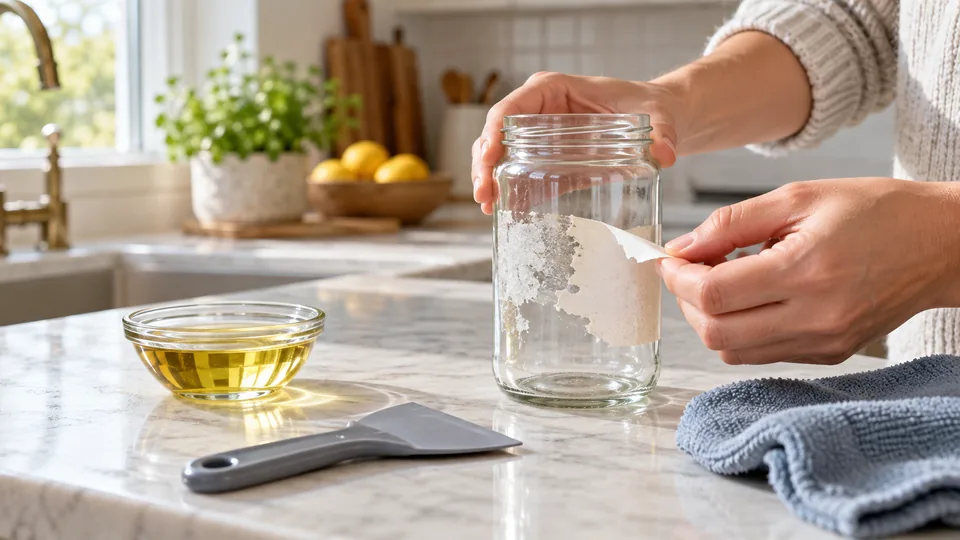
If you are wondering how to get sticky residue off glass, it is the easiest surface because it is hard, non-porous and resistant to most solvents. Here is how to remove sticker marks from glass, jars or windows:
- Soak removable items such as jars in hot soapy water for 10–20 minutes, then peel the softened label.
- Hold a new single-edge razor blade at about 30° and shave the residue off flat glass. Keep the glass wet to avoid scratches; do not use a blade on coated, tinted or low-E glass.
- Wipe remaining glue with rubbing alcohol, white vinegar or acetone.
- Finish with glass cleaner and a lint-free cloth.
For how to get tape residue off glass, or when you need a window film adhesive remover after stripping old tint or privacy film, spray the surface with soapy water, scrape with a razor, then wipe with alcohol. Our guide on installing and removing window film covers the full removal process.
How to get sticker residue off plastic
Plastic needs the most care because solvents such as acetone and strong citrus removers can soften, cloud or craze it. Polycarbonate and acrylic sheet are especially sensitive. When removing sticker residue from plastic, work from the gentlest method upward:
- Warm soapy water and a soft sponge.
- Cooking oil or baby oil left on for 5–10 minutes, then wiped off.
- Rubbing alcohol on a cotton pad, tested on a hidden spot first.
- A plastic scraper, never a metal blade.
The same steps show how to get glue off plastic containers, storage bins, toys and appliance panels. Avoid abrasive pads, which leave fine scratches that collect dirt.
How to get sticker residue off clothes
If you want to know how to clean sticker glue from fabric, start here: it often appears after a label goes through the wash. To get sticker residue off clothes, do not put the garment in the dryer, because heat sets the adhesive.
- Scrape off loose bits with a dull knife or fingernail.
- Dab the spot with rubbing alcohol or a little dish soap and work it in with an old toothbrush.
- For stubborn glue, place an ice cube on it for a few minutes; hardened residue often cracks and flakes off.
- Wash in the warmest water the care label allows, then air-dry and check before drying by machine.
Test alcohol on an inside seam first, especially on silk, acetate and dyed synthetics. The same method shows how to remove adhesive from fabric after tape, name badges or iron-on patches.
How do you get sticky stuff off wood?
Wood is porous unless it has a sealed finish, so the method depends on what is on the surface. On varnished, lacquered or painted wood, warm the residue with a hairdryer, then rub with a few drops of mineral oil or cooking oil and buff off with a soft cloth. On raw or oiled wood, skip liquid oil, which can darken the grain; use heat and a plastic scraper, then a light pass with fine (240-grit) sandpaper if needed.
Avoid acetone and strong alcohol on finished furniture; they can soften lacquer and shellac. If the residue comes from old furniture film or contact paper, see our guide on wrapping furniture with vinyl film for how removable adhesives are designed to come off cleanly.
How to remove tape residue and duct tape residue
Duct tape uses a thick rubber-based adhesive that is harder to remove than label glue. Here is how to get tape residue off, and how to remove duct tape residue in particular, by surface:
- Hard surfaces: heat, then oil or citrus remover, then soap and water.
- Painted walls: warm soapy water first; rubbing alcohol on a barely damp cloth if needed. Strong solvents can lift latex paint.
- Metal: how to remove adhesive residue from metal is simple: use rubbing alcohol or acetone, then a clean dry wipe to prevent water spots.
- Tile floors: for how to remove glue from tile floor areas after old carpet tape, use a plastic floor scraper with warm water and dish soap; a dedicated tile adhesive remover is for thicker mastic.
Rolling the residue with a fresh piece of the same tape, pressed and pulled quickly, also lifts a surprising amount of duct tape residue before you reach for solvent.
How to remove adhesive from a wall
Walls are the most delicate case because paint and drywall paper tear easily. To remove adhesive from wall surfaces, or to get sticky residue off a wall after removing wall decals, hooks or peel-and-stick wallpaper, warm the area with a hairdryer, roll the residue off with your thumb, then wipe with warm water and a little dish soap. Use rubbing alcohol only on gloss or semi-gloss paint.
Quality self-adhesive films are designed to minimize this problem. Removable acrylic adhesives on decorative wallpaper and furniture film are formulated to peel without leaving glue when removed at room temperature, typically 18–25 °C (65–77 °F). See our guide to removing wallpaper without damaging walls for the full process.
For installers and retailers: preventing residue complaints
Residue complaints are one of the most common returns issues for peel-and-stick products. If you sell or install self-adhesive film, a few specification choices reduce them:
- Specify removable adhesive for rental, hotel and short-term applications, and permanent adhesive only where the film will stay for years.
- Prime new drywall before applying wallpaper so the adhesive bonds to paint, not paper.
- Tell customers to peel slowly and warm the film when removing it, especially after several years in sunlight.
- Request samples and run a peel test on your target surface before ordering in volume.
Our home and furniture decorative films and wallpaper are available with removable adhesive grades, and we supply free A4 samples so you can test residue behavior before you stock a line.
Next step
If you are sourcing peel-and-stick wallpaper, furniture film or vinyl that removes cleanly, tell us the surface, the expected service life and whether the application is permanent or temporary. Contact us for free A4 samples and a quotation within 24 hours.
Frequently Asked Questions
Does rubbing alcohol remove sticker residue?
Yes. Rubbing alcohol dissolves most acrylic sticker adhesives on glass, metal, glazed tile and hard plastic. Use 90–99% isopropyl for faster results, press a soaked cotton pad on the residue for two to five minutes, then rub it off. It evaporates cleanly, but test it first on acrylic sheet, varnish and painted surfaces.
What is the best way to get sticker residue off?
The best way to get sticker residue off is to combine heat and a solvent. Warm the glue with a hairdryer for about a minute, apply rubbing alcohol, cooking oil or citrus adhesive remover for a few minutes, then wipe or scrape it away with a plastic card. Finish by washing with soap and water.
How do I get sticker glue off clothes after washing?
Do not put the garment in the dryer. Scrape off loose glue, dab the spot with rubbing alcohol or dish soap and scrub gently with an old toothbrush. For hardened residue, freeze it with an ice cube so it flakes off. Wash again in the warmest water the care label allows, then air-dry.
How do you remove sticker glue from plastic without damaging it?
Start with warm soapy water, then try cooking oil or baby oil left for five to ten minutes. If residue remains, use rubbing alcohol on a hidden spot first. Avoid acetone and strong solvents, which can cloud or crack plastics such as acrylic and polycarbonate, and use a plastic scraper rather than metal.
How do you remove duct tape residue?
Duct tape uses a thick rubber-based adhesive. Warm it with a hairdryer, then apply cooking oil or a citrus-based adhesive remover and let it soak for several minutes. Scrape it off with a plastic card and wash the surface with dish soap. Pressing fresh tape onto the residue and pulling quickly also lifts a lot of it.
Can you use a razor blade to remove stickers from glass?
Yes, on plain glass. Wet the glass with soapy water and hold a new single-edge blade at about 30 degrees, shaving the residue off in one direction. Keeping the surface wet prevents scratches. Do not use a blade on tinted, coated, low-E or tempered glass with printed markings, or on window film.
How do you make a DIY adhesive remover?
Mix equal parts baking soda and cooking oil into a paste. Spread it over the residue, leave it for five to ten minutes, then rub it off with a cloth. The oil dissolves the adhesive and the baking soda adds gentle abrasion. Wash the area with warm soapy water afterward to remove the oily film.
How do you remove adhesive from a painted wall?
Warm the residue with a hairdryer for 30 to 60 seconds and roll it off with your thumb. Wipe what remains with warm water and a little dish soap on a soft cloth. Use rubbing alcohol only on gloss or semi-gloss paint, and avoid acetone or citrus solvents, which can lift latex paint.