Key takeaways
- Furniture vinyl wrap is a self-adhesive PVC film with a face film, pressure-sensitive adhesive and release liner.
- Thicker films around 0.3–0.5 mm hide minor scratches and grain better than 80–100 micron contact paper.
- Degreasing old polish and wax off furniture before wrapping is the single most important step to prevent lifting.
- Cutting film 3–5 cm oversize on every side leaves enough material to wrap edges with heat.
- A single 1.22 m wide roll can cover a standard interior door face and both edges without a seam.
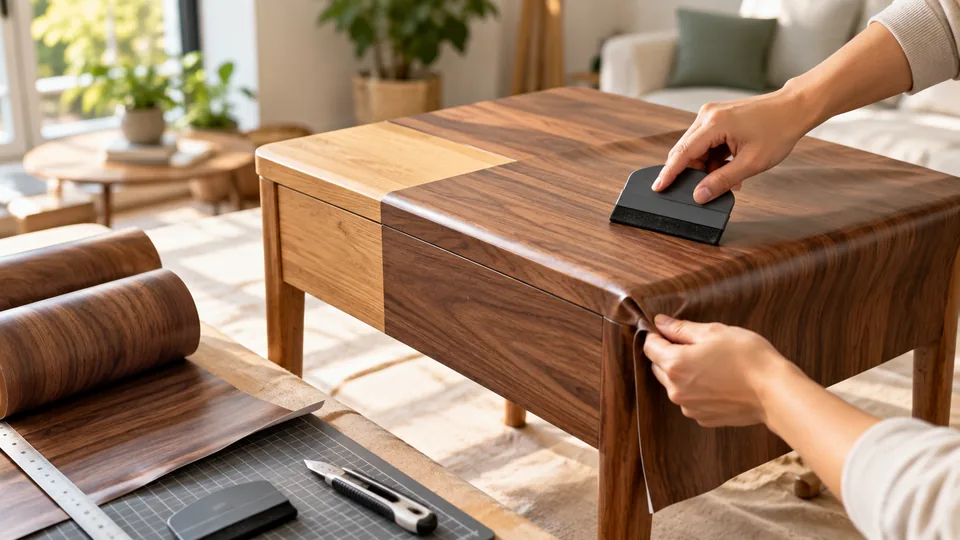
Furniture vinyl wrap is a self-adhesive PVC film that you apply over tables, dressers, cabinets and doors to change their color or finish without sanding back or painting. Clean and degrease the piece, cut the film oversize, squeegee it from the center outward, warm it to wrap the edges, and trim. Most pieces take one to three hours.
Below: which film to buy, the tools you need, a step-by-step wrapping method for flat surfaces, edges and corners, what a vinyl wrap costs compared with refinishing, and how to give a cheap hollow core door or an old dresser a convincing makeover.
What is furniture vinyl wrap?
Furniture wrap film has three layers: a printed or solid-color PVC face film, a pressure-sensitive adhesive (PSA), and a release liner, usually a grid-printed paper. The face film may be smooth or embossed to imitate wood grain, leather or stone, and comes in matte, satin, high-gloss or metallic finishes.
Thickness matters more than anything else for furniture:
| Film type | Typical thickness | Strengths | Best for |
|---|---|---|---|
| Craft or contact paper | 80–100 micron (3–4 mil) | Cheap, easy to cut | Drawer fronts, shelves, short-term projects |
| Decorative furniture film | 120–300 micron | Good conformability, many patterns | Dressers, side tables, kitchen cabinets |
| Architectural or thick furniture film | 0.3–0.5 mm | Hides minor flaws, durable, wood texture | Doors, tables, hotel furniture, wall panels |
| Vehicle wrap film (cast vinyl) | 50–100 micron | Very conformable, air-release channels | Complex curves, metal surfaces |
Our home and furniture decorative films run up to 0.5 mm thick on 1.22 m × 50 m rolls, with glossy, matte and embossed surfaces and a 3-year warranty. A 0.5 mm film hides fine scratches and grain beneath, which is why it is used for door and furniture renovation in hotels.
Cast vs calendered vinyl wrap
Cast vinyl wrap is made by casting liquid PVC onto a carrier, so it has almost no memory and stretches around complex curves without shrinking back. That is why it is the standard vinyl wrap for automobiles and the usual bus wrap material. Calendered film is rolled out from a heated mass; it is thicker, stiffer and more economical, and it performs well on the flat panels and simple edges typical of furniture. For a table or dresser, a thicker calendered decorative film is usually the better choice; for a curved chair shell, a thinner cast film is easier.
Vinyl wrap tools: what you need
A basic vinyl wrap tool kit for furniture costs little and makes a visible difference to the result:
- Felt-edged squeegee: the felt edge prevents scratches on gloss films.
- Heat gun or hair dryer: softens the film to wrap edges and corners.
- Snap-off utility knife with 30° blades: change blades often; a dull blade tears film.
- Knifeless trim tape: for cutting patterns or seams on the piece without risking the surface.
- Isopropyl alcohol and lint-free cloths for final cleaning.
- Fine sanding sponge (220–320 grit), wood filler and a scraper for prep.
- Measuring tape, straightedge and masking tape for positioning.
- Optional: wrap gloves to slide your hand across the film without fingerprints, and an adhesion primer for edges and low-energy plastics.
How to wrap furniture with vinyl, step by step
Work at room temperature, ideally 18–25 °C (65–77 °F), in a dust-free space. The same method works for tables, dressers, nightstands, wardrobe doors and interior doors.
- Remove hardware and disassemble. Take off handles, knobs and hinges, and remove drawers and doors so each panel can be wrapped flat.
- Clean and degrease. Wash with a degreaser, rinse and dry. Old furniture often carries years of polish and wax, which is the main cause of film lifting.
- Repair and sand. Fill dents and holes with wood filler, sand flush, and scuff glossy lacquer lightly with a 220–320 grit sponge. Remove all dust, then wipe with isopropyl alcohol.
- Prime edges if needed. On edges, corners and plastic or melamine surfaces, a thin coat of adhesion primer helps the film stay wrapped.
- Cut film oversize. Cut each piece 3–5 cm (1–2 in) larger on every side than the panel, so you have film to wrap around the edges.
- Apply from the center. Peel back about 10 cm of liner, place the film, and squeegee from the center outward in overlapping strokes while gradually pulling away the liner. For large tops, use the hinge method: tape the film across the middle, apply one half, then the other.
- Wrap edges and corners. Warm the overhanging film until it is soft, pull it around the edge with even tension, and press it down. At outside corners, cut a small relief notch or fold the film like wrapping a gift, then heat and press.
- Trim cleanly. Trim excess film on the underside or inside edge with a fresh blade, keeping 5–10 mm of wrap on the back face.
- Post-heat and reassemble. Warm edges and corners once more to relax the film so it does not pull back, then cut holes for hardware from the front with a sharp blade and refit everything.
Our detailed guide to installing self-adhesive decorative film without bubbles covers dry vs wet application and bubble repair.
Door wraps: interior door makeover ideas
Vinyl door wraps are one of the most effective upgrades for flat interior doors, and putting vinyl on door faces is the quickest old interior doors makeover there is. A cheap hollow core door makeover with wood grain film can make a plain flush door look like oak or walnut for a fraction of the cost of replacement. For updating interior doors:
- Remove the door from its hinges and wrap it flat on sawhorses.
- Use a single 1.22 m (48 in) width to cover a standard 76–91 cm (30–36 in) door face plus both edges in one piece, with no seam.
- Run the wood grain vertically, as real door stiles do.
- On paneled doors, wrap each recessed panel with heat and careful relief cuts, or use thinner film.
For a DIY interior door makeover, black, charcoal grey and white wraps give a modern look; wood grain suits traditional interiors. Front door wraps and exterior door wraps need exterior-rated film, because sun and temperature swings degrade interior-grade adhesive. Our hotel-grade wood grain door and furniture film is a 0.5 mm option for interior doors.
Furniture restoration vs vinyl wrap: which should you choose?
Wrapping is a form of furniture refurbishing, not restoration. Wood furniture restoration and restoration of antique furniture aim to preserve the original material: stripping, repairing joints, and refinishing with stain, oil or lacquer. Vinyl covers the original surface instead.
- Choose restoration for solid wood antiques, heirlooms and pieces with valuable veneer. How to restore old wood furniture properly depends on the existing finish; a gentle clean and re-oil often renews wood without stripping.
- Choose vinyl wrap for flat-pack furniture, particleboard and MDF, melamine-faced pieces, dated laminate and hollow-core doors, where refinishing is not practical. It is the fastest way to redo wood furniture you simply want to look different, and the simplest answer to how to redo furniture without a workshop.
Renovating wooden furniture often mixes both approaches: restore and oil a solid wood top, and wrap the particleboard carcass or drawer fronts. Refinished furniture with paint suits carved or highly shaped pieces that vinyl cannot follow. Vinyl suits clean-lined, flat-sided pieces.
How much does it cost to vinyl wrap furniture?
How much to vinyl wrap a piece depends on its size and shape. The cost for vinyl wrap on furniture is mainly material and time, so the vinyl wrap price for a DIY job is mostly the film itself. A DIY wrap of a dresser or table usually needs a few meters of film plus basic tools, which is typically much less than buying a new piece or paying for professional refinishing. Professional furniture wrapping is priced by surface area and complexity; flat panels are cheap to wrap, while curves, mouldings and many drawers add labor.
When asking for a vinyl wrap quote, confirm the film type and thickness, whether edges and drawer interiors are included, and the warranty. Car wrap prices are a different market entirely: vehicle work uses cast film and far more labor per square meter, so how much does a wrap cost for a car is a question that does not translate to furniture. How much to wrap a dresser is closer to the cost of a can of good paint and a weekend than to a vehicle job.
Vinyl wrap colors and finishes for furniture
Solid-color furniture wraps follow interior trends. The table below matches popular wrap colors to the pieces and rooms where they work best.
| Color family | Popular shades | Works well on |
|---|---|---|
| Black and grey | Black wrap, matte charcoal, grey vinyl wrap, dark grey vinyl wrap | Modern kitchen cabinets, media units, interior doors |
| White and neutrals | White wrap, cream, tan vinyl wrap | Dated pine, wardrobes, small rooms |
| Green | Emerald green vinyl wrap, dark green vinyl wrap, forest and olive green | Cabinets, dressers, built-in shelving |
| Blue | Dark blue vinyl wrap, navy, light blue vinyl wrap, sky blue | Bedrooms, studies, kitchen islands, nurseries |
| Red and pink | Red vinyl wrap, dark red vinyl wrap, wine red, pink wrap | Accent drawers, a single door, kids' furniture |
| Wood tones | Walnut, oak, brown wrap, rustic barnwood | Doors, tables, desks, flat-pack furniture |
Our solid-color architectural accent vinyl covers deep shades such as navy, dark green, olive and charcoal in 0.61 m and 1.22 m widths for smaller pieces and accents.
Textured and specialty finishes include wood grain in walnut, oak and rustic barnwood; leather vinyl wrap (a leather wrap look without the upkeep) for headboards and desk tops; carbon wrap and brushed metal for desks and media units; and clear vinyl wrap as a protective layer. Camo vinyl wrap, black camo wrap, sticker bomb vinyl wrap, topographic vinyl wrap and lenticular finishes come from the car world, where they sit alongside brake caliper wrap kits. They can work on a feature piece in a game room, but check that any vehicle-style film you buy has an adhesive suited to indoor furniture surfaces.
Peel and stick table top and desk surfaces
Table tops take the most wear. Use a thicker film (0.3 mm or more), wrap the edges fully rather than butting at the edge, and avoid seams across the working area. Vinyl is not heat-proof; even heat resistant vinyl wrap tolerates warm mugs, not hot dishes, so use coasters and trivets. For a durable dining or desk top, add a clear TPU protection film over the wrap; see our TPU surface protection film.
For installers, refurbishers and trade buyers
Cabinet refacing companies, hotel refurbishers and furniture flippers buy film by the roll. Standardize on a small set of colors and thicknesses, keep a retained sample of each approved batch for color matching, and test adhesion on the actual substrate before committing. Our cabinet refacing project shows how color approval and sampling are typically managed.
Next step
Tell us the surfaces you are wrapping, your preferred colors or wood grains, finish, thickness and the number of rolls. We send free A4 samples and quote within 24 hours; use our contact page to start.
Frequently Asked Questions
Can you put vinyl wrap on wood furniture?
Yes. Vinyl wrap sticks well to sealed or painted wood, MDF, particleboard, melamine and laminate furniture. Clean off polish and wax, fill dents, scuff glossy finishes lightly and wipe with isopropyl alcohol first. Raw, unsealed wood should be sealed or primed, because porous surfaces absorb adhesive and lead to poor bonding.
How much does it cost to vinyl wrap furniture?
DIY vinyl wrapping usually costs only the film plus a few basic tools, which is typically far less than buying new furniture or paying for professional refinishing. Professional furniture wrapping is priced by surface area and complexity, with flat panels the cheapest and curved or moulded pieces the most expensive because they take more labor.
How long does vinyl wrap last on furniture?
Quality furniture vinyl wrap typically lasts several years indoors, and furniture-grade films are often sold with multi-year warranties. Lifespan depends on surface preparation, film thickness and use. Table tops and drawer fronts wear fastest, while wardrobe sides and door faces can look good for many years if kept away from heat and harsh solvents.
What tools do you need to vinyl wrap furniture?
You need a felt-edged squeegee, a heat gun or hair dryer, a snap-off utility knife with sharp 30 degree blades, isopropyl alcohol and lint-free cloths, a fine sanding sponge, wood filler, a measuring tape and a straightedge. Knifeless trim tape, wrap gloves and adhesion primer for edges are useful optional extras.
Can you vinyl wrap interior doors?
Yes. Flat interior doors, including hollow core doors, are ideal for vinyl wrapping. Remove the door, lay it flat, clean it and wrap the face and edges from a single 1.22 m wide piece so there is no seam. Paneled doors are possible with heat and relief cuts. Exterior doors need exterior-rated film.
Is vinyl wrap heat resistant?
Only to a limited degree. Furniture vinyl wrap is PVC, which softens and can bubble or shrink when exposed to hot dishes, pans, or direct sunlight through glass over long periods. Heat resistant grades tolerate warm mugs and normal room heat, but you should still use coasters and trivets on wrapped table tops.
Is vinyl wrap better than painting furniture?
Vinyl wrap is faster, produces no fumes or drying time, gives a factory-smooth finish and can imitate wood grain, marble or leather that paint cannot. Paint is better on carved, curved or heavily moulded pieces that film cannot follow, and it is easier to touch up. Choose wrap for flat-sided furniture and doors.
Can you remove vinyl wrap from furniture?
Yes. Warm the film with a hair dryer or heat gun on low, lift an edge and peel slowly at a low angle. Residue usually comes off with warm soapy water or a citrus-based adhesive remover. Removal is easiest on lacquered or laminate surfaces; on porous or poorly sealed wood, test a small area first.