Key takeaways
- Sign vinyl is a three-layer product made of a PVC face film, a pressure-sensitive adhesive and a silicone-coated release liner.
- Calendered sign vinyl is typically 70 to 100 micron thick, while cast vinyl is about 50 micron and conforms better to curves.
- Typical outdoor life is 2 to 4 years for monomeric calendered vinyl, 5 to 7 years for polymeric and 8 to 12 years for cast vinyl.
- Standard outdoor vinyl banners use 13 oz per square yard PVC-coated polyester scrim, about 440 gsm, with grommets around every 2 feet.
- Aluminum composite panel with polymeric or cast vinyl and a UV laminate is the standard combination for long-life exterior business signs.
Sign vinyl is a thin, self-adhesive PVC film used to make business signs, vinyl lettering, window graphics and decals, either plotter-cut from solid colors or printed and laminated. Combined with banner vinyl and rigid boards such as aluminum composite, PVC foam board and acrylic, it forms the core sign-making materials every sign shop stocks.
This guide is for sign makers, print shops and businesses that want to understand what they are buying. It covers the types of sign vinyl, banner materials, rigid substrates, the equipment involved, how to apply vinyl lettering, and how to choose the right material for indoor, outdoor and short-term signage.
What is sign vinyl made of?
Self adhesive sign vinyl is a three-layer product: a colored or white PVC face film, a pressure-sensitive adhesive (PSA), and a silicone-coated release liner, often printed with a grid. PVC (polyvinyl chloride) is used because it is weather-resistant, flexible, cuts cleanly and holds color well.
Two manufacturing processes produce two very different films:
- Calendered vinyl: PVC is pressed and stretched between heated rollers into a sheet, typically 70–100 micron (about 3–4 mil) thick. It is economical and suits flat surfaces. Monomeric calendered films use short-chain plasticizers and suit short-term signage; polymeric calendered films use long-chain plasticizers, shrink less and last longer outdoors.
- Cast vinyl: liquid PVC is cast onto a carrier sheet and dried, giving a thin, typically 50 micron (2 mil), stress-free film that conforms to rivets and curves and barely shrinks. It is the premium choice for vehicle wraps and long-life exterior graphics.
Finishes are glossy, matte or satin; adhesives are permanent for outdoor signs or removable for temporary promotions. Our explainer on permanent vs removable cutting vinyl covers adhesive choice in more detail.
Types of sign vinyl and what each is for
| Vinyl type | Typical thickness | Typical outdoor life | Main uses |
|---|---|---|---|
| Monomeric calendered (economy) | 80–100 micron | 2–4 years | Promotional signs, event signage, indoor signs, short campaigns |
| Polymeric calendered (intermediate) | 70–80 micron | 5–7 years | Business signs, vinyl lettering, shop front signage, fleet lettering on flat panels |
| Cast vinyl (premium) | 50 micron | 8–12 years | Vehicle wraps, curved surfaces, long-life exterior graphics |
| Printable white vinyl | 80–100 micron | Depends on ink and laminate | Full-color decals, wall graphics, posters, labels |
| Translucent and frosted vinyl | 70–100 micron | 3–7 years | Backlit sign faces, signage on glass, window frosting |
| Reflective vinyl | Thicker, varies | 5–10 years | Safety, directional and site signage |
These figures are typical for vertical exposure in temperate climates; hot, sunny regions and horizontal surfaces shorten them. Our plotter graphic and signage films are calendered PVC in 80–200 micron thicknesses and 0.61 m or 1.22 m widths, glossy or matte, with permanent and removable adhesives.
Vinyl banners: materials, weights and sizes
Vinyl banners are a different product from adhesive sign vinyl. Banner material is a PVC-coated polyester scrim: a woven polyester mesh sandwiched between PVC layers for tear strength. It is printed, not cut, usually on wide-format eco-solvent, latex or UV printers.
- Weight: 13 oz/yd² (about 440 gsm) is the standard for outdoor vinyl banners and banner signs; 15–18 oz (510–610 gsm) is used for large vinyl banners, double sided vinyl banners and long-term outdoor use.
- Frontlit vs blockout: frontlit is standard; blockout has an opaque middle layer for double-sided printing.
- Mesh banners: perforated so wind passes through, used on fences and building wraps.
- Finishing: hemmed edges and metal grommets, typically every 2 ft (60 cm). A vinyl banner with grommets can be tied or bungee-mounted.
- Common vinyl banner sizes: 2x6 vinyl banner and 3x6 vinyl banner formats for shop fronts and events, 4x8 ft for building fronts, and custom sizes from banner material rolls.
Retractable signs, roll up banner printing and stand up banners for events use thinner, curl-free PVC or polyester film rather than scrim banner, so they roll smoothly into the base. Used billboard vinyls and vinyl billboard tarps are recycled heavy banner material, popular as cheap tarps and covers.
Rigid sign-making materials: what goes under the vinyl
Most business signs are vinyl applied to a rigid panel. Choosing the substrate is as important as choosing the film.
| Substrate | Typical thickness | Indoor / outdoor | Best for |
|---|---|---|---|
| Aluminum composite panel (ACM) | 3–4 mm | Both; very durable | Shop front signage, business sign boards, permanent signage |
| PVC foam board | 3–10 mm | Indoor; short-term outdoor | Interior signage, wall signs, point-of-sale and retail signs |
| Corrugated polypropylene | 4 mm | Outdoor, short-term | Vinyl yard signs, site signage, election and event signs |
| Acrylic (PMMA) | 3–10 mm | Both | Corporate interior signs, logo signs for walls, backlit faces |
| Aluminum sheet | 0.6–2 mm | Outdoor | Parking, safety and directional signs |
| Foam core board | 5 mm | Indoor only | Event signage, presentations, temporary displays |
| Glass | Existing | Both | Signage on glass, door lettering, frosted manifestation |
For exterior sign materials, ACM with polymeric or cast vinyl and a UV laminate is the standard long-life combination. For indoor business signage, foam board or acrylic with calendered vinyl is usually sufficient.
Sign making equipment and supplies
A basic vinyl sign shop needs surprisingly little equipment:
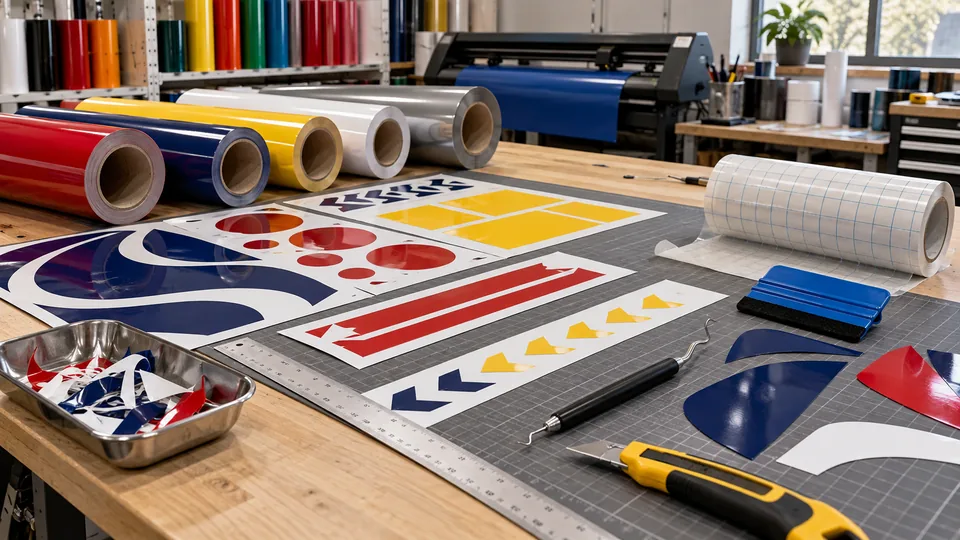
- Vinyl cutter (plotter): a drag-knife machine, typically 0.6–1.6 m wide, that cuts letters and shapes from rolls of sign vinyl.
- Wide-format printer: eco-solvent, latex or UV, for printable sign vinyl and banners.
- Laminator or laminating film: cold overlaminate protects prints from UV and abrasion; see our laminating film guide.
- Application or transfer tape: paper or clear tape that carries cut lettering to the substrate; see our vinyl transfer tape guide.
- Hand tools: felt-edged squeegee, weeding hooks, a cutting mat, a utility knife, a heat gun, measuring tape and masking tape.
- Grommet press and hemming tape: for finishing vinyl banners.
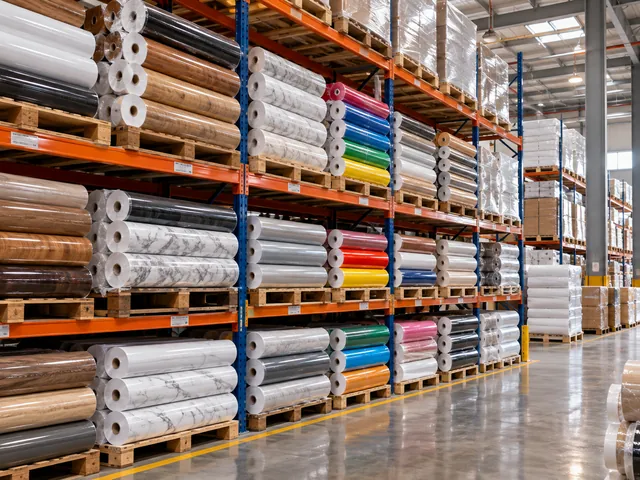
Sign supply stores sell these individually, but vinyl, tape and laminate are consumables, so sign shops usually buy them by the roll directly from a manufacturer or distributor.
How do you apply vinyl lettering to a sign or wall?
Cut vinyl lettering is applied the same way whether the target is an ACM panel, a glass door or a painted wall. Work at 10–30 °C (50–86 °F).
- Cut and weed. Cut the design on the plotter, then remove the waste vinyl around and inside the letters with a weeding hook.
- Apply transfer tape. Lay application tape over the lettering and squeegee firmly so the tape grips the vinyl.
- Clean the surface. Wipe with isopropyl alcohol and let it dry; dust and grease are the main causes of failure.
- Position with a hinge. Tape the graphic in place along the top or center with masking tape, and check level and spacing.
- Peel the liner. Lift one half of the graphic, peel the liner back to the hinge and cut it away.
- Squeegee from the hinge out. Use overlapping strokes at a low angle, then repeat for the other half.
- Remove the transfer tape. Peel back slowly at a sharp angle, close to 180 degrees, keeping the letters on the surface.
- Finish. Press down any lifted edges, and prick small bubbles with a pin before pressing them flat.
Large graphics or windows can be applied wet with a slip solution for easier positioning, but wet application is slower to cure and is not recommended with some air-release films. For vinyl lettering for walls, use low-tack transfer tape so it does not pull paint.
What is the best vinyl for outdoor signs?
Match the film to the expected life of the sign:
- Under 2 years: monomeric calendered vinyl on corrugated plastic or foam board for promotional signs, event signs and cheap vinyl banners.
- 3–7 years: polymeric calendered vinyl on ACM for business logo signs, store signage and outdoor vinyl letters.
- 7 years and more: cast vinyl with matching cast laminate for permanent exterior graphics and vehicles.
Dark and fluorescent colors fade faster than white, black and mid tones. A UV-protective laminate over printed vinyl usually extends outdoor life significantly. Choose permanent adhesive for outdoor self adhesive vinyl signs and removable adhesive for seasonal promotions on windows.
Interior signage, wall signs and signage on glass
Indoor signage has different priorities from exterior work: appearance, low glare and clean removal matter more than weather resistance.
- Interior signs and wall signage: matte vinyl lettering or printed graphics on acrylic or PVC foam board, fixed with stand-off pins or double-sided tape, for receptions, meeting rooms and corporate signage.
- Custom logo sign for wall: cut vinyl applied directly to a painted feature wall is the lowest-cost reception sign; layered acrylic is the premium version.
- Retail signs and store signage: removable adhesive vinyl for seasonal promotions, floor graphics with anti-slip laminate, and shelf-edge labels.
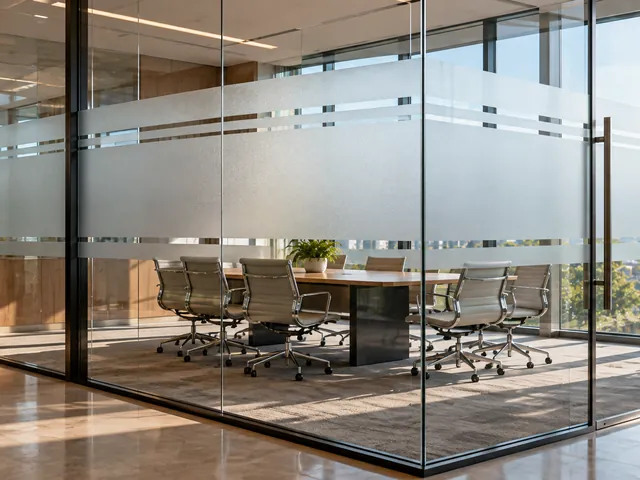
- Signage on glass: door lettering, opening hours and frosted manifestation bands. Apply to the inside face where possible so the vinyl is protected from weather and cleaning.
For glass, matte vinyl reads better than glossy because it does not reflect light, and white or frosted lettering is legible against both bright and dark interiors.
Buying sign vinyl rolls for a sign shop
If you run a vinyl sign shop or supply sign makers, check these points when sourcing:
- Color consistency between batches, so a re-order of a brand color matches the original sign.
- Cuttability and weeding: clean cuts at normal blade pressure, liner that stays flat.
- Liner type: a grid liner speeds hand cutting and alignment.
- Roll widths: 0.61 m (24 in) for desktop cutters, 1.22 m (48 in) for wide plotters.
- MOQ and lead time: we supply from 1 roll for stock colors and 100 rolls for custom colors, in 7–10 days from stock or 15–25 days custom.
Our glossy and matte cutting vinyl comes in a full color range with permanent or removable adhesive. See how one customer uses it in our sign shop case study.
Next step
Send us your color list, widths, adhesive type and monthly roll quantities, and we will reply with a quotation within 24 hours. Contact us for free A4 samples to test on your own cutter before you order.
Frequently Asked Questions
What is the best vinyl for outdoor signs?
For outdoor signs expected to last 3 to 7 years, polymeric calendered vinyl with a permanent adhesive is the usual choice. For 7 years or more, or for curved surfaces, use cast vinyl with a matching laminate. Monomeric calendered vinyl suits short-term promotional and event signs that need to last under two years.
What is the difference between cast and calendered vinyl?
Calendered vinyl is made by pressing PVC between heated rollers, which makes it thicker, around 70 to 100 micron, more economical and best for flat surfaces. Cast vinyl is poured as a liquid and dried into a thin, roughly 50 micron film that conforms to curves, shrinks very little and lasts longer outdoors.
What material are vinyl banners made of?
Vinyl banners are made of PVC-coated polyester scrim, a woven polyester mesh laminated between layers of PVC for strength. The standard outdoor weight is 13 ounces per square yard, about 440 gsm, while heavier 15 to 18 ounce grades are used for large, double-sided or long-term banners. Edges are hemmed and fitted with grommets.
What materials do you need to make a vinyl sign?
To make a vinyl sign you need sign vinyl in your chosen colors, a rigid substrate such as aluminum composite, PVC foam board or acrylic, transfer tape, and a vinyl cutter or wide-format printer. Hand tools include a squeegee, weeding hooks, a utility knife and isopropyl alcohol for cleaning the surface before application.
How long do vinyl signs last outside?
Vinyl signs typically last 2 to 4 years outdoors with economy calendered vinyl, 5 to 7 years with polymeric calendered vinyl and 8 to 12 years with cast vinyl. Strong sun, heat, horizontal mounting and dark or fluorescent colors shorten lifespan, while a UV-protective laminate over printed graphics usually extends it.
Can you put vinyl lettering on a painted wall?
Yes. Vinyl lettering for walls works on smooth, fully cured painted surfaces. Wait at least two weeks after painting, clean the wall gently, and use low-tack transfer tape so it releases from the letters without pulling paint. Removable adhesive vinyl is best if the lettering may need to come off later.
What size are standard vinyl banners?
Common vinyl banner sizes are 2 by 6 feet and 3 by 6 feet for shop fronts, events and birthdays, 3 by 8 and 4 by 8 feet for building fronts and fences, and custom sizes printed from banner material rolls. Grommets are usually placed in the corners and around every 2 feet along the edges.