Key takeaways
- Frosted decorative office window film is usually PVC of 120 to 160 micron and gives privacy while letting daylight through.
- Security window film is a clear multi-ply PET laminate of about 100 to 350 micron that holds broken glass together rather than making it unbreakable.
- Perforated window vinyl gives one-way vision only when it is brighter outside than inside, and common perforation ratios are 50/50 and 60/40.
- UK guidance places glass door safety markings in two zones, roughly 850 to 1,000 mm and 1,400 to 1,600 mm above the floor.
- Window film is normally wet-applied with a slip solution, trimmed 1 to 2 mm from the frame, and left to cure for several days before cleaning.
Office window film covers four jobs on commercial glass: frosted or patterned film for privacy in meeting rooms, security window film that holds broken glass together, perforated window vinyl for one-way vision graphics, and cut vinyl lettering for office signs and branding. Choose by the problem you need to solve, then by thickness, adhesive and indoor or outdoor exposure.
Glass offices look open and bright, but they create practical problems: no privacy in a glass conference room, people walking into clear doors, glare, security worries at ground level, and blank storefronts. This guide explains each type of film and window graphic, where it fits, what it typically costs, and how to specify it.
Types of office window film and window vinyl
| Film type | Typical material and thickness | Main purpose | Where it is used |
|---|---|---|---|
| Frosted / etched decorative film | PVC, 120–160 micron (about 5–6 mil) | Privacy while transmitting light | Meeting room glass walls, partitions, doors, restrooms |
| Gradient and patterned film | PVC, printed or cut, 120–160 micron | Partial privacy, design, brand pattern | Glass meeting rooms, reception, corridors |
| Security / safety window film | Clear multi-ply PET, about 100–350 micron (4–14 mil) | Holds broken glass in place | Ground floors, schools, storefronts, homes |
| Perforated window vinyl | Printed PVC with 50/50 or 60/40 holes, about 150–180 micron | One-way vision graphics | Storefront windows, office frontages, vehicles |
| Cut vinyl lettering and logos | Calendered or cast PVC, 80–100 micron | Signage, door decals, manifestation dots | Doors, windows, walls |
| Solar / architectural window film | Metallized or ceramic PET | Heat and glare control | Exterior glazing, building window film |
PVC (polyvinyl chloride) films are soft and easy to cut, which suits decoration and lettering. PET (polyethylene terephthalate, polyester) films are stiffer, clearer and stronger, which is why safety, security and solar films are PET.
Office window privacy film for glass conference rooms
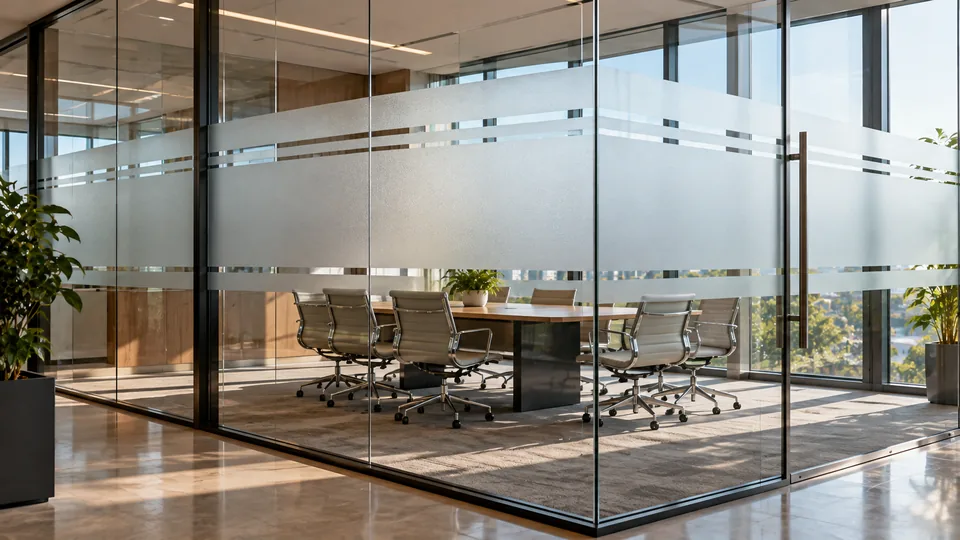
A glass wall conference room needs enough privacy that screens and faces cannot be read from the corridor, while still letting daylight through. Office window privacy film does this with a frosted, etched-glass look. Common office window privacy ideas:
- Full frost: complete privacy, best for HR rooms and restrooms.
- Privacy band: a frosted band from about 900 to 1,800 mm (3–6 ft) above the floor blocks the seated and standing eye-line but keeps the top and bottom clear.
- Stripes and gradients: a gradient glass texture that fades from frosted to clear gives partial privacy and a modern look.
- Patterned or logo frost: a modern glass film design for the office can include the company logo or a geometric pattern cut into the frost.
Frosted film is applied wet with a slip solution, so it can be positioned precisely on large panes. Our decorative frosted office glass film is PVC in 120, 140 or 160 micron, in widths of 0.61, 0.92, 1.22 and 1.52 m, with an indoor life of typically 3–5 years. For rented offices, choose a removable adhesive. The office glass project case study shows meeting room glass walls fitted this way, and our privacy window film guide covers day and night privacy.
Glass door safety marking (manifestation)
Clear glass doors and full-height panels are hard to see, and people walk into them. Many building codes require visible markings on safety glazing, called manifestation. In the UK, for example, guidance calls for markings in two zones, roughly 850–1,000 mm and 1,400–1,600 mm above the floor. Even where it is not required, it is good practice.
- Use dots, bands, logos or lettering that contrast with the background on both sides of the glass.
- Frosted vinyl cut into dots or a logo strip is the most common office solution.
- Combine safety marking with branding; a frosted band with the company name does both jobs.
What is security window film?
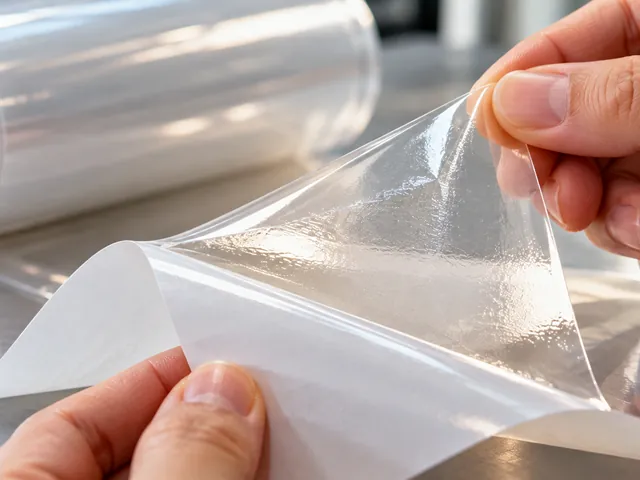
Security window film, also called safety and security window film, safety film for windows or glass, shatterproof (or shatter proof) window film, or glass security film, is a clear, thick polyester laminate with a strong adhesive. It does not make glass unbreakable. Instead, when the glass breaks, the film holds the fragments together so the pane stays in the frame longer, reducing injuries from flying glass and slowing a break-in.
- Safety film: about 100–200 micron (4–8 mil). Shatter resistant window film used to bring ordinary glass closer to safety glazing performance in some situations, and to reduce injury risk.
- Security film: about 200–350 micron (8–14 mil) or more, often with an attachment system that anchors the film to the frame. Used for commercial security window film, storefronts and security window films for schools.
- Home security window film: home security film is usually 100–200 micron, applied to ground-floor windows and glass doors; security film for house windows is mainly about delaying entry.
When upgrading glazing for code compliance, ask for test reports against the relevant standard, because safety glazing film must be tested on the specific glass type. Security film installation is normally a professional job, and installing window security film yourself is rarely worth the risk on large panes: the film is wet-applied, squeegeed hard and trimmed to the frame edge, and must cure before it reaches full strength.
Security film for windows cost
Security film for windows cost depends mainly on thickness and whether an anchoring system is used. In many US markets, installed safety film for windows is typically quoted per square foot, often roughly $5–$15 for film alone and more with frame attachment. Window security film installation cost rises for high or hard-to-reach glazing. Get quotes that list film thickness, warranty and the anchoring method.
Perforated window vinyl and one-way vision film
Perforated window vinyl, also called perforated window film, perforated vinyl window film or one way vision window film, is a printed white PVC film with a black adhesive side and a grid of small holes. From outside you see the printed graphic; from inside you look through the holes. The common perforation ratios are 50/50 (half holes) and 60/40 (more print area, slightly less visibility).
- The one-way effect works only when it is brighter outside than inside. At night, with lights on indoors, people outside can see in.
- Perforated vinyl film is usually laminated with an optically clear overlaminate for outdoor durability and rain, which otherwise fills the holes.
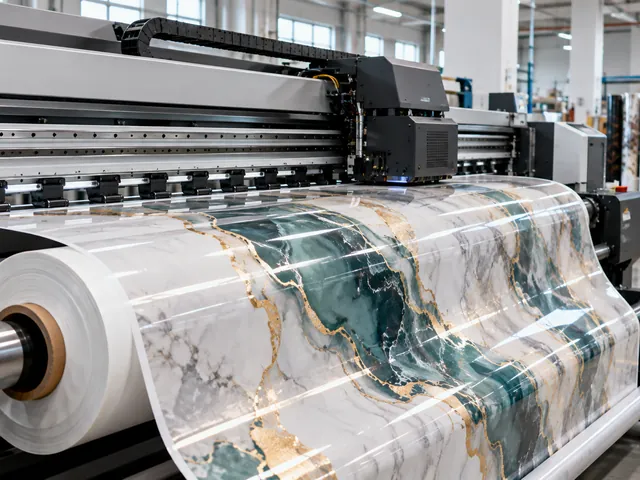
- Perforated window vinyl printing is done on wide-format solvent, eco-solvent, UV or latex printers; fine text reads poorly on perforated film, so keep messages large.
Perforated vinyl stickers and decals suit storefront window film, office frontages and see through window vinyl on doors.
Office signs, window lettering and building signage
Office signage, from corporate office signage in a reception to window signage at street level, ranges from door decals to exterior building signs. Self-adhesive vinyl appears in most of it:
- Vinyl window lettering: opening hours, company names and logos plotter-cut from colored vinyl and applied with transfer tape. Window lettering usually goes on the inside face of glass to protect it from weather and cleaning.
- Office door decals and customizable office door signs: names and room numbers cut from vinyl or printed on clear film.
- Office wall signage and office logo signs for wall: large cut-vinyl logos on reception walls, or dimensional signs with vinyl faces.
- Storefront signage and store front stickers: business window vinyl for promotions, including seasonal shop window Christmas decals in removable adhesive.
- Building signage and commercial building signage: exterior fascia signs and lightboxes use durable vinyl graphics for outdoor commercial signage, typically cast or premium calendered vinyl rated for several years outdoors.
For a custom office sign or custom window vinyl, choose matte vinyl for a refined look and to cut glare, and permanent adhesive outdoors. Our window decal cutting vinyl comes on 0.61 m and 1.22 m rolls with a grid liner, and our sign vinyl guide for sign shops explains cast versus calendered film.
Window film for commercial buildings vs home offices
Window film for commercial buildings is usually specified by a facility manager or fit-out contractor, often across hundreds of panes, so consistency, fire documentation and warranty matter. Commercial window privacy film, architectural window film and commercial window protection films are chosen together so the building looks uniform from outside. A home office has simpler needs. Home office window treatments often combine a frosted or patterned film on the lower half of the window with blinds or curtains, giving privacy on video calls without losing daylight. A thin clear protect film can also be used temporarily on glass during renovation to stop paint and plaster splashes.
How to install office window film
- Clean the glass. Scrape with a new razor blade, wash with a mild detergent solution and remove all paint specks and dust.
- Mix a slip solution. Add a few drops of baby shampoo or film application concentrate to a liter of clean water in a spray bottle.
- Cut the film oversize. Allow about 2–3 cm (1 in) extra on every side.
- Wet the glass and the adhesive. Spray the glass heavily, peel the liner and spray the adhesive side as you peel.
- Position and squeegee. Float the film into place, then squeegee from the center outward to push the water out.
- Trim the edges. Trim with a sharp blade against a straight edge, leaving a 1–2 mm (1/16 in) gap from the frame.
- Final squeegee and cure. Squeegee again with a hard card wrapped in a lint-free cloth. Leave the film to cure for several days before cleaning.
See our detailed guide on installing and removing window film without bubbles.
For sign shops, fit-out contractors and distributors
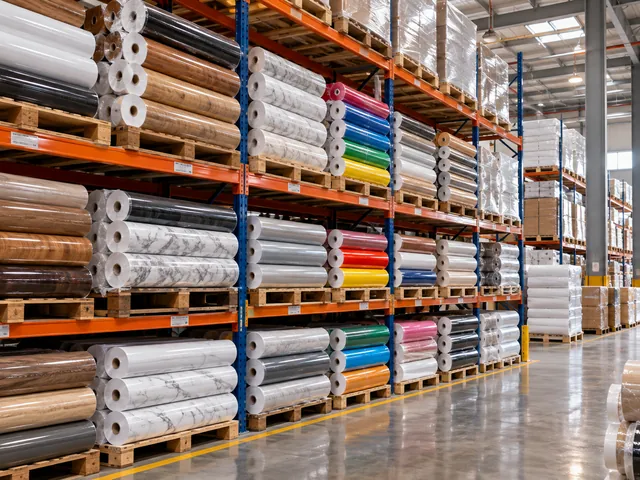
Fit-out contractors and sign shops usually stock a white frosted film, one or two patterned frosts, and a full color range of matte and gloss cutting vinyl. We manufacture decorative frosted PVC glass films in 120–160 micron on 50 m and 100 m rolls, and cutting vinyl in 80–200 micron, with stock items from 1 roll and custom patterns from 100 rolls. We do not make security or perforated films, so specify a tested security film separately where safety glazing is required.
Next step
Send us your glass dimensions, the privacy level or pattern you want, roll widths and quantities, and whether the adhesive should be removable. Contact us for free A4 samples and a quotation within 24 hours.
Frequently Asked Questions
What is the best privacy film for office windows?
The best privacy film for office windows is usually a frosted or etched-look PVC film of 120 to 160 micron, which blocks clear views while letting daylight through. Full frost suits restrooms and HR rooms, while a frosted band at eye level or a gradient pattern suits glass conference rooms. Use a removable adhesive in rented offices.
Does security window film really work?
Security window film works by holding broken glass together, not by making glass unbreakable. A thick PET film of about 200 to 350 micron, ideally anchored to the frame, keeps the pane in place longer during an impact or break-in attempt and reduces injuries from flying glass. Its effectiveness depends on correct professional installation.
How much does security film for windows cost?
Security film for windows cost depends on film thickness, glass size and whether an anchoring system is used. In many US markets, installed safety and security film is typically quoted per square foot, often roughly five to fifteen dollars for film alone and more with frame attachment. Ask quotes to state thickness and warranty.
Can people see through perforated window vinyl?
People inside can see out through perforated window vinyl, while people outside see the printed graphic, as long as it is brighter outside than inside. At night, when the interior is lit, the effect reverses and people outside can see in. Ratios of 50/50 or 60/40 balance visibility and print area.
Is shatterproof window film the same as safety glass?
Shatterproof window film is not the same as safety glass. Tempered or laminated safety glass is manufactured to meet glazing standards, while film is applied afterward to hold fragments together. Some safety films are tested to meet impact standards on specific glass types, so ask for test reports if film is meant to satisfy a code requirement.
Does window lettering go on the inside or outside of the glass?
Window lettering usually goes on the inside of the glass, applied in reverse so it reads correctly from outside. This protects the vinyl from weather, window cleaning and vandalism, and it lasts longer. Lettering meant to be read from inside, or applied to double-glazed units with tinted glass, sometimes goes on the outside instead.
How do you make a glass conference room private?
To make a glass conference room private, apply frosted window film to the glass walls, either fully or as a band from about 900 to 1,800 mm above the floor to block seated and standing eye-lines. Gradient or patterned frosts give partial privacy with a more open feel. Wet-apply the film for precise positioning.