Key takeaways
- Wall decals are self-adhesive graphics, usually PVC vinyl 80–100 micron thick, that apply to walls without paste.
- Removable adhesive is the standard choice for painted interior walls, while permanent adhesive suits glass, tile and outdoor surfaces.
- Freshly painted walls should cure for at least 2–3 weeks before any wall decal is applied.
- Peeling a decal slowly at a low angle after warming it with a hair dryer is the safest way to remove it from paint.
- Cut-vinyl custom wall decals need a vector file such as SVG, AI, EPS or PDF with outlined text.
Wall decals are thin self-adhesive vinyl, fabric or PVC-foam graphics that stick directly to painted walls, tiles, doors or glass without paste. Cut-vinyl decals leave only the design on the wall, printed decals carry full-color images, and 3D wall stickers add texture. Most peel and stick wall decals apply in minutes and, with removable adhesive, come off cleanly.
Below we compare decal materials, explain which wall stickers suit each room, show how to apply and remove them, and cover what to specify if you are ordering custom wall decals or wall graphics in volume.
Wall decals vs wall stickers: is there a difference?
In everyday use, wall stickers and wall decals mean the same thing: a decorative graphic with a pressure-sensitive adhesive (PSA) on the back and a release liner you peel away. The trade sometimes draws a finer line:
- Wall decal usually means a cut-vinyl design (letters, silhouettes, patterns) supplied on a release liner with a transfer tape on top. Only the vinyl stays on the wall; there is no background.
- Wall sticker often means a printed or die-cut piece that is applied directly from its backing, like a large sticker, including 3D foam and tile stickers.
- Wall graphics is the commercial term for large printed or cut vinyl wall graphics in offices, shops and gyms, sometimes covering a whole wall.
- Wall clings are static or low-tack films; giant wall clings are popular for temporary promotions because they reposition easily.
What are wall decals made of?
The material decides how a decal looks, how long it lasts and whether it comes off cleanly. These are the main constructions sold as wall stickers decor:
| Type | Face material | Typical thickness | Best for | Removability |
|---|---|---|---|---|
| Cut vinyl wall decals | Solid-color PVC film | 80–100 micron (3–4 mil) | Lettering, quotes, silhouettes, logos | Good with removable adhesive |
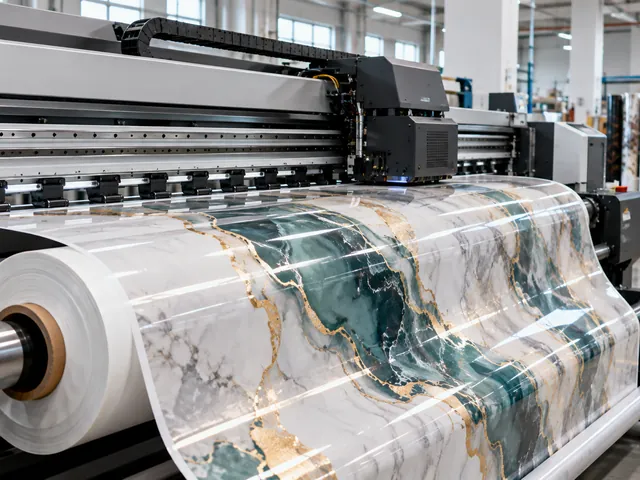
| Printed vinyl decals | White PVC film, printed, often laminated | 80–150 micron plus laminate | Photos, full-color art, custom wall graphics | Good to moderate |
| Fabric decals | Polyester fabric with repositionable adhesive | Varies | Kids' rooms, reusable vinyl stickers alternative | Excellent, repositionable |
| 3D wall decor stickers | PVC or XPE foam, embossed | Several millimeters | Faux brick, stone, wood texture | Moderate; test first |
| Tile stickers | Printed PVC, often glossy | 100–200 micron | Kitchen and bathroom tile refresh | Good on glazed tile |
A micron is one thousandth of a millimeter; 25.4 micron equals 1 mil. Thinner vinyl conforms to slight wall texture and looks painted on; thicker vinyl is easier to handle and hides small imperfections. Our graphic and signage cutting vinyl runs 80–200 micron in 0.61 m and 1.22 m widths, with permanent and removable adhesives in glossy and matte finishes.
Permanent vs removable wall decals
For interior walls, removable wall decals are the default: the adhesive builds enough grip over 24–48 hours to hold, yet releases from cured paint when peeled slowly. Permanent adhesive belongs on smooth exterior surfaces, vehicles and signs, and on interior glass or tile where long-term durability matters more than clean removal. Removable vinyl decals are also the safer choice for renters, and the same peelable stickers for wall use can go on doors and furniture.
Which wall stickers work best in each room?
Wall decals for living room and sitting room
Large wall decals for living room walls and huge wall decals — tree branches, line-art faces, mountain ranges, oversized botanical prints — work well as a focal point behind a sofa or TV. Wall stickers for living room spaces are usually seen from 2–4 m (6–13 ft) away, so a matte finish avoids glare from lamps and windows. Black wall decals read strongly on light walls; white wall decals suit dark accent walls. Removable wall decals for living room walls and removable living room wall stickers make seasonal changes easy, and the same designs sell as lounge wall decals and wall stickers for sitting room settings in UK-style markets.
Bedroom wall decals and stickers for adults and kids
For adults, bedroom wall decals tend toward headboard outlines, moons and constellations, script quotes and vintage wall decals or retro wall decals with botanical or mid-century motifs. Wall decals adult bedroom buyers often pair a decal with a painted accent, and bedroom wall stickers for adults lean toward contemporary wall decals in black, white or metallic gold. For children, star, cloud and animal wall stickers for bedrooms are long-standing best-sellers; our 3D star wall stickers for kids' rooms are a waterproof PVC example. A custom name wall decal above a crib or bed is a popular personalized add-on, and pink decals for walls or blue wall decals in nurseries are still classic wall decals bedroom decor ideas. Wall decal stickers for bedroom spaces can also become bedroom wall graphics that cover a whole headboard wall.
Kitchen wall decals and kitchen wall stickers
Kitchen wall decals face grease, steam and frequent wiping. Choose vinyl with a wipeable surface and keep decals at least 30 cm (12 in) from the cooktop. Wall decals quotes kitchen designs (recipes, "Eat", herb names), coffee-station lettering and pantry labels are typical kitchen wall stickers ideas; peel and stick wall decals for kitchen cabinets and pantry doors are popular too. For walls around the stove, a heat- and oil-resistant backsplash film is a better choice than a decorative decal.
Bathroom wall stickers and tile stickers
Bathroom wall stickers must tolerate humidity. PVC vinyl itself is waterproof, but the adhesive on painted walls can lift in a poorly ventilated shower room. Waterproof wall stickers for bathroom tiles — printed PVC tile stickers sized to common tiles such as 10 × 10 cm, 15 × 15 cm or 20 × 20 cm (4, 6 or 8 in) — bond well to glazed ceramic. Marble wall sticker designs and patterned bathroom tile wall stickers are an inexpensive way to update dated tile without regrouting. Bathroom wall stickers waterproof grades are worth the small extra cost. Avoid direct, continuous shower spray on any decal.
Office wall decals and commercial wall graphics
Wall stickers for office spaces and office wall decor stickers range from mission statements and decals for walls letters in brand colors to full-wall printed murals in meeting rooms. Office wall decals are usually specified in cut vinyl for lettering and printed, laminated vinyl for imagery. For glass partitions, frosted or colored window vinyl does the same job; see our guide to office glass film and window graphics.
Door, outdoor and concrete decals
A door wall decal or door wall sticker must survive constant handling, so keep it away from the handle area. Outdoor wall decals stickers need exterior-grade vinyl with permanent adhesive and UV-stable inks. Concrete stickers, concrete decals and sidewalk stickers require rough-surface adhesives and an anti-slip laminate; standard interior decals will not hold on bare masonry.
Wall decal ideas by style and color
Beyond room-specific designs, a few styles sell year-round: vintage wall stickers and antique wall decals with botanical engravings or old maps, frame stickers that outline a gallery wall without nails, and minimalist line art. On a pink wall, white or gold decals give the cleanest contrast; for white walls, black, navy or terracotta reads best. Self adhesive wall decals in a matte finish look closest to hand painting.
How to apply wall decals without bubbles
Most failures come from fresh paint, dust or rushing. These steps apply to cut-vinyl decals with transfer tape; printed stickers skip the transfer-tape step.
- Let paint cure. Wait at least 2–3 weeks after painting. Uncured paint releases solvents that push the vinyl off and can bond the adhesive permanently to the paint.
- Clean the wall. Wipe with a damp cloth, then with isopropyl alcohol on a lint-free cloth. Do not use cleaners that leave a residue. Work at 15–30 °C (60–86 °F).
- Position with a hinge. Tape the decal to the wall with masking tape along the top edge, check it with a level, then step back and confirm placement.
- Remove the backing. Flip the decal up on its hinge and peel the release liner away slowly, keeping the vinyl on the transfer tape. If letters stay on the liner, press them back and peel again.
- Squeegee from the center. Lower the decal and press it down with a felt-edged squeegee or credit card, working from the center outward in overlapping strokes.
- Remove the transfer tape. Peel it back on itself at close to 180°, slowly. Re-press any piece that lifts.
- Fix bubbles. Prick a remaining bubble with a fine pin and press the air out toward the hole.
Choosing the right tack of transfer tape matters on matte paint: a low-tack tape releases the vinyl more easily onto flat finishes.
Will wall decals stick to textured walls?
Light orange-peel texture is usually fine; heavy knockdown, sand-finish or brick is not, because the vinyl only touches the high points. On textured walls, use thinner vinyl, press firmly, warm the vinyl gently with a hair dryer while squeegeeing, and accept that fine lettering will not reproduce perfectly. Wall stickers texture designs such as 3D brick and wood panels are a better choice there; our removable brick and stone wall sticker is one example.
How to remove wall stickers without damaging paint
Warm the decal with a hair dryer for 20–30 seconds to soften the adhesive, lift an edge with a fingernail or plastic card, and peel slowly at a low angle, close to parallel with the wall. Reheat as you go. Residue usually wipes off with warm soapy water; for stubborn spots, see our guide to removing sticker residue. Removable wall sticker decals left up for many years, especially in sunny rooms, may take some paint with them, so test removal in a corner.
Custom wall decals, custom wall vinyl and printable wall vinyl
Custom wall decals start with a vector file (SVG, AI, EPS or PDF with outlined text) for cut vinyl, or a high-resolution image, typically 150 dpi at full size for wall viewing distances, for printed graphics. Plan for these specifications:
- Size and placement: measure the wall and mark obstacles such as switches and outlets.
- Color: provide a color reference; solid-color custom wall vinyl is cut from stock colors, while printed wall vinyl sheets reproduce any color.
- Finish: matte for most interiors, gloss for high-traffic areas that need frequent wiping.
- Adhesive: removable for painted drywall, permanent for glass, tile and outdoor use.
- Lamination: recommended for printed decals in kitchens, bathrooms, hallways and floor-level placements.
Printable wall vinyl lets print shops produce full-color designs on a wide-format printer and then contour-cut them. For DIYers with a desktop cutting machine, our guide on how to make vinyl stickers and decals covers files, cutting and weeding.
Wall decals for retailers, e-commerce sellers and sign shops
If you sell wall stickers decor online or produce vinyl wall graphics for clients, consistent vinyl and adhesive batches are what keep returns down. Specify the adhesive grade (removable for walls), finish, roll width (0.61 m suits most decal designs; 1.22 m suits murals and large office graphics) and liner type. A grid-printed release liner speeds up cutting and packing. For private-label decal programs, our OEM and ODM service covers custom colors and private-label packaging.
Next step
Tell us whether you need cutting vinyl rolls, printed wall stickers or finished custom decals, along with the size, finish, adhesive type and quantity. We send free A4 samples and quote within 24 hours; start on our contact page.
Frequently Asked Questions
Are wall decals and wall stickers the same thing?
Mostly yes. Both are decorative graphics with a pressure-sensitive adhesive that stick to walls without paste. In the trade, a wall decal often means cut vinyl applied with transfer tape, leaving only the design on the wall, while a wall sticker usually means a printed or die-cut piece applied straight from its backing.
Do removable wall decals damage paint?
Removable wall decals rarely damage fully cured paint if you peel them slowly at a low angle after warming them with a hair dryer. Problems usually come from applying decals to paint less than two or three weeks old, to low-quality or flat paint, or from leaving decals in strong sunlight for many years.
Can you put wall stickers in a bathroom?
Yes. PVC vinyl is waterproof, so bathroom wall stickers work well on glazed tile, mirrors and well-ventilated painted walls. Waterproof tile stickers bond best to smooth ceramic. Keep decals out of direct shower spray, make sure the room has an extractor fan or window, and let the adhesive set for 24 to 48 hours before steam exposure.
Will wall decals stick to textured walls?
Light orange-peel texture is usually fine, but heavy knockdown, sand-finish or brick textures cause poor adhesion because the vinyl only touches the high points. Use thinner vinyl, press firmly while warming it with a hair dryer, and avoid fine lettering. Textured 3D wall stickers are often a better choice on rough surfaces.
What file do I need for custom wall decals?
Cut-vinyl custom wall decals need a vector file such as SVG, AI, EPS or PDF with all text converted to outlines, so the cutting machine can follow the paths. Printed wall graphics need a high-resolution image, typically around 150 dpi at the final printed size, plus the exact dimensions and finish you want.
What are the best wall decals for a living room?
Large wall decals with a matte finish work best in living rooms because they read well from across the room and avoid glare. Popular designs include tree branches, line art, mountain ranges, botanical prints and quotes. Choose black or dark decals for light walls, white decals for dark accent walls, and removable adhesive for easy changes.
How long do vinyl wall decals last?
Indoors, quality vinyl wall decals typically last several years, often five or more, if kept away from direct heat and constant moisture. Printed decals last longer with a protective laminate. Outdoor decals need exterior-grade vinyl with permanent adhesive and UV-stable inks, and their life depends heavily on sun exposure and climate.
Can wall decals be reused?
Standard vinyl wall decals are generally single-use because they stretch and pick up dust when removed. Fabric decals and some low-tack reusable vinyl stickers can be repositioned and reused several times if stored on their original backing. If reuse is important, choose a product sold specifically as repositionable rather than simply removable.